A Baby Wildebeest's First Steps
In A Baby Wildebeest's First Steps, narrator Gordon Buchanan describes how a wildebeest is born on the savanna, which stretches across almost half of Africa and is home to millions of animals. The baby wildebeest immediately begins learning to walk. By the end of the day, it is one of the fastest land animals. The wildebeest uses speed, constant movement, and safety in numbers to avoid predators. This video is excerpted from BBC's Animal Babies, a heartwarming show that follows the first breaths, first steps, and first feeds of some adorable baby animals, revealing the challenges they face to survive in some of the toughest but most beautiful places on the planet.
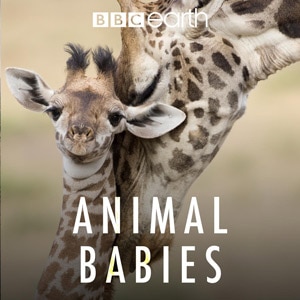
Three wildlife camera operators follow six iconic baby animals as they face the challenges of surviving their first year on Earth. Learn more.
Lesson Express
Q: How would you describe the savanna habitat?
A: Low, grassy plains with few trees. Home to many millions of animals — elephants, giraffes, cheetahs, zebras, rhinos, lions, wildebeest, etc. It covers almost half of Africa. The weather constantly changes, from long periods of very dry weather to downpouring rain. It has more large predators than anywhere else in the world.
Q: How does the baby wildebeest protect itself after it's born?
A: It begins learning to walk immediately and is always on the move. It can run at 50 mph.
Q: How is there safety in numbers for the wildebeest?
A: There are so many calves born each day, a calf would be very unlikely to be the one targeted by a predator.
You Might Also Like
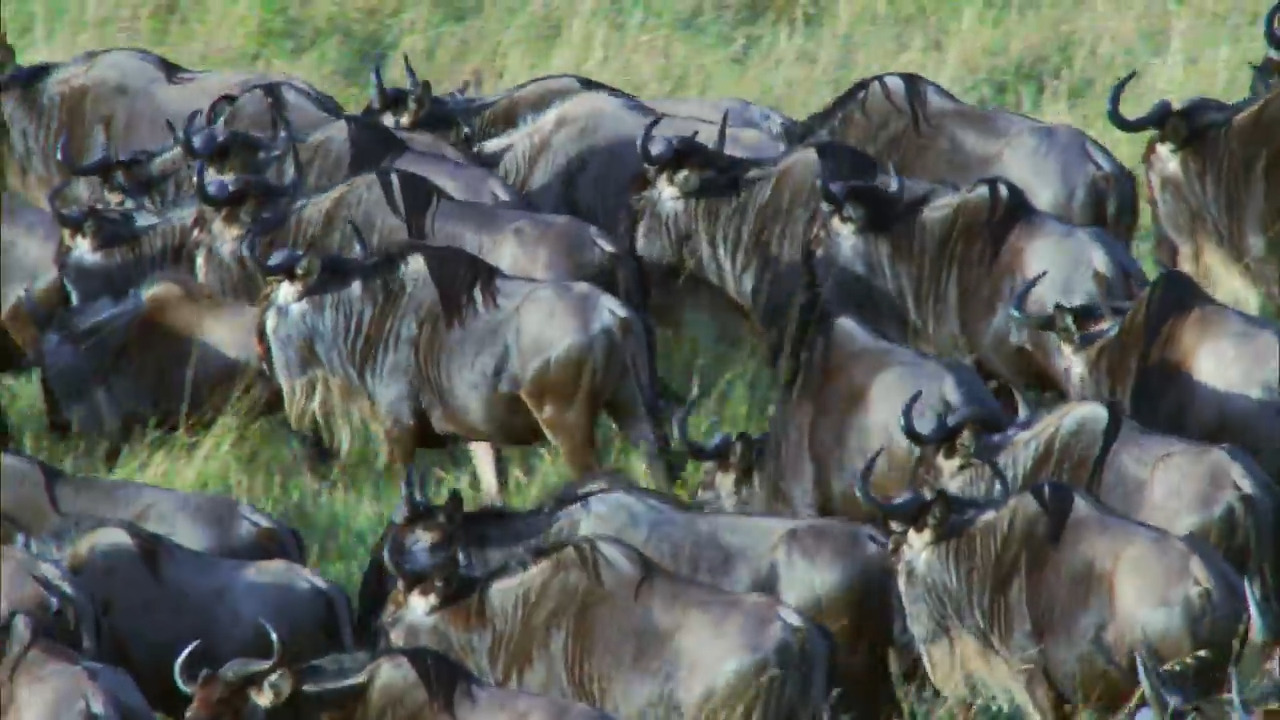
In African Grasslands Provide Food for Millions, narrator Sir David Attenborough teaches about how some animals eat grass and grass seeds. The East African savannas supports a population of 1.5 million red-billed quelea, and nearly 2 million wildebeest. This video is excerpted from BBC's Planet Earth, a breathtaking documentary series that highlights the natural wonders of our planet.
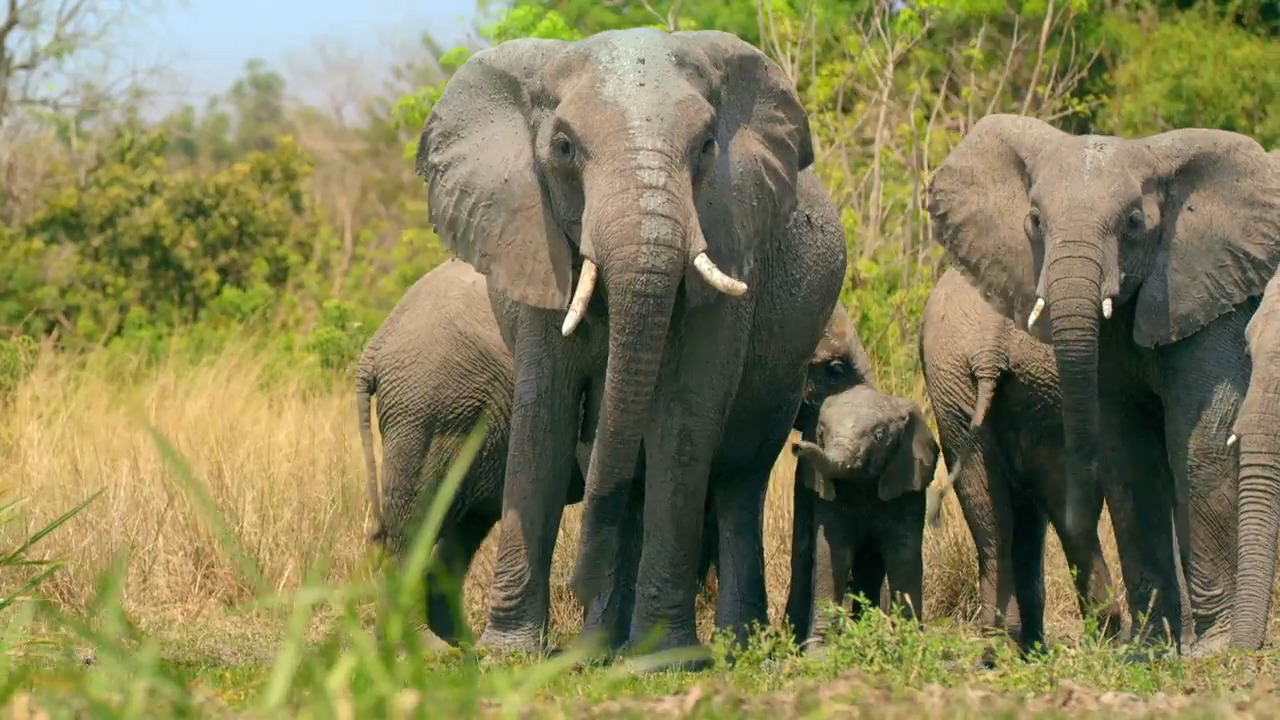
In African Elephant River Crossing, host Andy Day spies a family of African elephants. They’re about to cross a river. Will the elephants, including the baby of the herd, make it through the deep, predator-infested water? This video is excerpted from BBC’s Andy's Aquatic Adventures, in which Andy Day jets all over the world to meet amazing animals living in and nearby water.
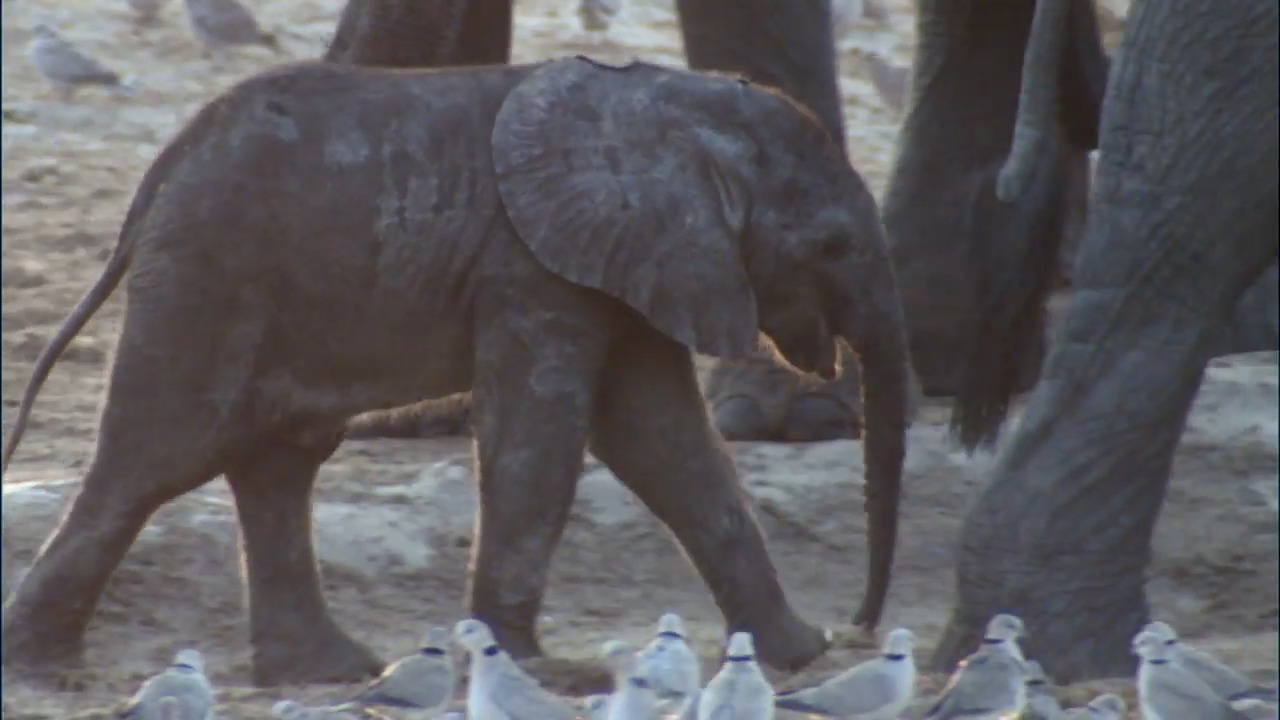
In The African Elephant Marches Towards Water, narrator Sir David Attenborough investigates how African elephants use their memories to find waterholes. The elephants gather in groups and travel during the night, when temperatures are cooler. This video is excerpted from BBC's Planet Earth, a breathtaking documentary series that highlights the natural wonders of our planet.
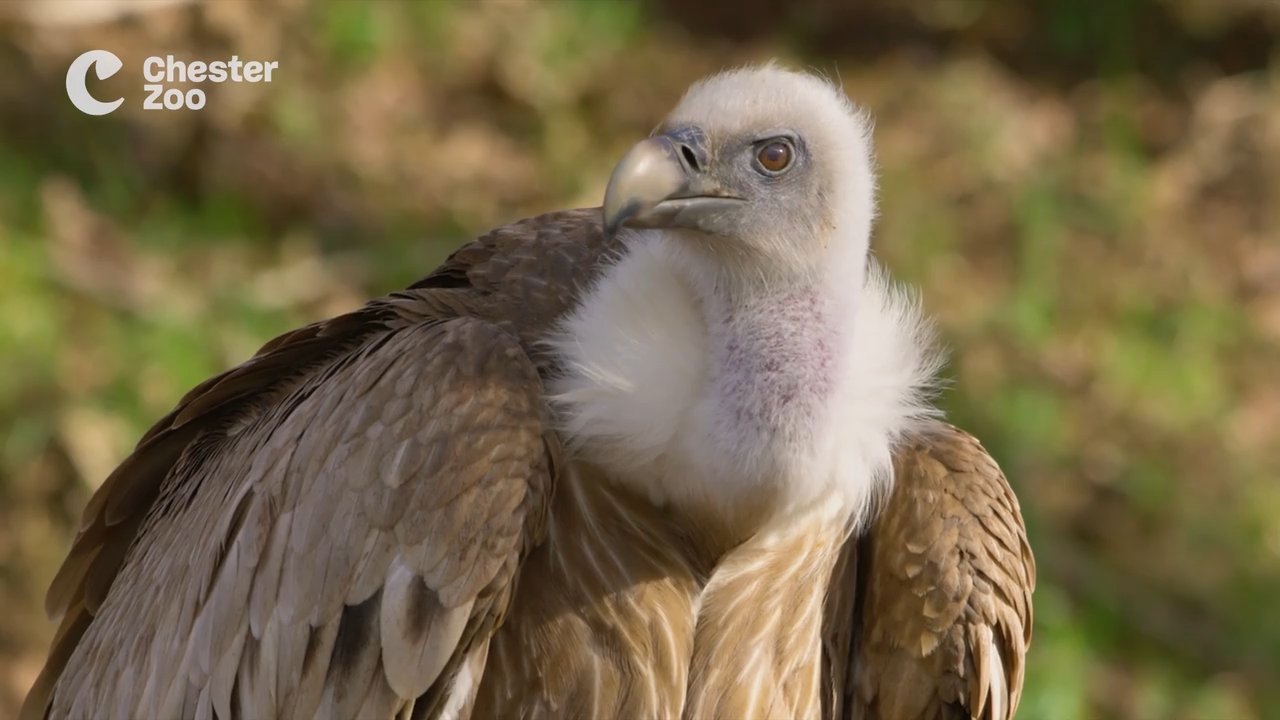
Vultures are the unsung heroes of Africa's ecosystems, playing a vital role in keeping the environment clean and healthy. With their incredible eyesight, enormous wingspans, and remarkably powerful digestive systems, these expert scavengers help prevent the spread of disease by safely consuming animal carcasses that other animals avoid.
In this fact file video from Chester Zoo, discover the amazing adaptations that make vultures so important to the natural world, learn about the critically endangered hooded vulture and how it raises its young, and explore the challenges these remarkable birds face in the wild. You'll also see why protecting vultures is essential for healthy ecosystems and how conservation efforts are helping safeguard their future.
In African Grasslands Provide Food for Millions, narrator Sir David Attenborough teaches about how some animals eat grass and grass seeds. The East African savannas supports a population of 1.5 million red-billed quelea, and nearly 2 million wildebeest. This video is excerpted from BBC's Planet Earth, a breathtaking documentary series that highlights the natural wonders of our planet.
In African Elephant River Crossing, host Andy Day spies a family of African elephants. They’re about to cross a river. Will the elephants, including the baby of the herd, make it through the deep, predator-infested water? This video is excerpted from BBC’s Andy's Aquatic Adventures, in which Andy Day jets all over the world to meet amazing animals living in and nearby water.
In The African Elephant Marches Towards Water, narrator Sir David Attenborough investigates how African elephants use their memories to find waterholes. The elephants gather in groups and travel during the night, when temperatures are cooler. This video is excerpted from BBC's Planet Earth, a breathtaking documentary series that highlights the natural wonders of our planet.
Vultures are the unsung heroes of Africa's ecosystems, playing a vital role in keeping the environment clean and healthy. With their incredible eyesight, enormous wingspans, and remarkably powerful digestive systems, these expert scavengers help prevent the spread of disease by safely consuming animal carcasses that other animals avoid.
In this fact file video from Chester Zoo, discover the amazing adaptations that make vultures so important to the natural world, learn about the critically endangered hooded vulture and how it raises its young, and explore the challenges these remarkable birds face in the wild. You'll also see why protecting vultures is essential for healthy ecosystems and how conservation efforts are helping safeguard their future.