
BBC News
BBC News helps students make sense of the world as it happens, covering current events, science, technology, the environment, culture, and more. It’s a valuable resource for building news literacy and helping students connect classroom learning to the world around them.
Ages 8–18

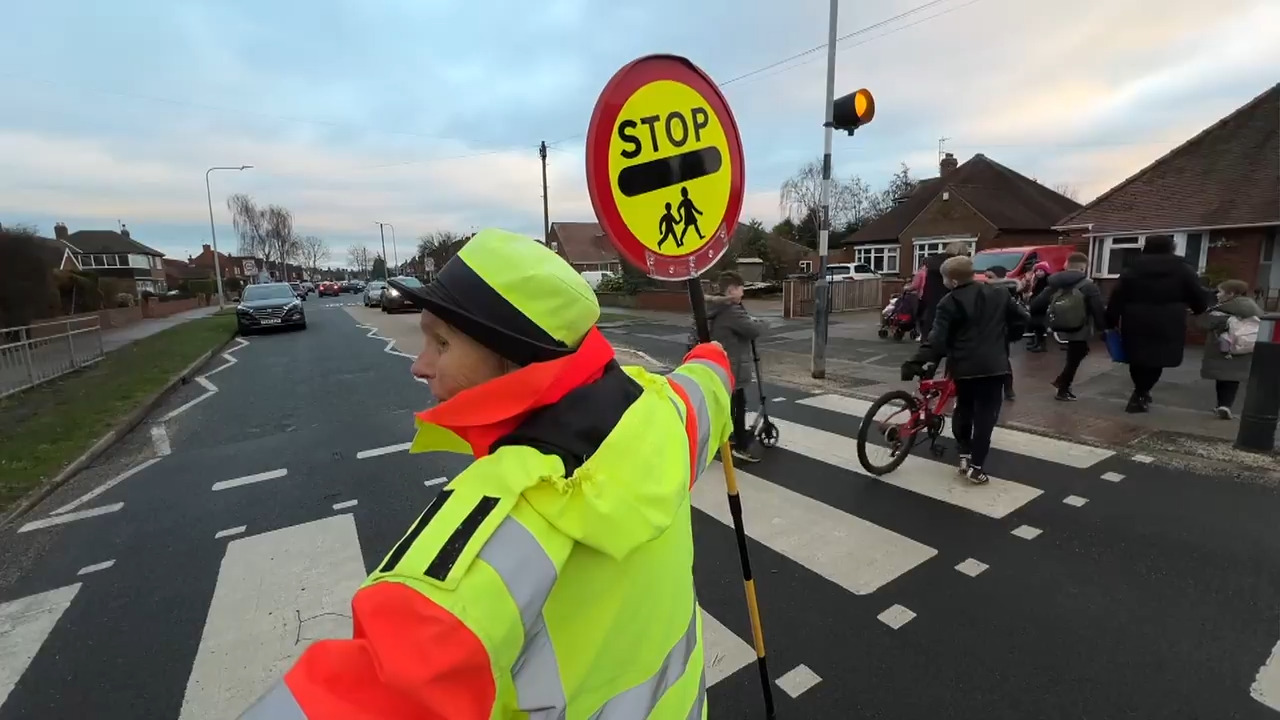
Why did the chicken cross the road? They probably just wanted an excuse to hang out with crossing guard, Brenda!
A town recently bid farewell to a local legend of a crossing guard, Brenda, who retired after 40 years of service. She was known as a "lollipop lady," but that's because of the shape of the stop sign crossing guards carry — not because she handed out candy. Still, by all accounts, Brenda was plenty sweet!
Although Brenda made the same journey nearly every day for four decades, her final day held one big surprise. Community members gathered to applaud her years of service and presented her with a certificate in recognition of everything she'd done.
Over the years, Brenda has broken up fights and even stepped between children and moving cars, so she's not easily shaken. But she was overwhelmed by the love and support shown at her retirement. Among those celebrating were current students, adults she had safely guided across the street as children, and, of course, her own family.
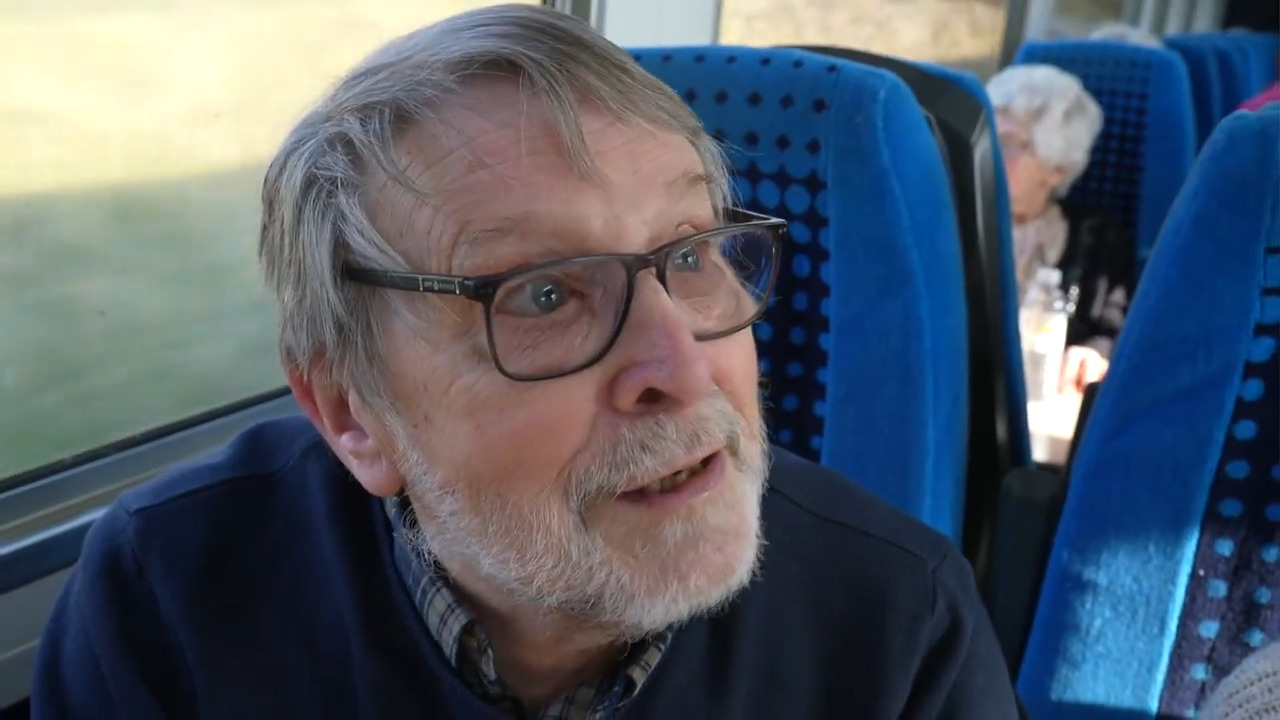
Dementia patients come together for a train ride to Whitby complete with beautiful scenery, live music, and gentle massages. Caregivers also find community aboard this special train ride. This video is excerpted from BBC News.
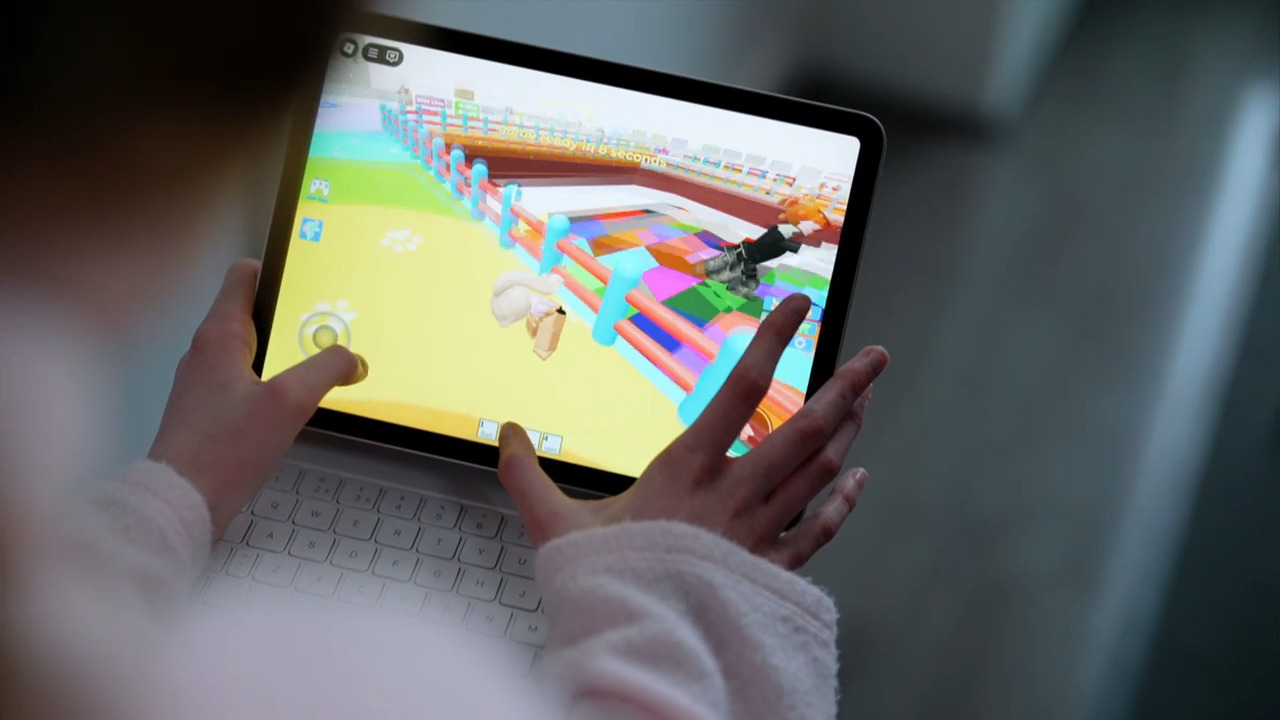
Roblox has exploded into one of the most popular gaming platforms in the world, especially for kids ages 8–12. What started as a small company has grown into a massive online universe with more than 40 million user-created games and experiences — from obstacle courses and role-playing worlds to fashion shows and virtual adventures. In fact, Roblox now has more monthly users than Nintendo Switch and Sony PlayStation combined.
But with its huge popularity comes growing controversy. Critics say that because almost anyone can create a game on the platform, some content may not always be appropriate for younger users. That has raised questions from parents and safety experts about how well kids are protected online.
Roblox co-founder and CEO Dave Baszucki says the company takes safety seriously and has “no tolerance” for inappropriate content. The platform has introduced new protections, including limits on messaging for users under 13. Still, reports show that some kids can sometimes find ways around age restrictions, which keeps the debate going.
Baszucki also says millions of users are having positive, creative experiences on Roblox every day — and reminds parents that they ultimately decide whether it’s the right platform for their children.

What happens when you mix theatre with soccer, or football as they call in the UK? You get a play that turns women’s soccer into a live story of grit, pressure, and ambition — no stadium required. This new production brings the energy of the game to the stage, spotlighting the real experiences of female athletes in sport.
The story doesn’t shy away from reality. Women footballers around the world have faced uneven playing conditions, from ill-fitting men’s kits to poorly maintained pitches and training setups that simply weren’t built with them in mind. Even small things — like long walks between facilities or limited access to resources — add up and shape the experience of being a professional athlete.
What makes the play feel especially authentic is the lead actor, who actually played semi-pro football before moving into acting. That real-life experience gives the performance extra edge, blending sport and storytelling in a way that feels lived-in, not just acted.
At its core, the production is about more than football. It’s about visibility, opportunity, and challenging the idea of who gets to have a future in sport — and who gets to be seen on stage telling that story.
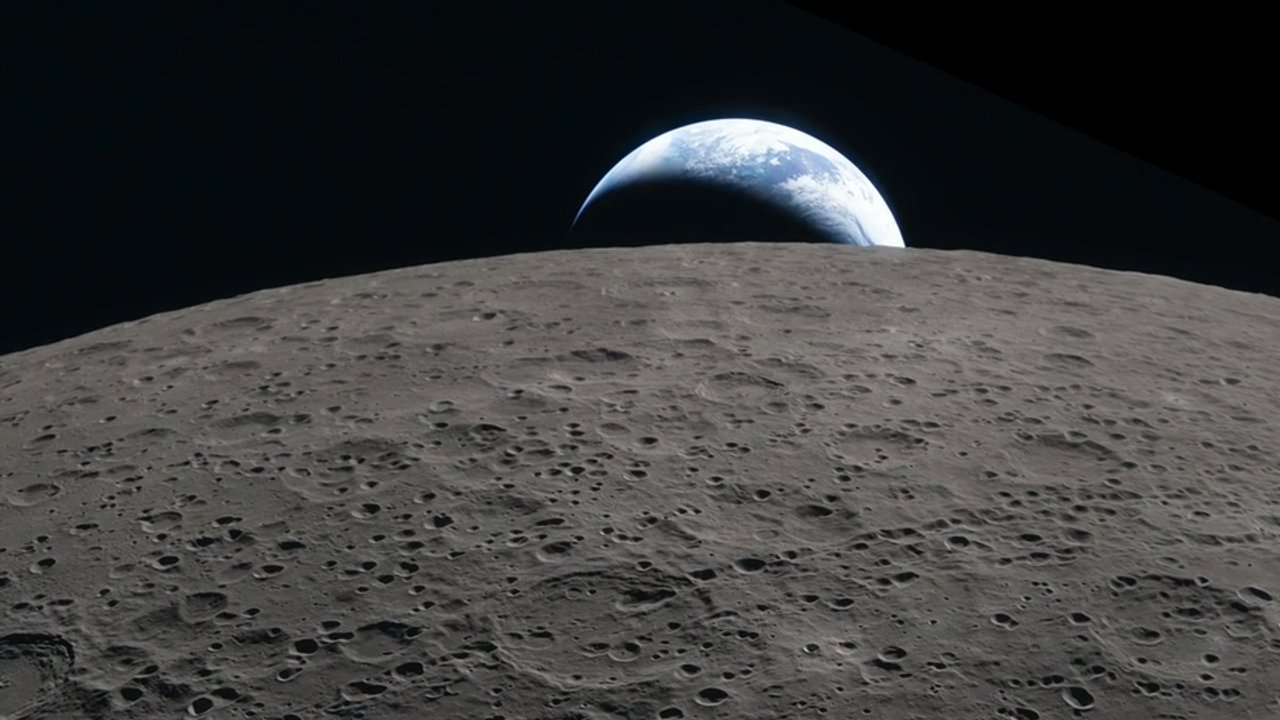
After a historic 10-day mission around the Moon — the first time humans have traveled so far into space since the 70s — the Artemis II crew came away with crucial knowledge: appreciate doors on bathrooms.
Commander Reid Wiseman dished on some other reflections about the trip. For example, the crew didn’t even realize what a big deal this was to people on Earth and didn’t hear much of the news until they talked to their families a few days into the mission. We suppose that’s what happens when you literally have your head in the clouds.
Not only was the journey unforgettable for science, but it was also personally significant for the crew members. One of the most powerful moments came when astronaut Jeremy Hansen named a lunar crater after Wiseman’s late wife, Carroll, a pivotal moment that solidified the crew’s bond.
But that bond wasn’t just to make things more fun — getting along in space is actually a matter of safety, and life inside a spacecraft requires serious teamwork. Think about sharing a room with a stinky sibling or living with a roommate who keeps eating your snacks. Now imagine that, in a room one-fifth the size and no way to escape! The astronauts lived, slept, and worked in extremely close quarters, so it was important to deal with disagreements immediately instead of letting tension build.
As exciting as it was to orbit the Moon, the return to Earth may have been just as intense. The crew re-entered the atmosphere at about 39 times the speed of sound. That’s about 30,000 miles per hour. They experienced forces of about four times normal gravity — about what you feel during the most intense parts of a roller coaster, but the astronauts felt this way for about 13 minutes. Nonstop! And that’s all before parachuting into the Pacific Ocean. All that probably makes it just a little more exhilarating than your bus ride to school.
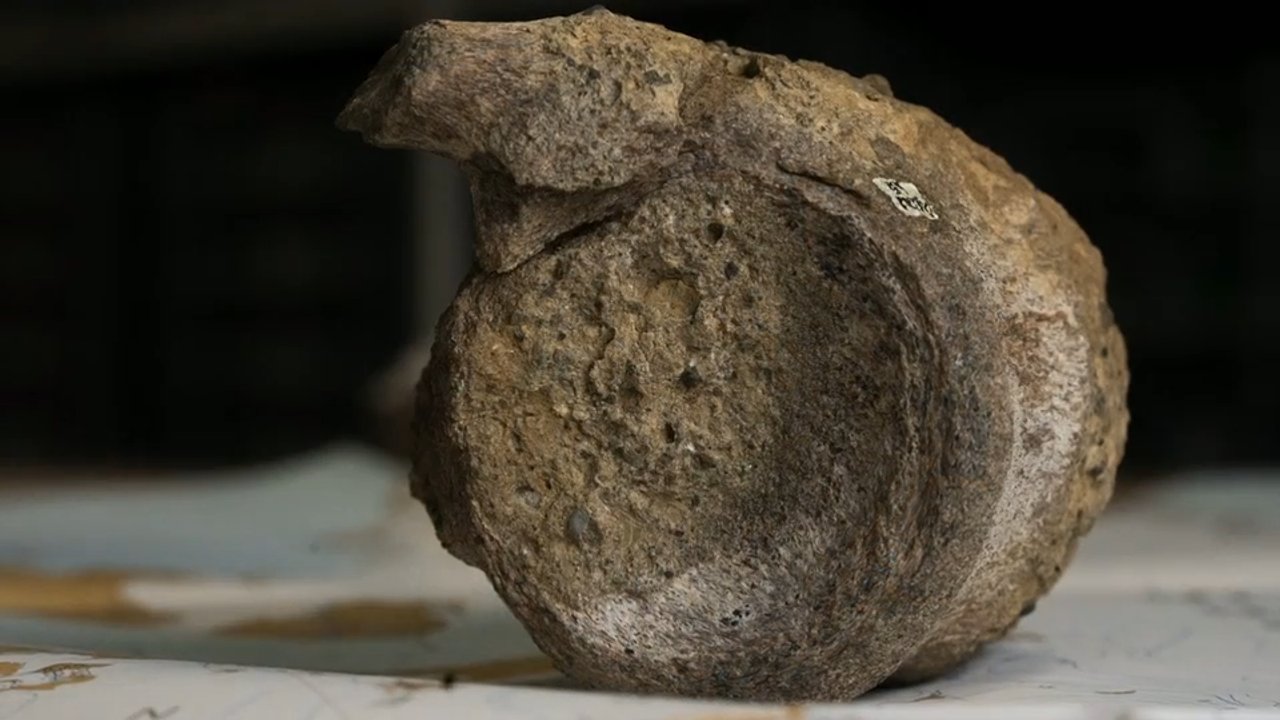
Sometimes a discovery doesn't happen in the field — it happens decades later, in a drawer.
In the 1980s, an Antarctic expedition recovered a fossil and recorded it simply as "vertebra of a large reptile" in a field notebook. That single line was all anyone knew about it for the next 40 years.
It wasn't until paleontologist Dr. Mark Evans revisited old research and notes that the fossil was properly identified — as the first dinosaur bone ever found in Antarctica. Its distinctive shape points to a Titanosaur, the largest dinosaur to ever walk the Earth.
The bone had been sitting in a collection the entire time. What changed wasn't the fossil — it was someone finally looking at it with the right knowledge asking the right questions.
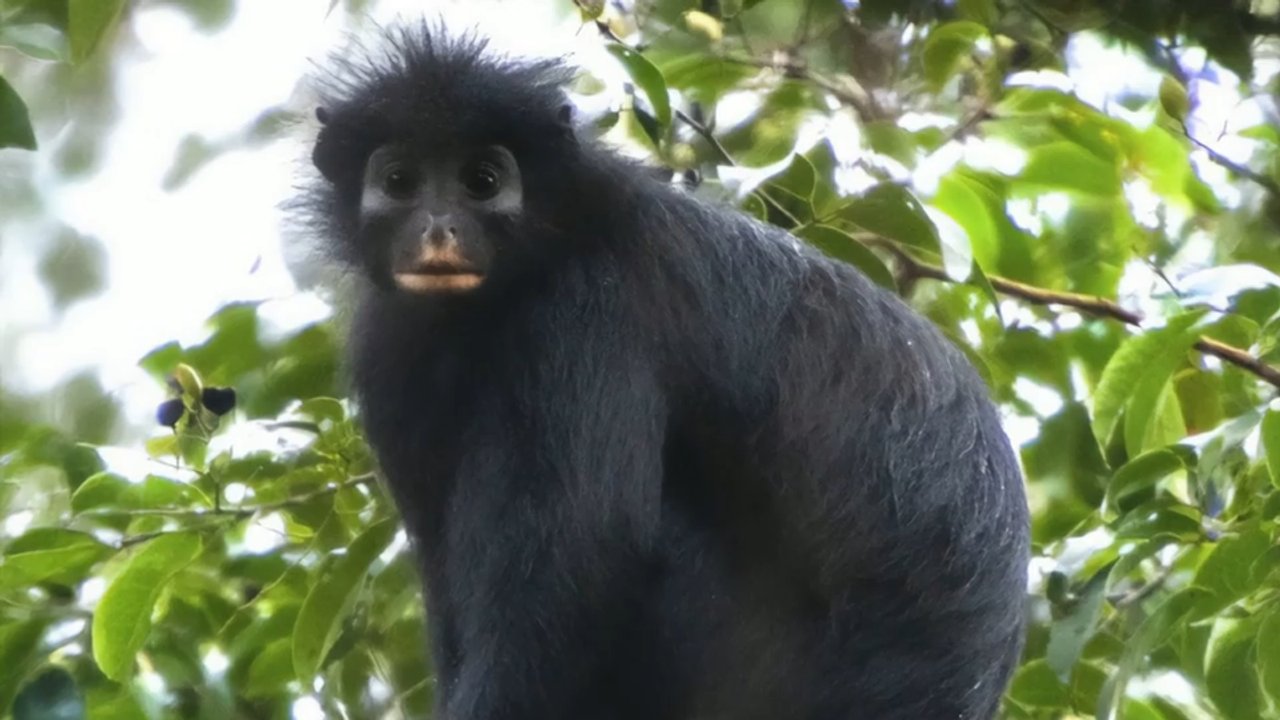
Most of our sub-par pictures just take up space on our phones and show off the insides of our pockets, but one blurry photo launched an almost two decades-long scientific endeavor.
A search that began with a picture of a tail in the trees eventually took researchers deep into Lomami National Park in the Democratic Republic of Congo on a quest to find out exactly what kind of monkey they were dealing with. Using microphones, cameras and genetic testing, they gathered enough evidence to confirm that the animal is a distinct species, now named Colobus congoensis — the first time a monkey is being named after the Congo!
It belongs to a group of plant-eating primates that live high in trees and do not have thumbs, but the Colobus congoensis has some unique characteristics. It uses a roaring call that announces its presence through dense tropical forest and has distinctive pinkish-orange lips that researchers think could act as a visual signal, perhaps helping it attract a mate. It also gives you someone to blame if your sibling asks, “Who ate the last orange creamsicle?!”
Scientists still have a lot to learn about this monkey, but it seems rare and limited to a particular habitat in the central-eastern part of the country. Researchers hope that officially recognizing it as a separate species will help protect both the monkey and the environment it depends on.
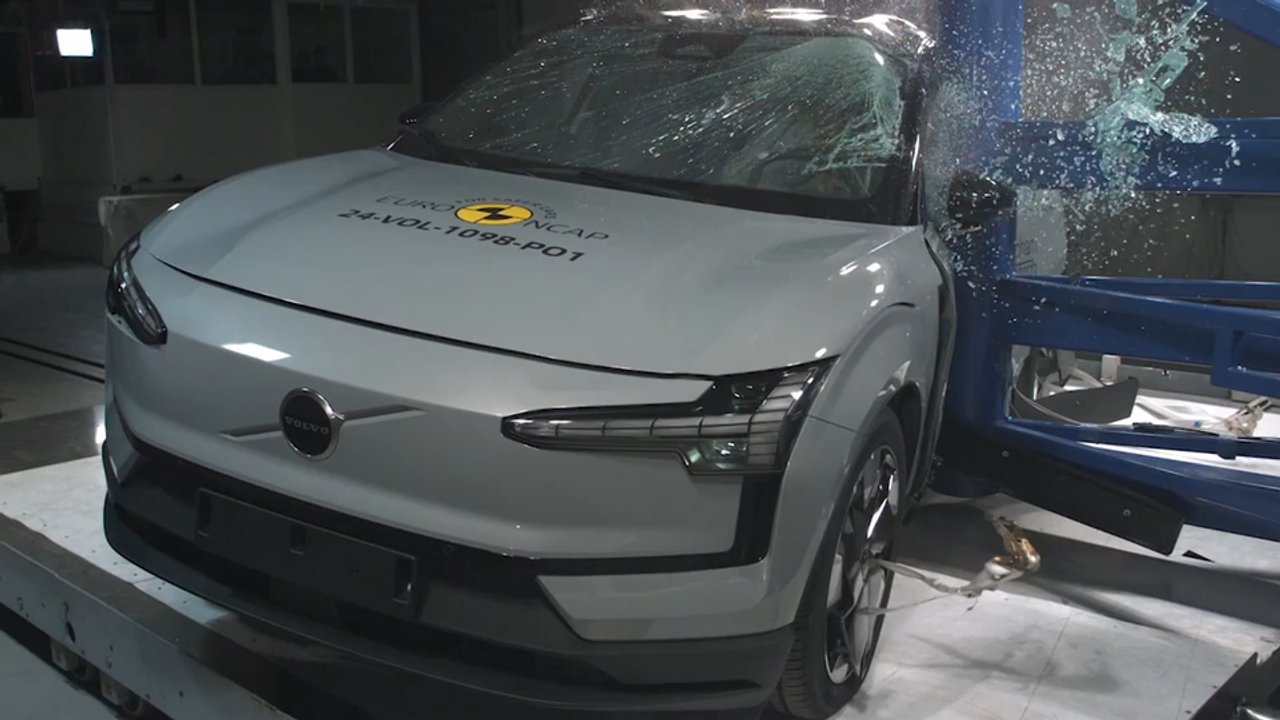
You’ve probably heard your parents (and everybody else) complain about insurance. And that’s fair, it’s expensive! Especially when it comes to electric cars, whose owners often pay higher more for insurance than drivers of more conventional cars. But why is that? Why are people being punished for trying to use less gas? Why does the cruel world continue to forsake us?!
Well, researchers investigated exactly that… the insurance thing, not the greater, overarching “cruel world” question. The team at a testing lab staged a crash at just 10 kilometers (or about 5 miles) per hour. Not exactly the crash that’d have you gripping your seat in a nail-biter of an action movie, but important for research. From the outside, the damage looked minor, but underneath, the high-voltage charging port had moved and some of its components had broken.
The problem was that the damaged charging components formed part of a much larger unit. So, instead of replacing one small broken piece, technicians would need to replace the charger and some of its cabling. One component alone was priced in the thousands, and leaving it out would render the car pretty useless.
It’s great that modern electric vehicles already have to meet high safety standards, but the concern is how expensive and difficult they can be to repair after relatively minor accidents. Experts say manufacturers need to design future EVs with repair in mind, protecting expensive components and making individual parts easier to replace. Seems easy enough… right?
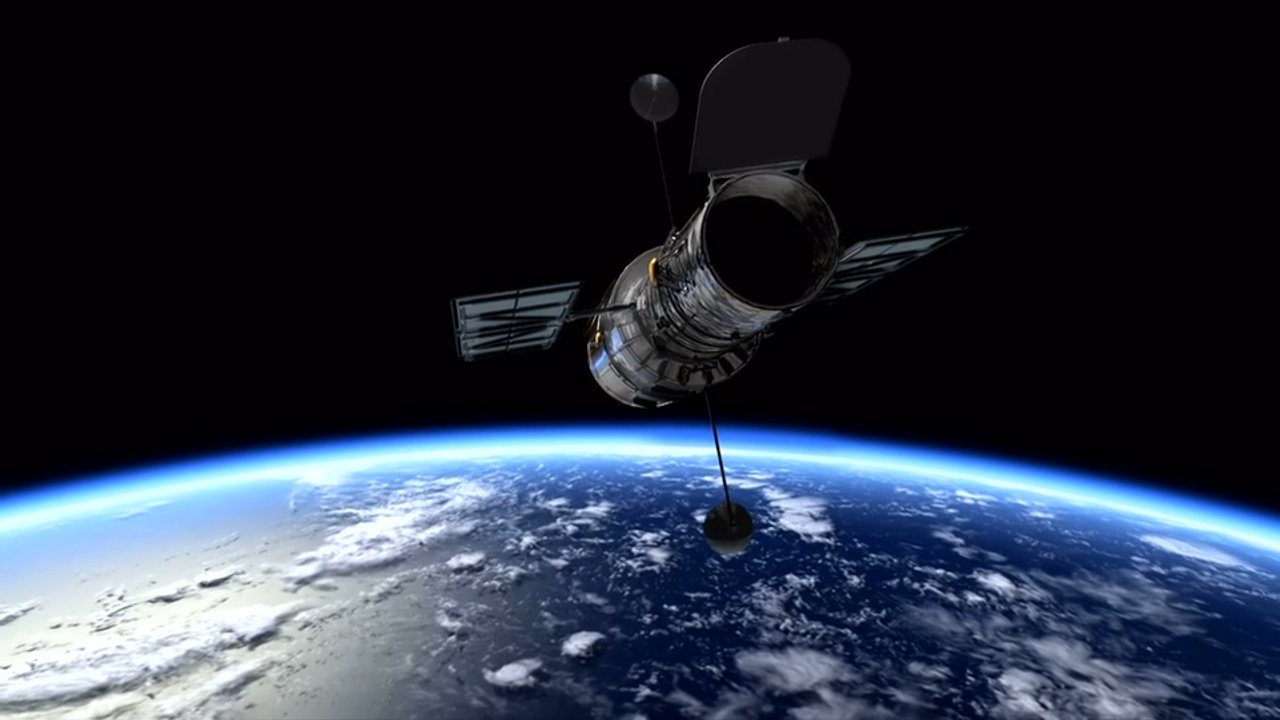
NASA is attempting something it has never done before: rescuing a space telescope that's slowly falling toward Earth.
The Swift Space Telescope has spent more than 20 years helping scientists study some of the universe's most powerful explosions. It originally orbited about 600 kilometers (over 300 miles) above Earth. At that height, the atmosphere is normally very thin — but increased solar activity has been pushing more of the atmosphere outward, creating extra drag. That drag slowed Swift down and caused its orbit to drop to about 360 kilometers (a little over 225 miles) above Earth.
To save it, NASA launched a rocket carrying a fridge-sized robot called Link. Link will first take pictures of Swift to figure out the safest place to grab hold of it. Then, using three robotic arms and its thrusters, it will slowly push Swift back up into a higher orbit. The whole process could take several months.
The mission is risky, since NASA has never attempted a rescue like this before. But if it works, Swift could keep operating for another decade. A success could also give NASA a blueprint for rescuing other aging spacecraft in the future — including the Hubble Space Telescope.
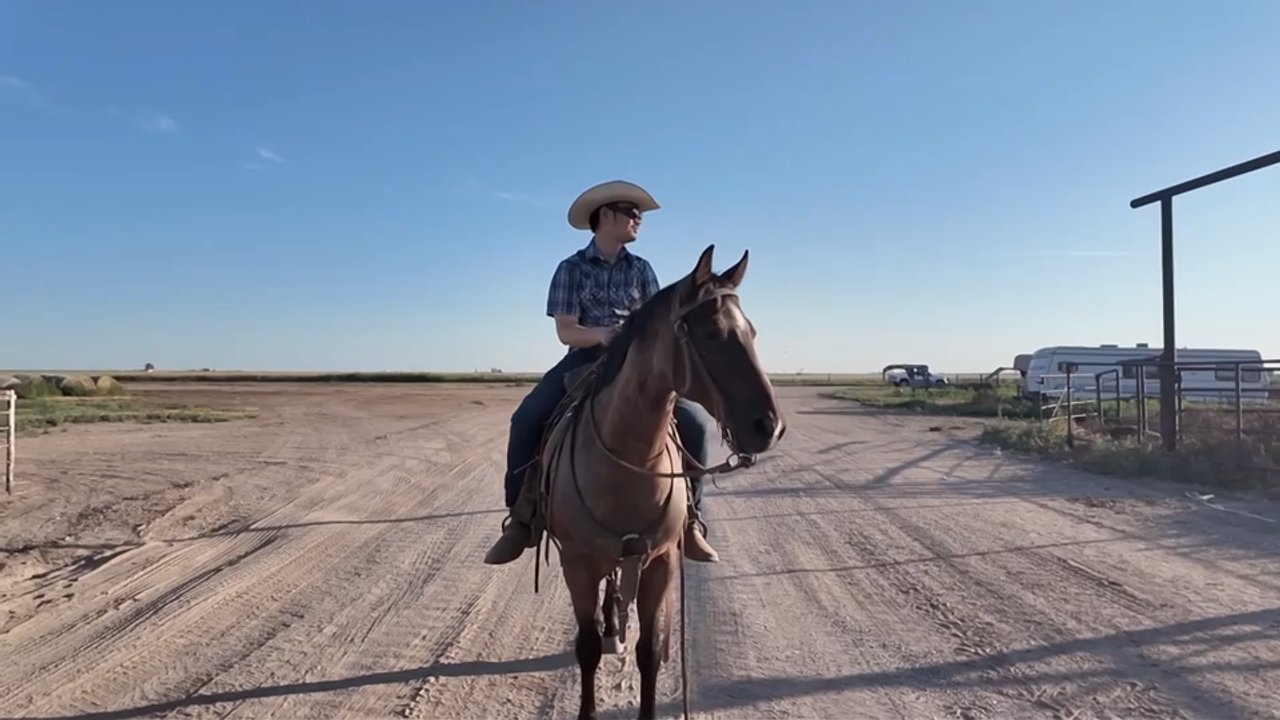
Cowboy culture might seem uniquely American, but one Chinese immigrant says it feels surprisingly familiar. Bruce Wang is originally from Yunnan, a region of China with a long history of horse breeding among many ethnic groups, but became fascinated with the cowboy lifestyle after moving to Texas as an international student at 20 years old.
At first, he dressed like a cowboy, but looking the part wasn't enough — he wanted the real experience. So he joined the cattle industry, learning to ride horses and work with livestock. Maybe he even learned to appreciate the smell of cow manure — or at least not complain about it.
After more than a decade in the United States, cowboy culture has become an important part of his identity, and he says it will stay with him even if he returns to China one day. By sharing his story, Bruce hopes people in China and the United States will better understand one another despite ongoing political tensions. What a moooooooo-ving story.

It’s officially the “Beijing International Automotive Exhibition,” but its friends call it “Auto China,” and it’s now the largest car show in the world. Nearly 1000 companies flock to the exhibits taking up more than 380,000 square meters, or over 50 football fields! Or 1,246,719 feet and 50 soccer fields, if you’re from America! Or 9,329,989 beep-boop-zoinks and 50 astro-space-ball fields if you’re a Martian from outer space! Any way you spin it, this car show is a big deal, and there were two standout trends.
The first was electric vehicles. There’s always been an issue with charging, as makers have tried to maximize how far cars can travel on single charge while minimizing how long that charge takes. Now, a company called BYD claims to have an ultra-fast charging system that can provide 400 km of range with only 5 minutes of charging. What’s more, it’s designed to operate under extreme weather conditions. Since batteries are usually sensitive to high or low temperatures, addressing this is a major step in making electric vehicles as reliable as gas cars.
The other big topic was also fully autonomous, or self-driving cars. The company Geely developed a self-driving car built specifically for ride-hailing, so there’s no steering wheel or driver’s seat. That means you can pick your nose without fear of the driver judging you! Xpeng’s driverless car uses a combination of lasers, radar, and cameras to build a real time picture of the road, but we hope it works just as well in the clouds, because they may be extending this technology into flying cars as early as next year. It’s a bird! It’s a plane! No, it’s just my Uber! That’s one way to beat traffic.
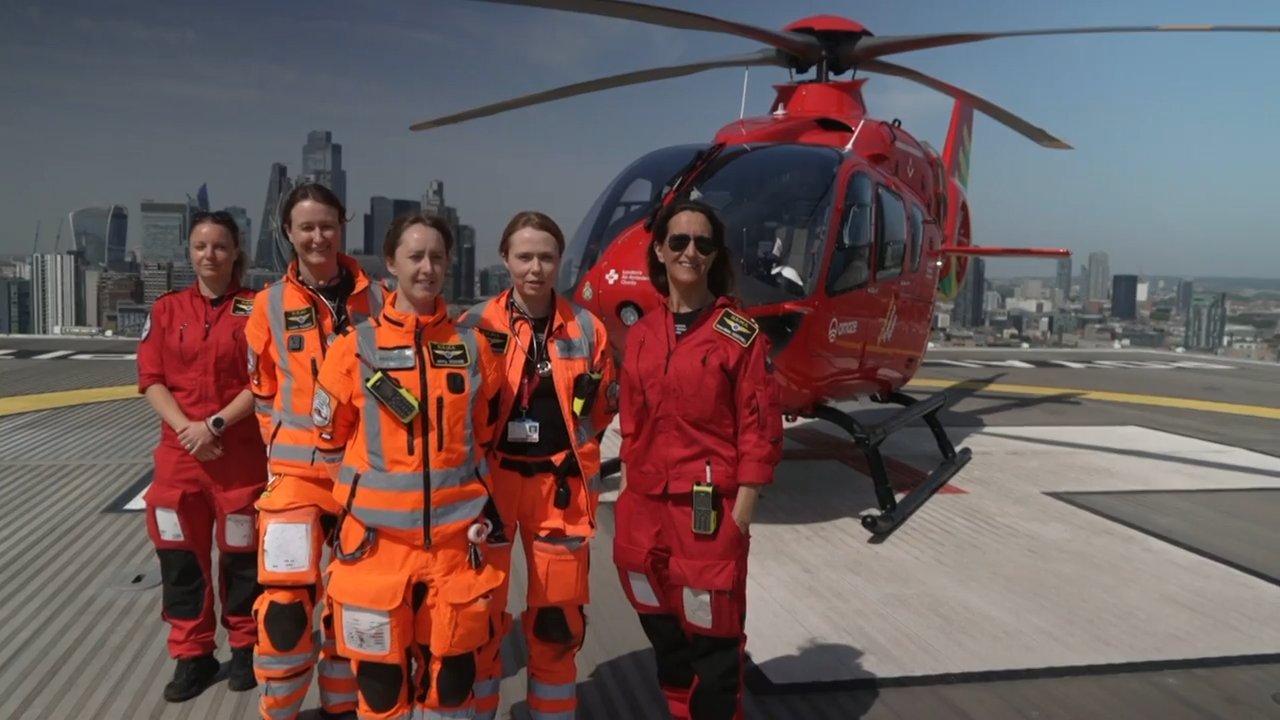
Move over, Superman. There are new heroes flying through the sky! The women of London’s Air Ambulance fly helicopters staffed with medical crews that take to the skies to save lives and inspire people everywhere. Not only do these teams provide critical care to people in need, but they also shape future generations by demonstrating what’s possible for women. But, it’s not specific to inspiring kids. A current pilot actually came from a full career as an accountant before moving from The Cloud to the clouds.
As impressive as it already is, the company is always striving to improve. They’ve recently gotten a team together to operate an ECMO, a life-support system for patients with severe, life-threatening heart or lung failure. Everyone works as a team to make sure patients get transported quickly and safely. The pilots not only fly the choppers but are instrumental in helping the medical team get set up for success and allowing them to focus on the patients.
Why did the chicken cross the road? They probably just wanted an excuse to hang out with crossing guard, Brenda!
A town recently bid farewell to a local legend of a crossing guard, Brenda, who retired after 40 years of service. She was known as a "lollipop lady," but that's because of the shape of the stop sign crossing guards carry — not because she handed out candy. Still, by all accounts, Brenda was plenty sweet!
Although Brenda made the same journey nearly every day for four decades, her final day held one big surprise. Community members gathered to applaud her years of service and presented her with a certificate in recognition of everything she'd done.
Over the years, Brenda has broken up fights and even stepped between children and moving cars, so she's not easily shaken. But she was overwhelmed by the love and support shown at her retirement. Among those celebrating were current students, adults she had safely guided across the street as children, and, of course, her own family.
Dementia patients come together for a train ride to Whitby complete with beautiful scenery, live music, and gentle massages. Caregivers also find community aboard this special train ride. This video is excerpted from BBC News.
Roblox has exploded into one of the most popular gaming platforms in the world, especially for kids ages 8–12. What started as a small company has grown into a massive online universe with more than 40 million user-created games and experiences — from obstacle courses and role-playing worlds to fashion shows and virtual adventures. In fact, Roblox now has more monthly users than Nintendo Switch and Sony PlayStation combined.
But with its huge popularity comes growing controversy. Critics say that because almost anyone can create a game on the platform, some content may not always be appropriate for younger users. That has raised questions from parents and safety experts about how well kids are protected online.
Roblox co-founder and CEO Dave Baszucki says the company takes safety seriously and has “no tolerance” for inappropriate content. The platform has introduced new protections, including limits on messaging for users under 13. Still, reports show that some kids can sometimes find ways around age restrictions, which keeps the debate going.
Baszucki also says millions of users are having positive, creative experiences on Roblox every day — and reminds parents that they ultimately decide whether it’s the right platform for their children.
What happens when you mix theatre with soccer, or football as they call in the UK? You get a play that turns women’s soccer into a live story of grit, pressure, and ambition — no stadium required. This new production brings the energy of the game to the stage, spotlighting the real experiences of female athletes in sport.
The story doesn’t shy away from reality. Women footballers around the world have faced uneven playing conditions, from ill-fitting men’s kits to poorly maintained pitches and training setups that simply weren’t built with them in mind. Even small things — like long walks between facilities or limited access to resources — add up and shape the experience of being a professional athlete.
What makes the play feel especially authentic is the lead actor, who actually played semi-pro football before moving into acting. That real-life experience gives the performance extra edge, blending sport and storytelling in a way that feels lived-in, not just acted.
At its core, the production is about more than football. It’s about visibility, opportunity, and challenging the idea of who gets to have a future in sport — and who gets to be seen on stage telling that story.
After a historic 10-day mission around the Moon — the first time humans have traveled so far into space since the 70s — the Artemis II crew came away with crucial knowledge: appreciate doors on bathrooms.
Commander Reid Wiseman dished on some other reflections about the trip. For example, the crew didn’t even realize what a big deal this was to people on Earth and didn’t hear much of the news until they talked to their families a few days into the mission. We suppose that’s what happens when you literally have your head in the clouds.
Not only was the journey unforgettable for science, but it was also personally significant for the crew members. One of the most powerful moments came when astronaut Jeremy Hansen named a lunar crater after Wiseman’s late wife, Carroll, a pivotal moment that solidified the crew’s bond.
But that bond wasn’t just to make things more fun — getting along in space is actually a matter of safety, and life inside a spacecraft requires serious teamwork. Think about sharing a room with a stinky sibling or living with a roommate who keeps eating your snacks. Now imagine that, in a room one-fifth the size and no way to escape! The astronauts lived, slept, and worked in extremely close quarters, so it was important to deal with disagreements immediately instead of letting tension build.
As exciting as it was to orbit the Moon, the return to Earth may have been just as intense. The crew re-entered the atmosphere at about 39 times the speed of sound. That’s about 30,000 miles per hour. They experienced forces of about four times normal gravity — about what you feel during the most intense parts of a roller coaster, but the astronauts felt this way for about 13 minutes. Nonstop! And that’s all before parachuting into the Pacific Ocean. All that probably makes it just a little more exhilarating than your bus ride to school.
Sometimes a discovery doesn't happen in the field — it happens decades later, in a drawer.
In the 1980s, an Antarctic expedition recovered a fossil and recorded it simply as "vertebra of a large reptile" in a field notebook. That single line was all anyone knew about it for the next 40 years.
It wasn't until paleontologist Dr. Mark Evans revisited old research and notes that the fossil was properly identified — as the first dinosaur bone ever found in Antarctica. Its distinctive shape points to a Titanosaur, the largest dinosaur to ever walk the Earth.
The bone had been sitting in a collection the entire time. What changed wasn't the fossil — it was someone finally looking at it with the right knowledge asking the right questions.
Most of our sub-par pictures just take up space on our phones and show off the insides of our pockets, but one blurry photo launched an almost two decades-long scientific endeavor.
A search that began with a picture of a tail in the trees eventually took researchers deep into Lomami National Park in the Democratic Republic of Congo on a quest to find out exactly what kind of monkey they were dealing with. Using microphones, cameras and genetic testing, they gathered enough evidence to confirm that the animal is a distinct species, now named Colobus congoensis — the first time a monkey is being named after the Congo!
It belongs to a group of plant-eating primates that live high in trees and do not have thumbs, but the Colobus congoensis has some unique characteristics. It uses a roaring call that announces its presence through dense tropical forest and has distinctive pinkish-orange lips that researchers think could act as a visual signal, perhaps helping it attract a mate. It also gives you someone to blame if your sibling asks, “Who ate the last orange creamsicle?!”
Scientists still have a lot to learn about this monkey, but it seems rare and limited to a particular habitat in the central-eastern part of the country. Researchers hope that officially recognizing it as a separate species will help protect both the monkey and the environment it depends on.
You’ve probably heard your parents (and everybody else) complain about insurance. And that’s fair, it’s expensive! Especially when it comes to electric cars, whose owners often pay higher more for insurance than drivers of more conventional cars. But why is that? Why are people being punished for trying to use less gas? Why does the cruel world continue to forsake us?!
Well, researchers investigated exactly that… the insurance thing, not the greater, overarching “cruel world” question. The team at a testing lab staged a crash at just 10 kilometers (or about 5 miles) per hour. Not exactly the crash that’d have you gripping your seat in a nail-biter of an action movie, but important for research. From the outside, the damage looked minor, but underneath, the high-voltage charging port had moved and some of its components had broken.
The problem was that the damaged charging components formed part of a much larger unit. So, instead of replacing one small broken piece, technicians would need to replace the charger and some of its cabling. One component alone was priced in the thousands, and leaving it out would render the car pretty useless.
It’s great that modern electric vehicles already have to meet high safety standards, but the concern is how expensive and difficult they can be to repair after relatively minor accidents. Experts say manufacturers need to design future EVs with repair in mind, protecting expensive components and making individual parts easier to replace. Seems easy enough… right?
NASA is attempting something it has never done before: rescuing a space telescope that's slowly falling toward Earth.
The Swift Space Telescope has spent more than 20 years helping scientists study some of the universe's most powerful explosions. It originally orbited about 600 kilometers (over 300 miles) above Earth. At that height, the atmosphere is normally very thin — but increased solar activity has been pushing more of the atmosphere outward, creating extra drag. That drag slowed Swift down and caused its orbit to drop to about 360 kilometers (a little over 225 miles) above Earth.
To save it, NASA launched a rocket carrying a fridge-sized robot called Link. Link will first take pictures of Swift to figure out the safest place to grab hold of it. Then, using three robotic arms and its thrusters, it will slowly push Swift back up into a higher orbit. The whole process could take several months.
The mission is risky, since NASA has never attempted a rescue like this before. But if it works, Swift could keep operating for another decade. A success could also give NASA a blueprint for rescuing other aging spacecraft in the future — including the Hubble Space Telescope.
Cowboy culture might seem uniquely American, but one Chinese immigrant says it feels surprisingly familiar. Bruce Wang is originally from Yunnan, a region of China with a long history of horse breeding among many ethnic groups, but became fascinated with the cowboy lifestyle after moving to Texas as an international student at 20 years old.
At first, he dressed like a cowboy, but looking the part wasn't enough — he wanted the real experience. So he joined the cattle industry, learning to ride horses and work with livestock. Maybe he even learned to appreciate the smell of cow manure — or at least not complain about it.
After more than a decade in the United States, cowboy culture has become an important part of his identity, and he says it will stay with him even if he returns to China one day. By sharing his story, Bruce hopes people in China and the United States will better understand one another despite ongoing political tensions. What a moooooooo-ving story.
It’s officially the “Beijing International Automotive Exhibition,” but its friends call it “Auto China,” and it’s now the largest car show in the world. Nearly 1000 companies flock to the exhibits taking up more than 380,000 square meters, or over 50 football fields! Or 1,246,719 feet and 50 soccer fields, if you’re from America! Or 9,329,989 beep-boop-zoinks and 50 astro-space-ball fields if you’re a Martian from outer space! Any way you spin it, this car show is a big deal, and there were two standout trends.
The first was electric vehicles. There’s always been an issue with charging, as makers have tried to maximize how far cars can travel on single charge while minimizing how long that charge takes. Now, a company called BYD claims to have an ultra-fast charging system that can provide 400 km of range with only 5 minutes of charging. What’s more, it’s designed to operate under extreme weather conditions. Since batteries are usually sensitive to high or low temperatures, addressing this is a major step in making electric vehicles as reliable as gas cars.
The other big topic was also fully autonomous, or self-driving cars. The company Geely developed a self-driving car built specifically for ride-hailing, so there’s no steering wheel or driver’s seat. That means you can pick your nose without fear of the driver judging you! Xpeng’s driverless car uses a combination of lasers, radar, and cameras to build a real time picture of the road, but we hope it works just as well in the clouds, because they may be extending this technology into flying cars as early as next year. It’s a bird! It’s a plane! No, it’s just my Uber! That’s one way to beat traffic.
Move over, Superman. There are new heroes flying through the sky! The women of London’s Air Ambulance fly helicopters staffed with medical crews that take to the skies to save lives and inspire people everywhere. Not only do these teams provide critical care to people in need, but they also shape future generations by demonstrating what’s possible for women. But, it’s not specific to inspiring kids. A current pilot actually came from a full career as an accountant before moving from The Cloud to the clouds.
As impressive as it already is, the company is always striving to improve. They’ve recently gotten a team together to operate an ECMO, a life-support system for patients with severe, life-threatening heart or lung failure. Everyone works as a team to make sure patients get transported quickly and safely. The pilots not only fly the choppers but are instrumental in helping the medical team get set up for success and allowing them to focus on the patients.