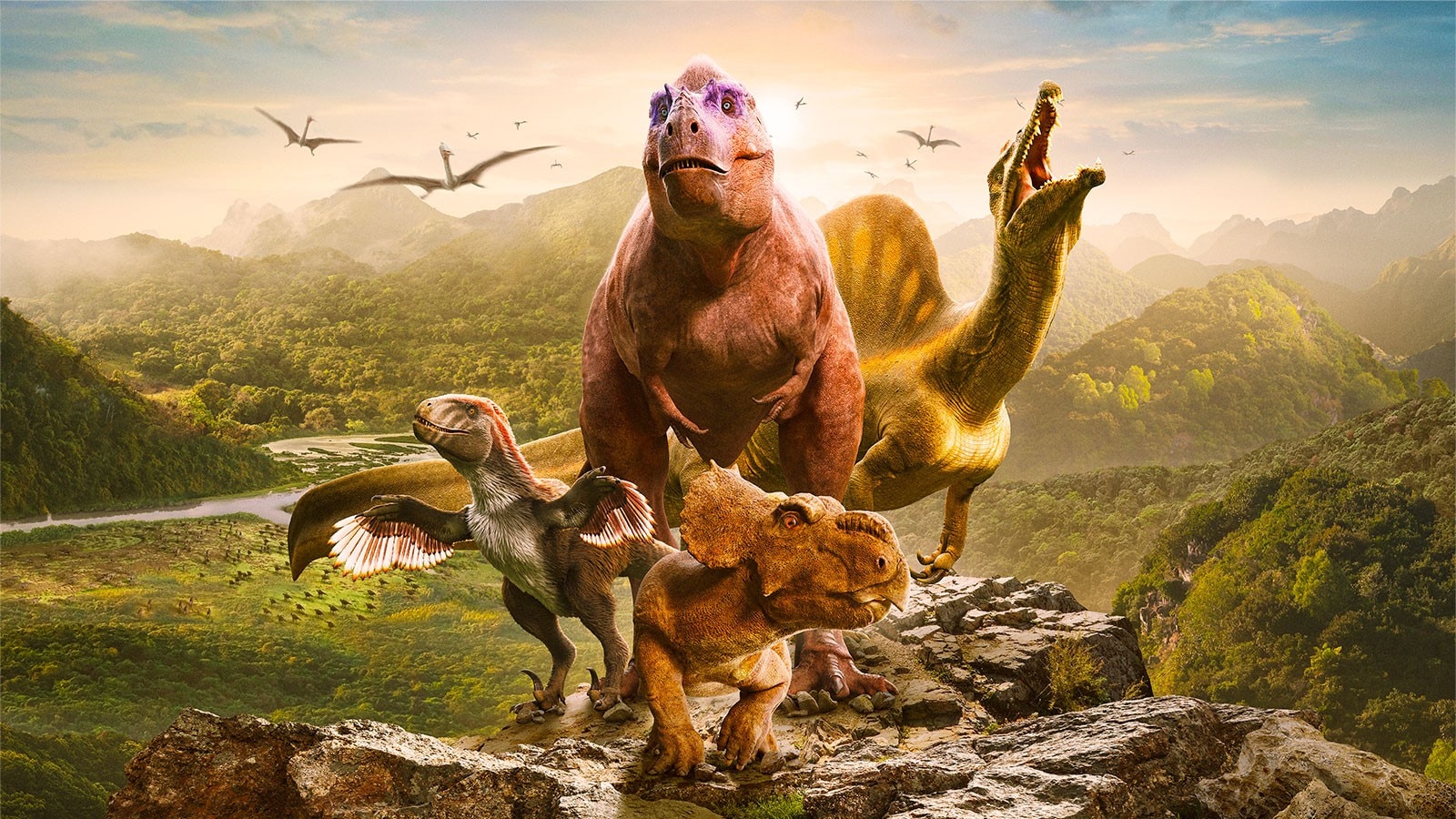
The greatest stories of all time are true.
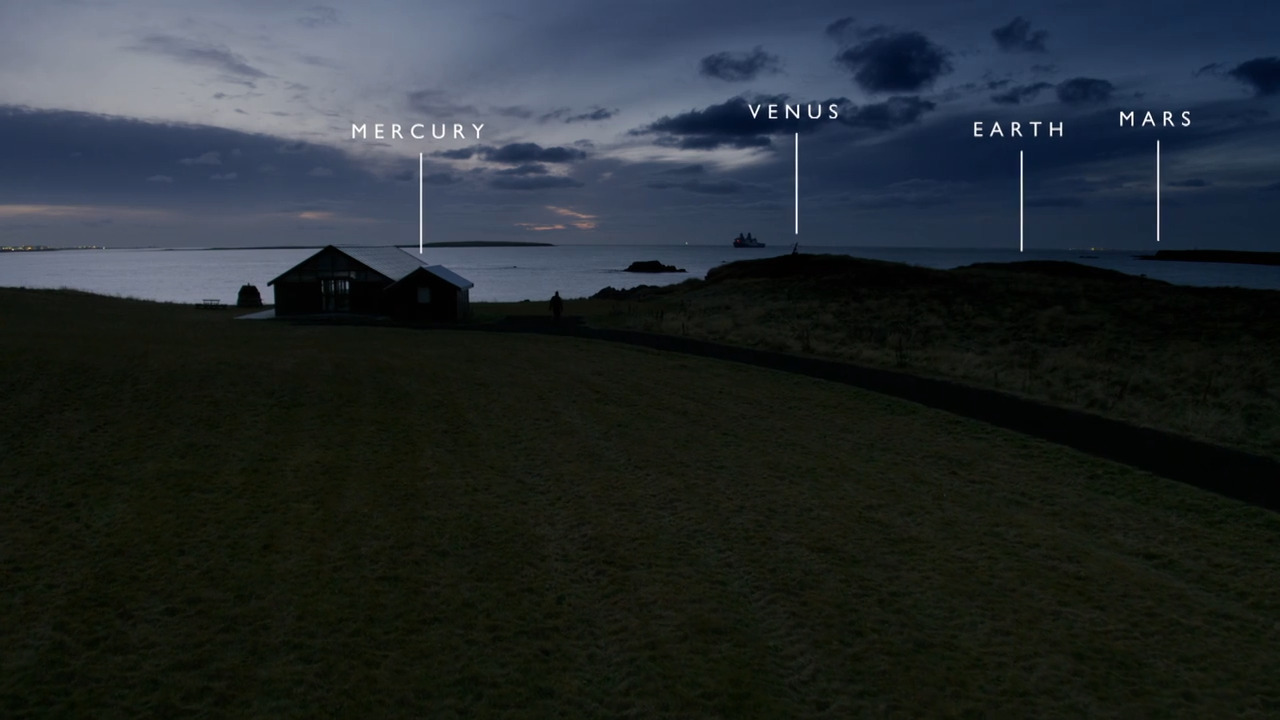
In Walking to Neptune, a Scale Model of the Solar System, Professor Brian Cox shows us a model of the Solar System that exemplifies how large it is, and how far Neptune is from the Sun’s light and warmth. This video is excerpted from BBC’s Brian Cox’s Adventures in Space and Time, a series that seeks to explain our place in the Universe. Professor Brian Cox looks back on decades of discovery and toward the next frontier in space, pondering the question: What’s next?
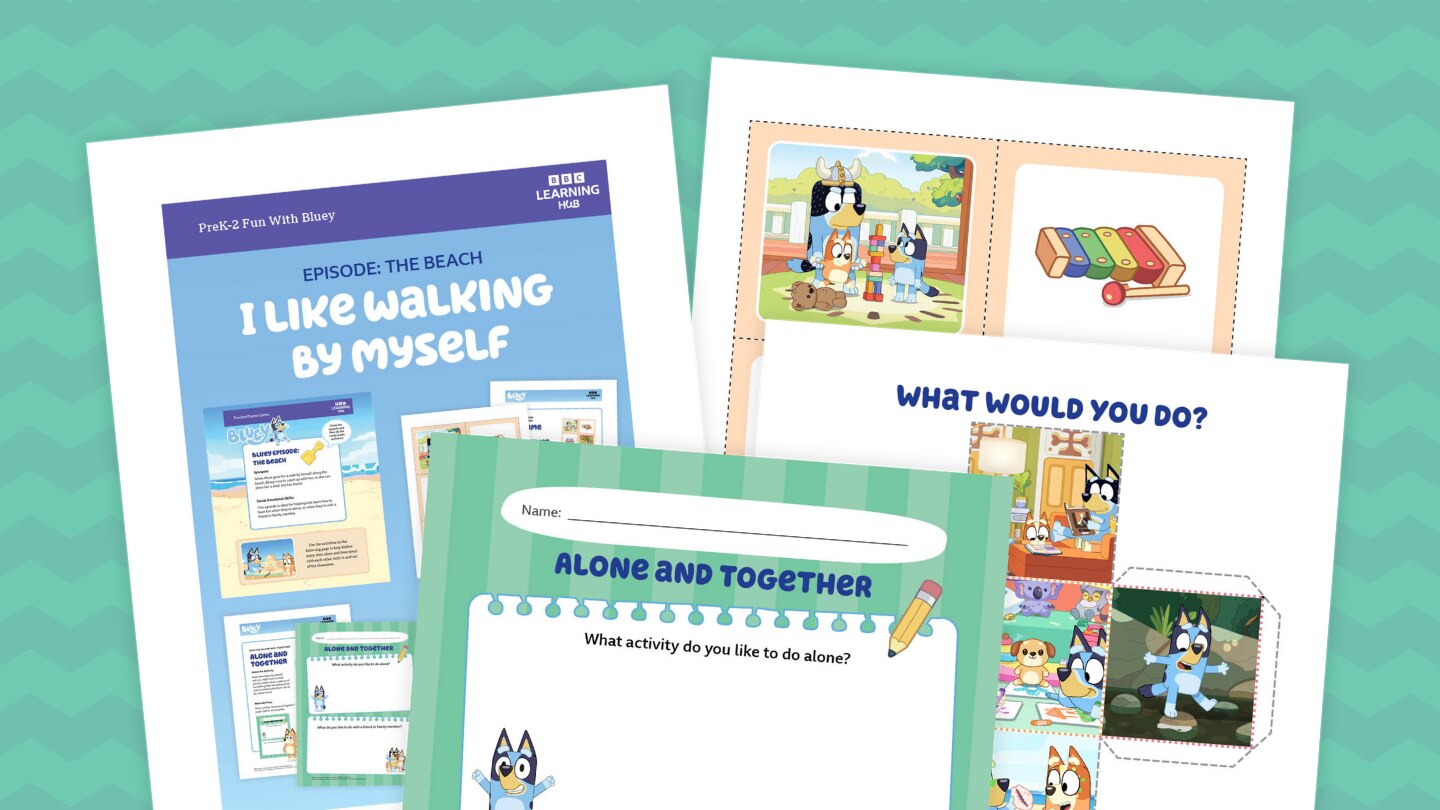
Sometimes we like to play together and other times, we want to be by ourselves. And that's OK! Try this lesson, which uses the Bluey episode "The Beach" as the kickoff to a classroom conversation about being alone and with others. The lesson includes printables for three activities in which kids try some activities alone and with a friend, draw a picture of things they like doing alone, and roll a fun Bluey die and share what they'd like to do at each location.
The Beach Episode Summary: When Mum goes for a walk by herself along the beach, Bluey runs to catch up with her, so she can show her a shell she has found.
Watch the episode here! (Click here to watch in Australia.)
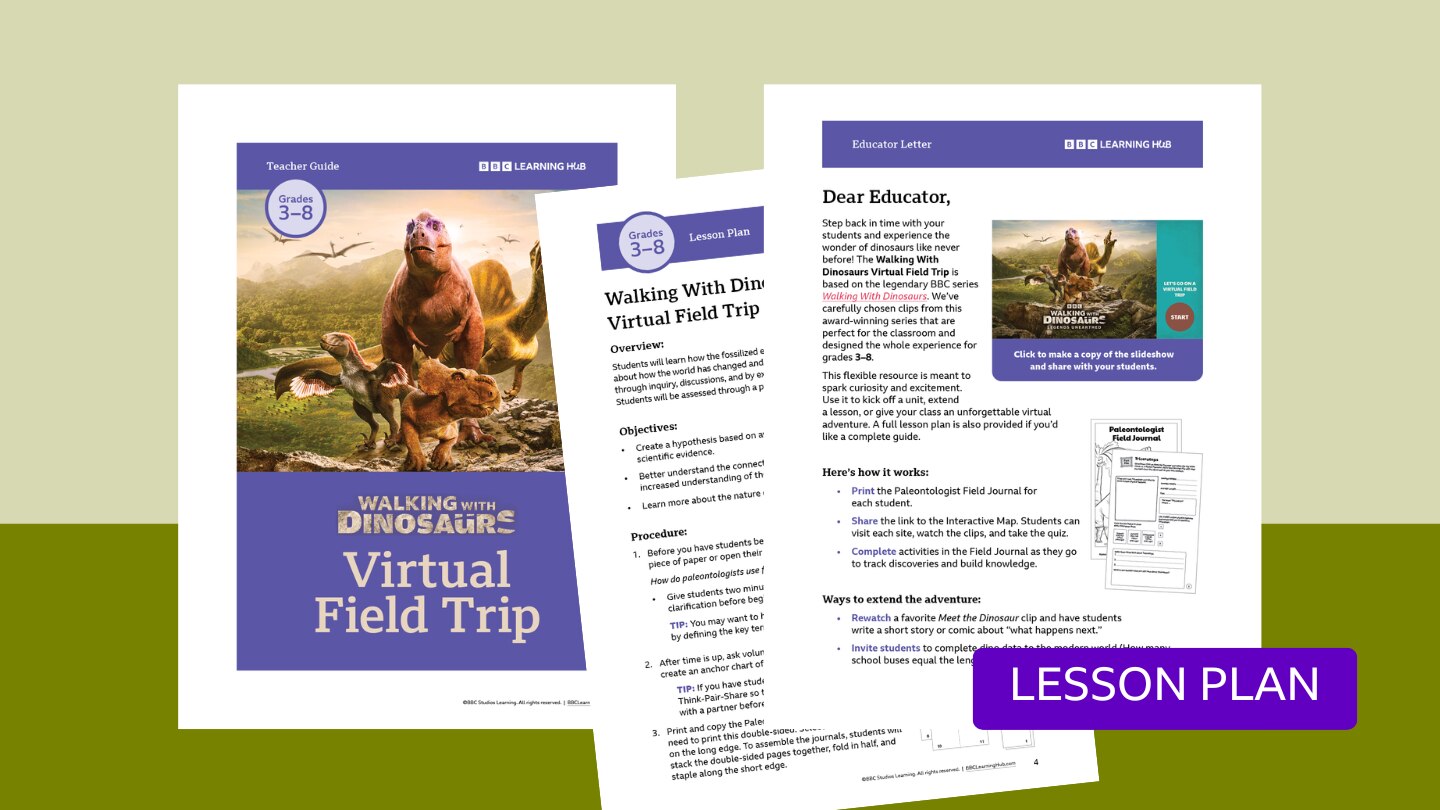
Want to use our Walking With Dinosaurs Virtual Field Trip in your Grade 3-8 classroom? You're going to want our Teacher Guide, too. Inside, you'll find:
- Introductory letter
- Ways to use the virtual field trip
- Extension activities
- Standards alignment
- Full lesson plan with objectives, procedure, and helpful tips
It's all part of our Walking With Dinosaurs Virtual Field Trip!
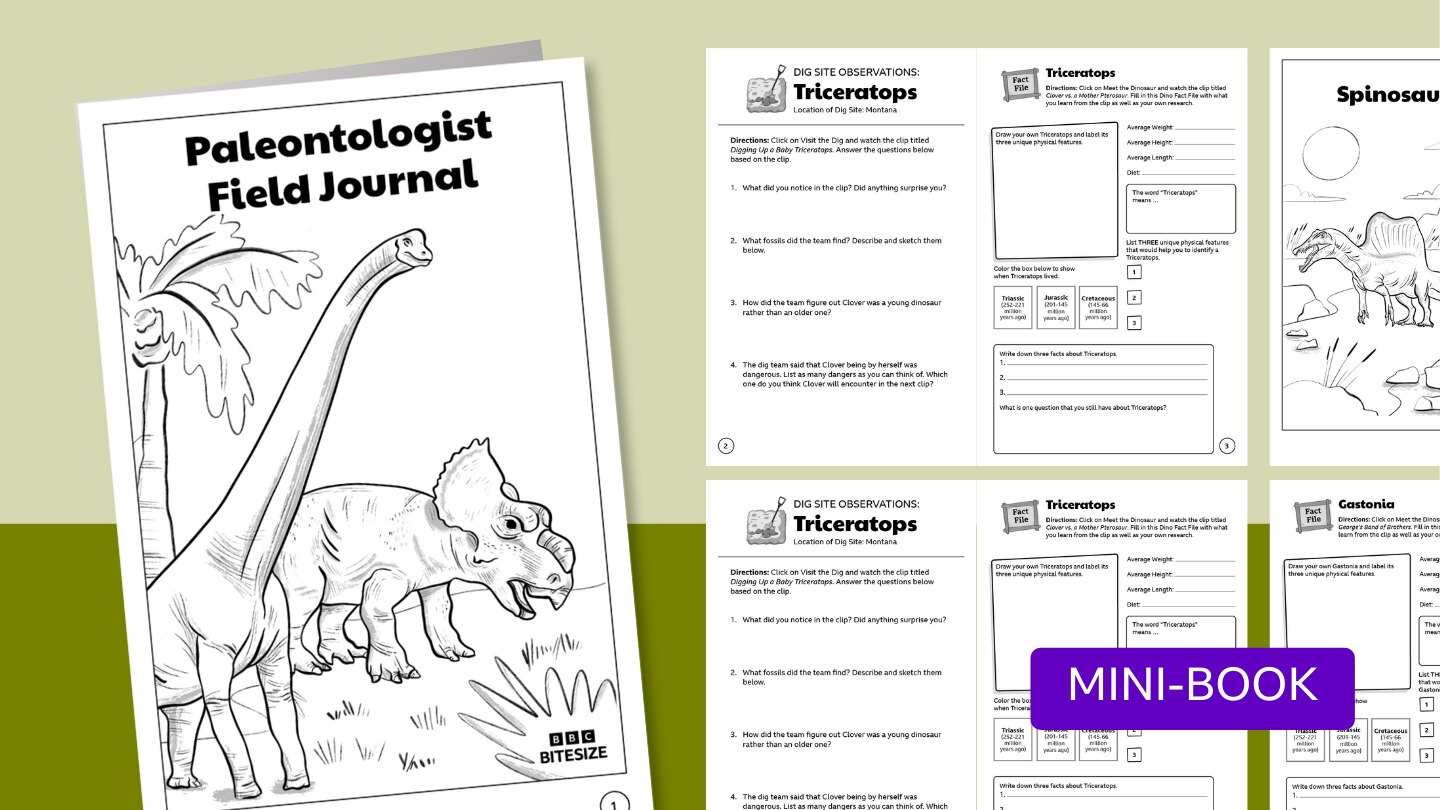
As students explore each dinosaur and dig site combo, they can record their findings in this Paleontologist Field Journal. For each site, students will fill in:
- Dig Site Observations: Answer questions about the Visit the Dig video.
- Fact File: Using information from the Meet the Dinosaur video and your own research, fill in all the boxes.
- Coloring page: Color the detailed scientific drawing of the dinosaur.
It's all part of our Walking With Dinosaurs Virtual Field Trip!
You'll need to print this double-sided. Select the option to flip on the long edge. To assemble the journals, students will stack the double-sided pages together, fold in half, and staple along the short edge.
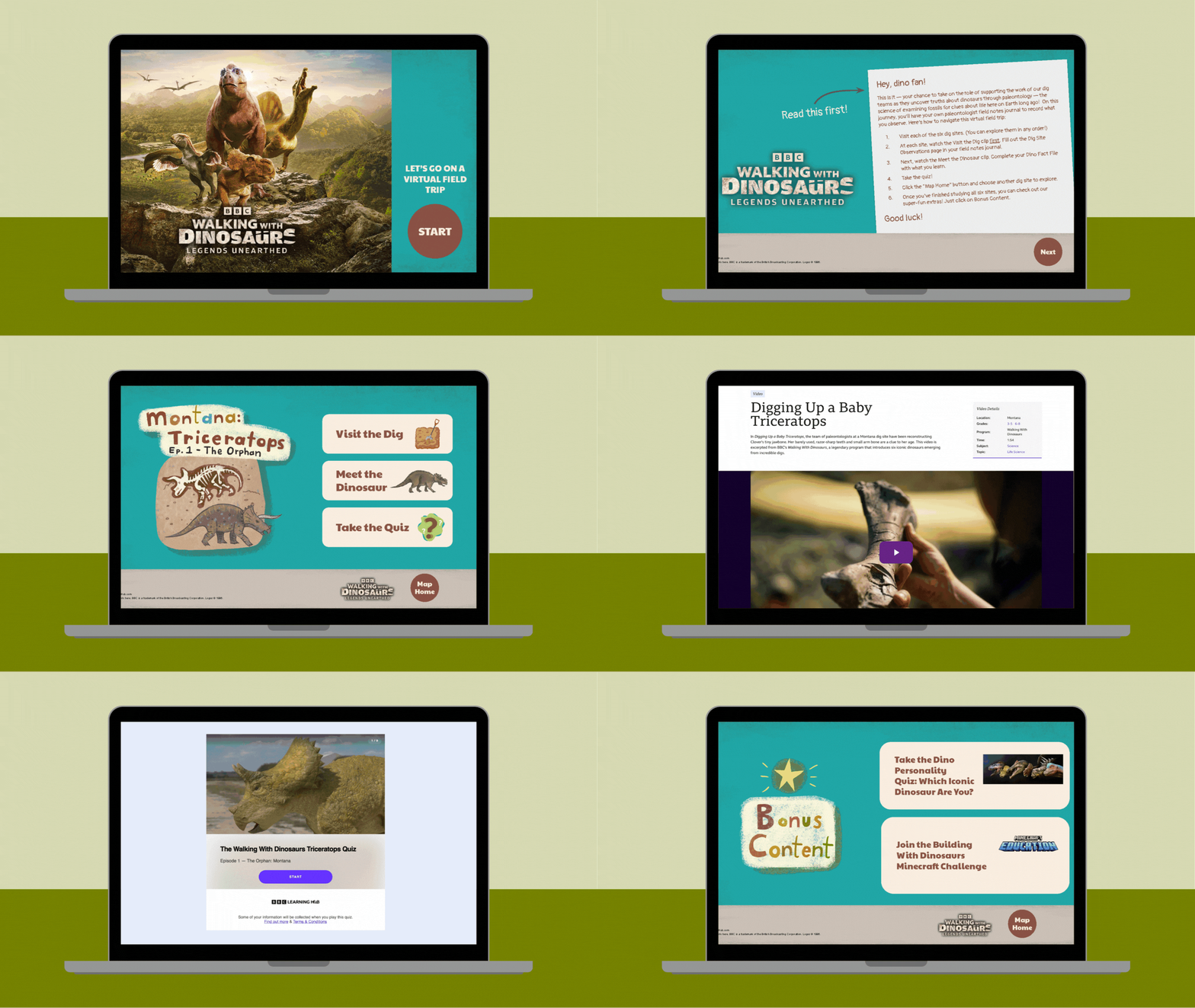
Come along on a prehistoric adventure! When you share this Interactive Map with your students, they'll get kid-friendly directions for how to explore. They can click around the six different dig sites (each featuring one incredible dinosaur), where they'll watch a pair of videos and take a quiz. Make sure you've also printed copies of the Paleontologist Field Journal for them to record their findings. It's all part of our Walking With Dinosaurs Virtual Field Trip!
To start, click on the link below. You'll be invited to make a copy of the Google Slides. You can save it to your Google Classroom and then share it with students so they can explore on their own. They'll want to be in Slideshow mode for this!
Get the Interactive Map
The greatest stories of all time are true.
In Walking to Neptune, a Scale Model of the Solar System, Professor Brian Cox shows us a model of the Solar System that exemplifies how large it is, and how far Neptune is from the Sun’s light and warmth. This video is excerpted from BBC’s Brian Cox’s Adventures in Space and Time, a series that seeks to explain our place in the Universe. Professor Brian Cox looks back on decades of discovery and toward the next frontier in space, pondering the question: What’s next?
Sometimes we like to play together and other times, we want to be by ourselves. And that's OK! Try this lesson, which uses the Bluey episode "The Beach" as the kickoff to a classroom conversation about being alone and with others. The lesson includes printables for three activities in which kids try some activities alone and with a friend, draw a picture of things they like doing alone, and roll a fun Bluey die and share what they'd like to do at each location.
The Beach Episode Summary: When Mum goes for a walk by herself along the beach, Bluey runs to catch up with her, so she can show her a shell she has found.
Watch the episode here! (Click here to watch in Australia.)
Want to use our Walking With Dinosaurs Virtual Field Trip in your Grade 3-8 classroom? You're going to want our Teacher Guide, too. Inside, you'll find:
- Introductory letter
- Ways to use the virtual field trip
- Extension activities
- Standards alignment
- Full lesson plan with objectives, procedure, and helpful tips
It's all part of our Walking With Dinosaurs Virtual Field Trip!
As students explore each dinosaur and dig site combo, they can record their findings in this Paleontologist Field Journal. For each site, students will fill in:
- Dig Site Observations: Answer questions about the Visit the Dig video.
- Fact File: Using information from the Meet the Dinosaur video and your own research, fill in all the boxes.
- Coloring page: Color the detailed scientific drawing of the dinosaur.
It's all part of our Walking With Dinosaurs Virtual Field Trip!
You'll need to print this double-sided. Select the option to flip on the long edge. To assemble the journals, students will stack the double-sided pages together, fold in half, and staple along the short edge.
Come along on a prehistoric adventure! When you share this Interactive Map with your students, they'll get kid-friendly directions for how to explore. They can click around the six different dig sites (each featuring one incredible dinosaur), where they'll watch a pair of videos and take a quiz. Make sure you've also printed copies of the Paleontologist Field Journal for them to record their findings. It's all part of our Walking With Dinosaurs Virtual Field Trip!
To start, click on the link below. You'll be invited to make a copy of the Google Slides. You can save it to your Google Classroom and then share it with students so they can explore on their own. They'll want to be in Slideshow mode for this!