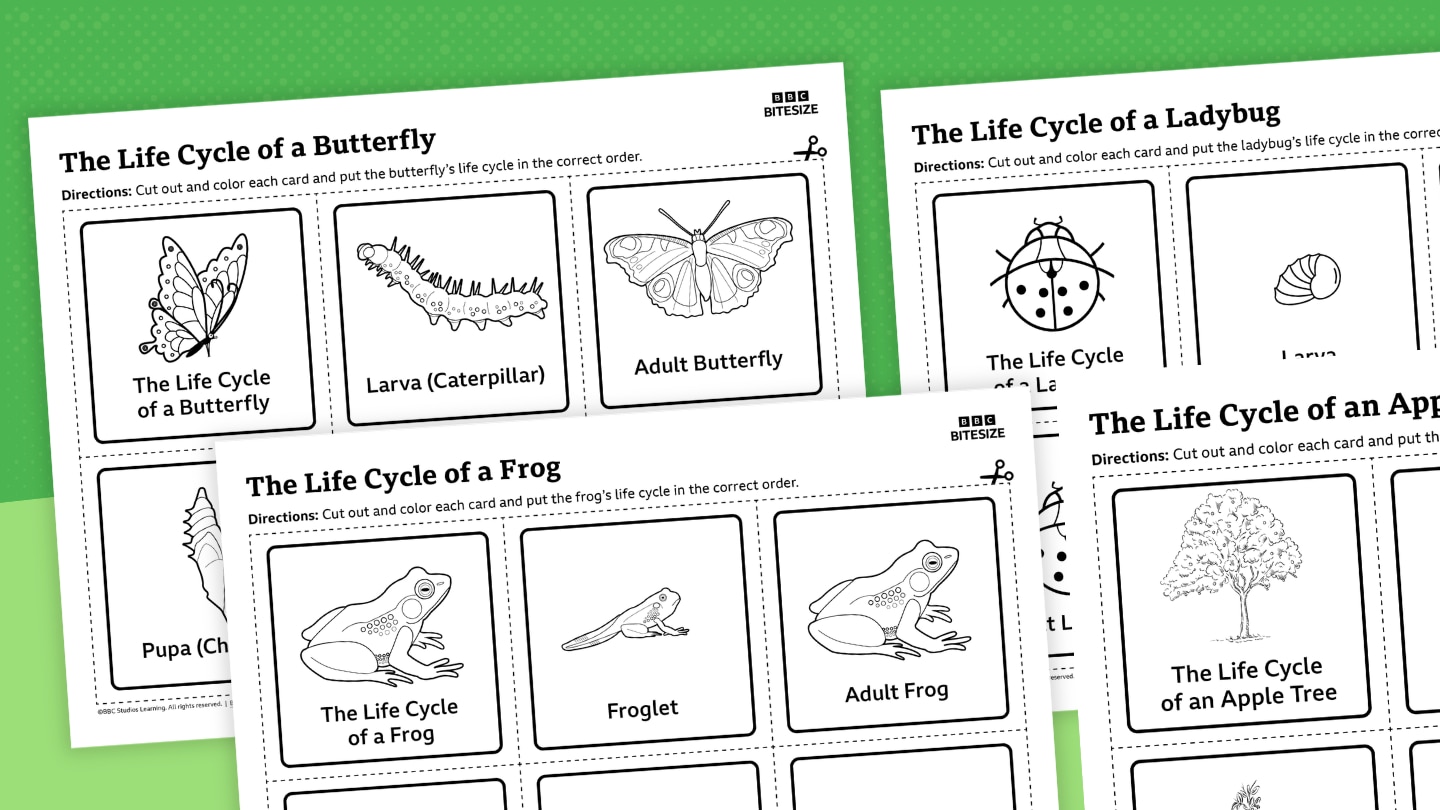
Invite your students to explore the life cycles of common organisms with these life cycle sequencing cards. The cards cover the bean plant, butterfly, birch tree, apple tree, honeybee, ladybug, and frog. They come already mixed up, so kids can color, cut, and put them in order. Use as an introductory task, check for understanding, center activity, or study guide!
As you introduce life cycles, focus on key concepts such as stages of growth, changes in form and function, and the idea that all living things follow a pattern from beginning to end. Encourage students to ask questions, make predictions, and notice patterns across plants and animals.
Teaching life cycles in elementary school is not only standards-based, it's also a great way to help students understand how living things grow and change over time. At this level, students are ready to explore clear, observable stages — like seed to plant or egg to adult—and begin comparing similarities and differences across species.
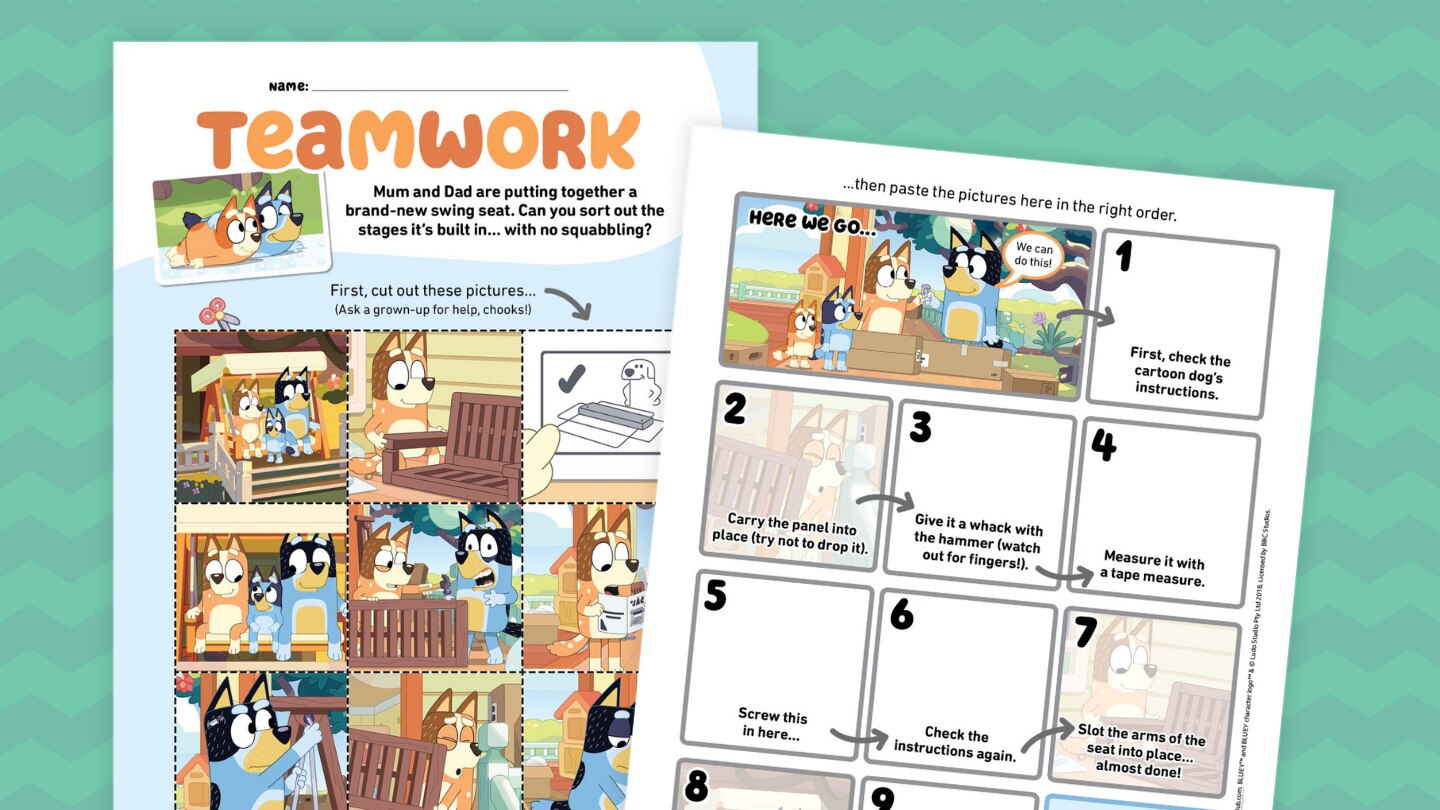
Teamwork makes the swing work! Mum and Dad are putting together a brand-new swing seat. Can you sort out the stages it’s built in... with no squabbling? First, cut out the pictures and then paste them in the right order (use the words in the boxes to help you!).
Inspired by Season 2, Episode 24 "Flatpack": With Mum and Dad assembling the flatpack furniture, the kids improvise games with the discarded wrapping materials. As the flatpack swing-seat takes shape, so does Bluey and Bingo’s mini-world.
Invite your students to explore the life cycles of common organisms with these life cycle sequencing cards. The cards cover the bean plant, butterfly, birch tree, apple tree, honeybee, ladybug, and frog. They come already mixed up, so kids can color, cut, and put them in order. Use as an introductory task, check for understanding, center activity, or study guide!
As you introduce life cycles, focus on key concepts such as stages of growth, changes in form and function, and the idea that all living things follow a pattern from beginning to end. Encourage students to ask questions, make predictions, and notice patterns across plants and animals.
Teaching life cycles in elementary school is not only standards-based, it's also a great way to help students understand how living things grow and change over time. At this level, students are ready to explore clear, observable stages — like seed to plant or egg to adult—and begin comparing similarities and differences across species.
Teamwork makes the swing work! Mum and Dad are putting together a brand-new swing seat. Can you sort out the stages it’s built in... with no squabbling? First, cut out the pictures and then paste them in the right order (use the words in the boxes to help you!).
Inspired by Season 2, Episode 24 "Flatpack": With Mum and Dad assembling the flatpack furniture, the kids improvise games with the discarded wrapping materials. As the flatpack swing-seat takes shape, so does Bluey and Bingo’s mini-world.