
In Otters Find Strength in Numbers, narrator Sir David Attenborough explains that, unlike most otters, Indian River otters live in social groups. Adults share food with the cubs, and the group forms an effective defense against a crocodile. This video is excerpted from BBC's Planet Earth, a breathtaking documentary series that highlights the natural wonders of our planet.
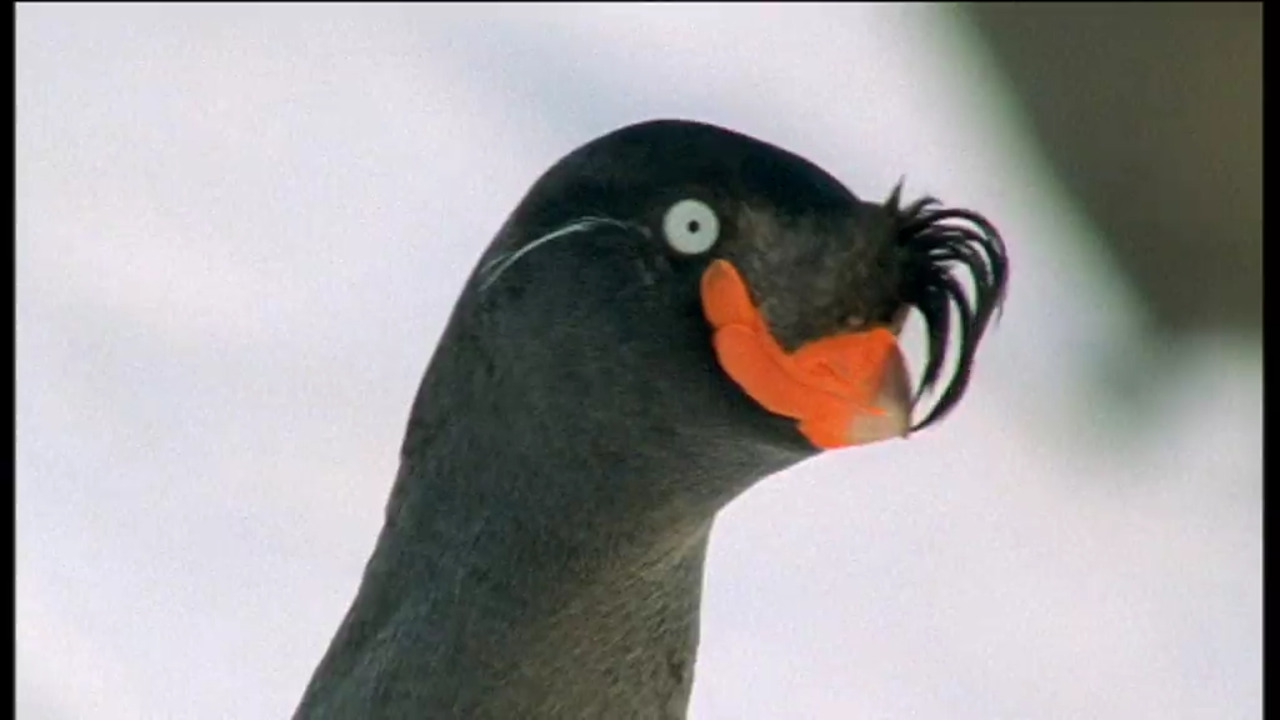
In The Crested Auklets' Safety in Numbers, narrator Sir David Attenborough describes how the crested auklet lives and uses its sheer numbers to escape predators. This video is excerpted from BBC’s Blue Planet, a definitive documentary series diving into the mysterious depths of the sea to discover the natural history of the world’s oceans and the rarely seen marine life that reside there.
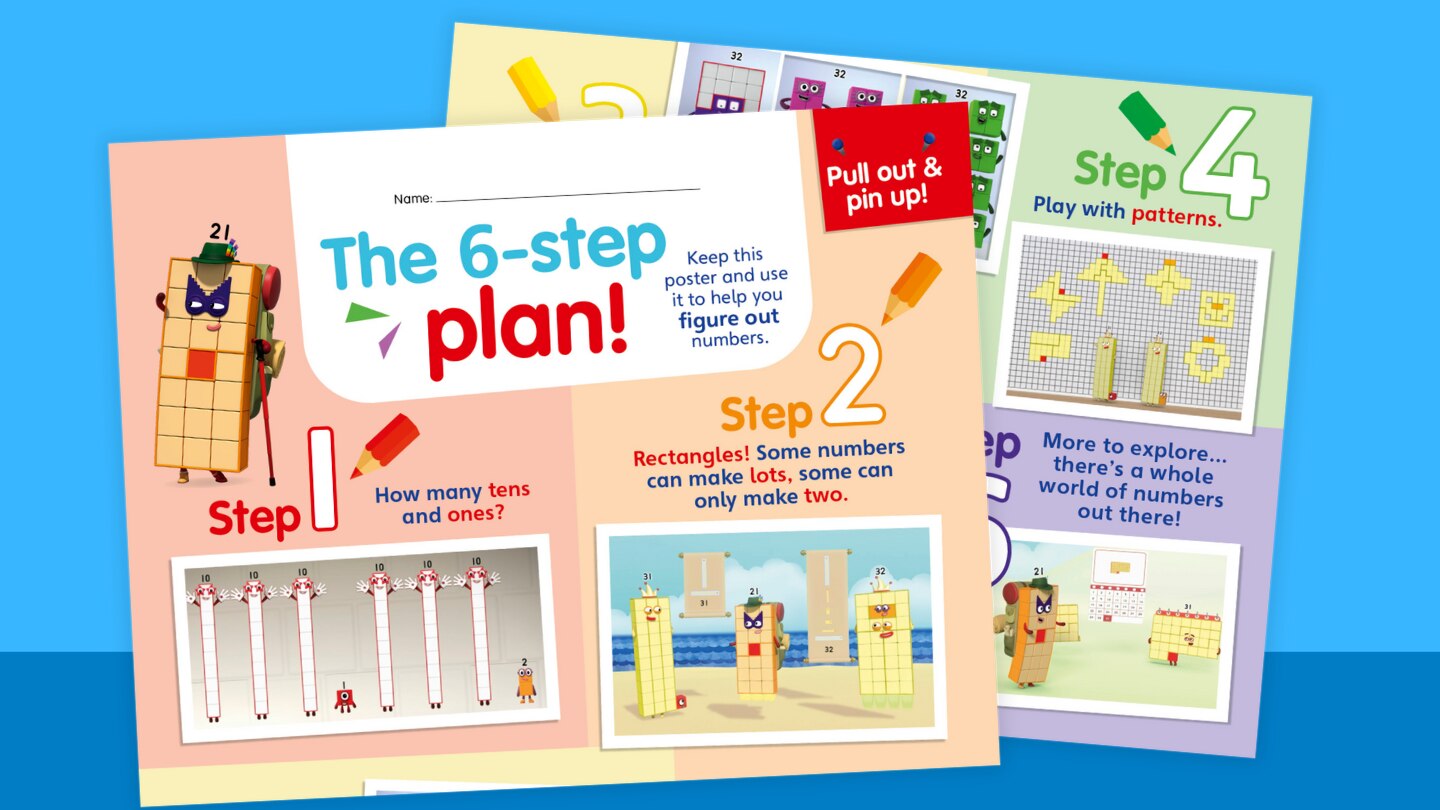
Keep this poster and use it to help you figure out numbers.
Step 1: How many tens and ones?
Step 2: Rectangles! Some numbers can make lots, some can only make two.
Step 3: Look inside! How many parts or teams?
Step 4: Play with patterns.
Step 5: Which clubs? Odd Blocks, Even Tops, Super-Rectangle, Square, or Prime?
Step 6: More to explore... there's a whole world of numbers out there!
Watch full episodes of Numberblocks on their official YouTube channel!
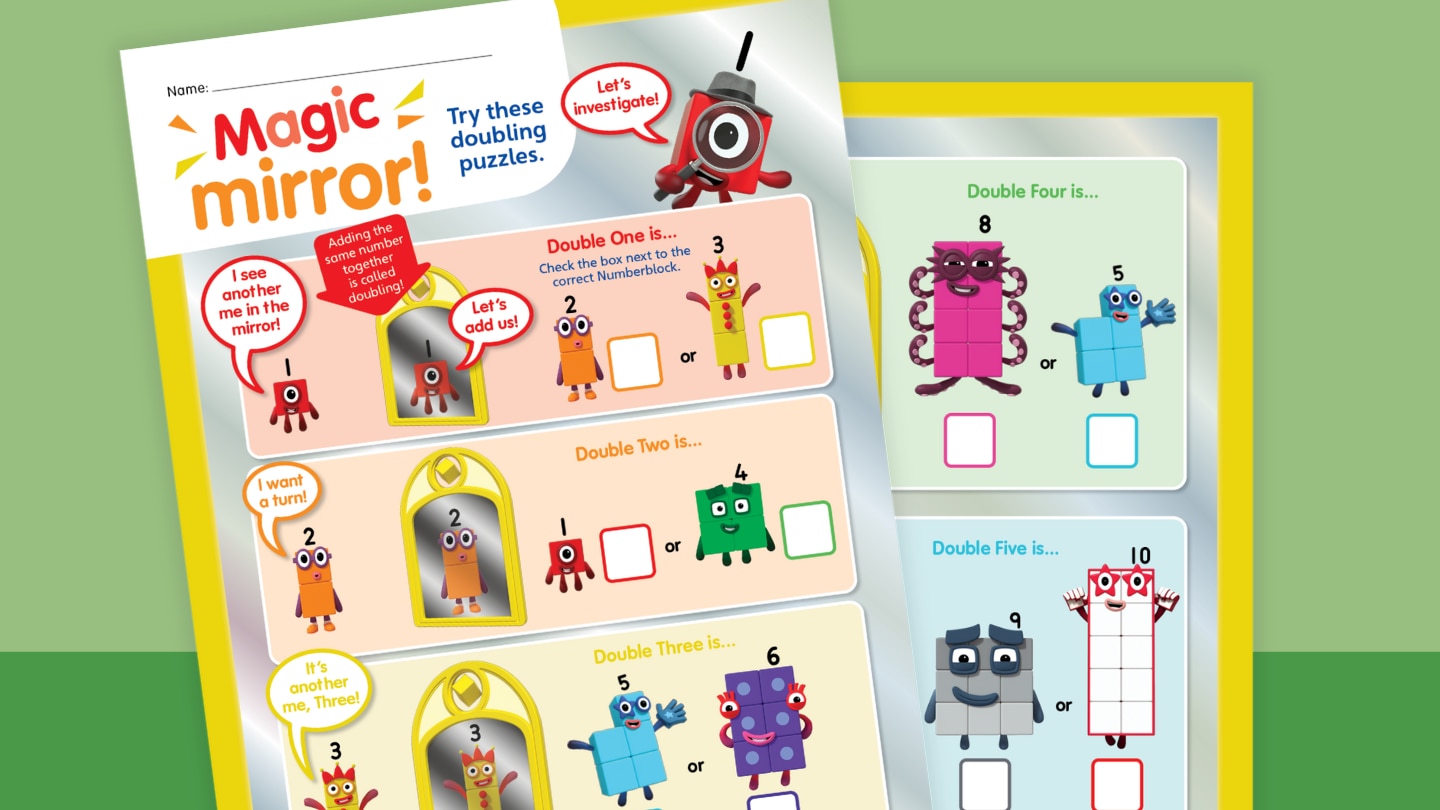
Adding the same number together is called doubling. Try these doubling puzzles. Check the box next to the correct Numberblock.
Double One is...
Double Two is...
Double Three is...
Double Four is...
Double Five is...
Doubles are handy to know for adding up quickly. Can you find any doubles around your home, e.g. eggs in their boxes or coins?
Watch full episodes of Numberblocks on their official YouTube channel!
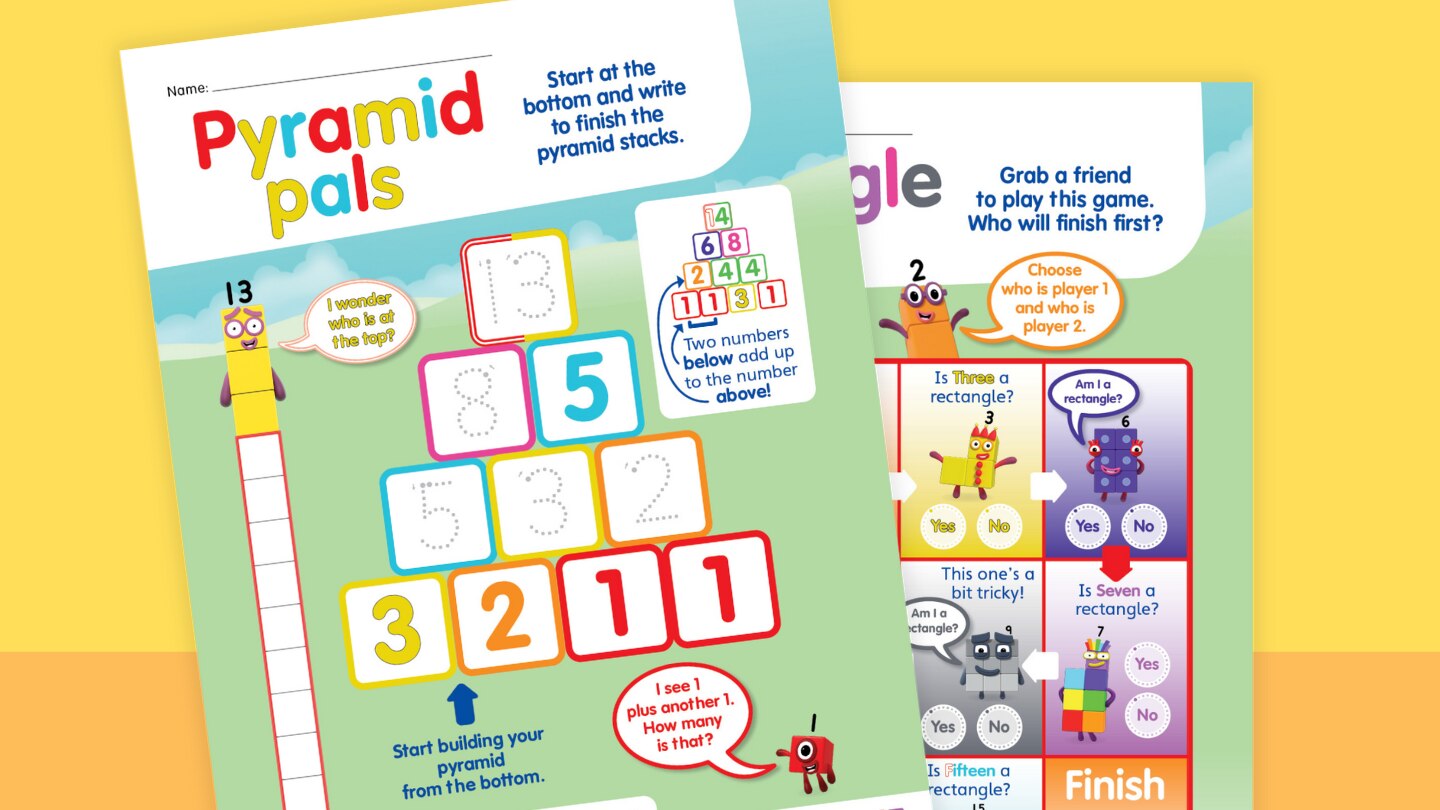
Start at the bottom and write to finish the pyramid stacks. Two numbers below add up to the number above. Use the number line to help you! Got it? Let's try some bigger numbers!
Watch full episodes of Numberblocks on their official YouTube channel!
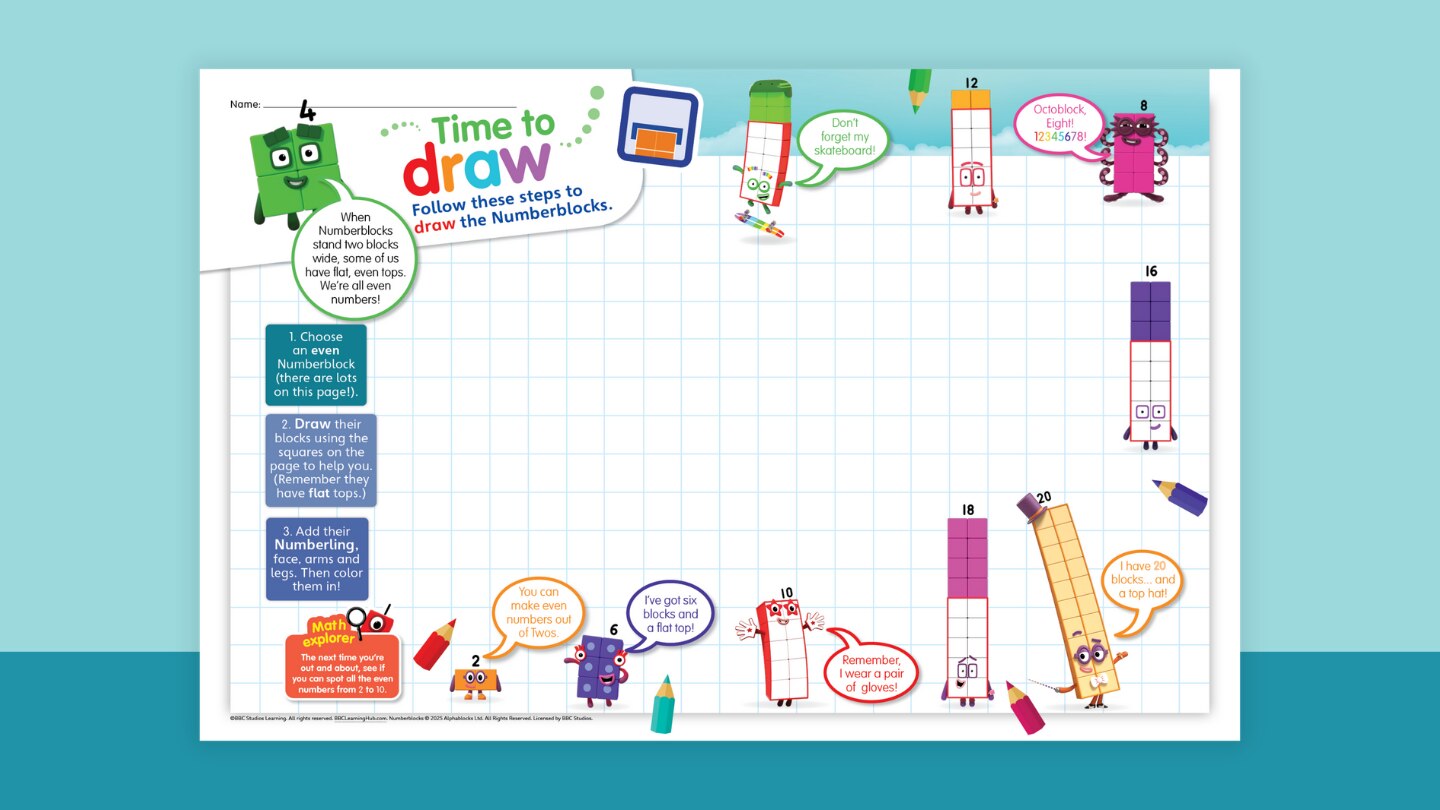
Time to draw! When the Numberblocks stand two blocks wide, some of us have flat, even tops. We're all even numbers!
- Choose an even Numberblock (there are lots on this page!).
- Draw their blocks using the squares on the page to help you (Remember they have flat tops.)
- Add their Numberling, face, arms, and legs. Then color them in!
Watch full episodes of Numberblocks on their official YouTube channel!
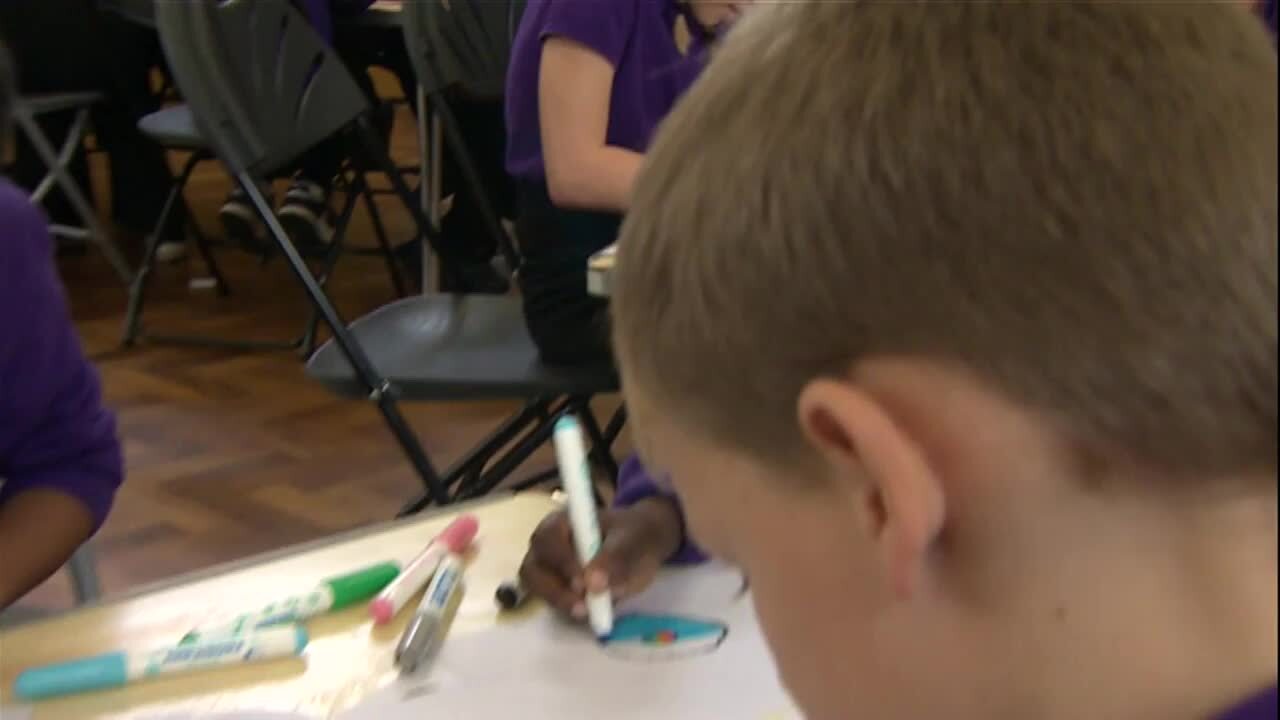
You’ve probably never thought about combining math and art class, but maybe now, you will! This teacher shares his new approach to math, where he uses colors to represent different numbers.
He assigned 10 numbers to 10 different colors — zero is white, one is black, two is red, and so on. That means combinations of numbers become combinations of colors. The result is an equation that’s educational and pretty at the same time!
What starts as multiplication or patterns quickly begins to look more like art class than math class. But behind the colors is real number sense, memory tricks, and a whole new way of thinking about equations. Turns out math might be a lot more visual — and creative — than most people realize.
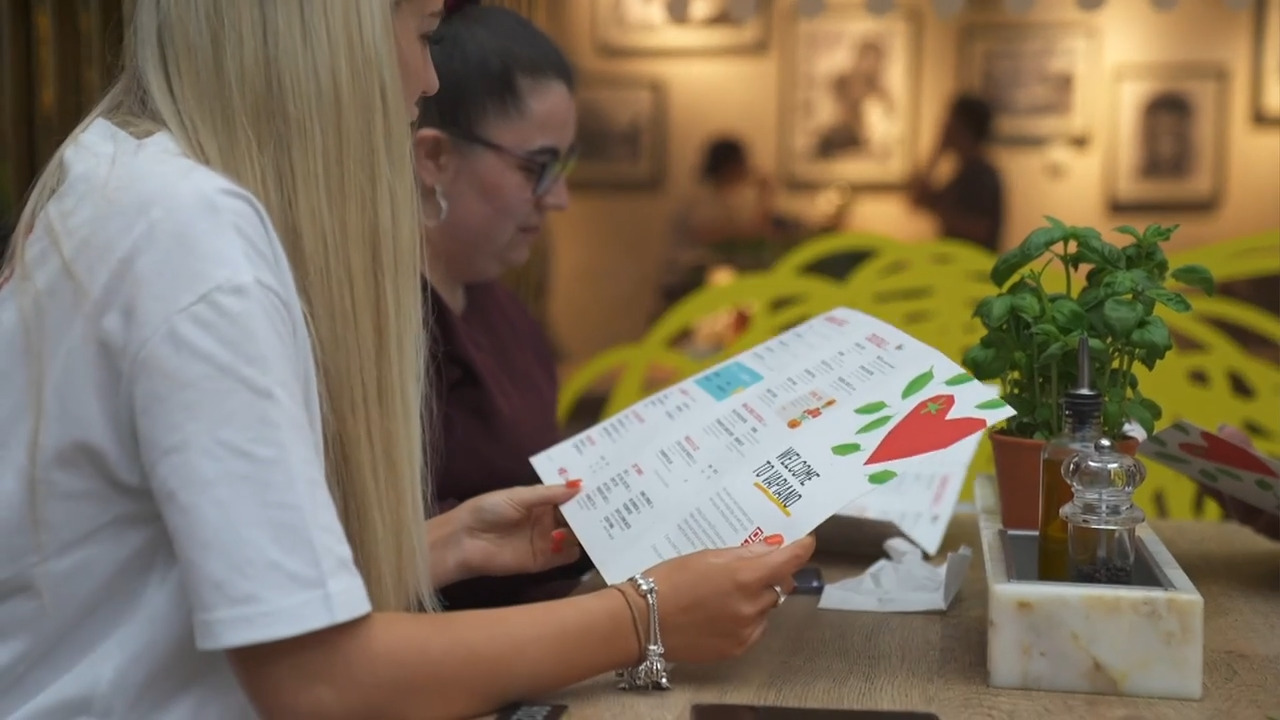
Since 2022, many big restaurant chains in the UK have started showing calorie counts right on their menus. It only takes a small amount of space, but it’s sparked a lot of opinions.
Some people think it’s really helpful. If you’re trying to understand what you’re eating or make choices that fit your goals, seeing the numbers can make things clearer. It can also help people eat out with friends without feeling like they’re totally guessing.
But others say it can have a downside. For some people, especially those who already feel stressed about food, seeing calorie numbers can make meals feel less enjoyable or even a bit stressful. Instead of focusing on taste, sharing, or just enjoying food, it can shift attention to the numbers.
Research suggests that calorie labels might slightly change what people order — by about 2% fewer calories on average per meal. That’s only a small difference per meal, but over time, small changes can add up.
In Otters Find Strength in Numbers, narrator Sir David Attenborough explains that, unlike most otters, Indian River otters live in social groups. Adults share food with the cubs, and the group forms an effective defense against a crocodile. This video is excerpted from BBC's Planet Earth, a breathtaking documentary series that highlights the natural wonders of our planet.
In The Crested Auklets' Safety in Numbers, narrator Sir David Attenborough describes how the crested auklet lives and uses its sheer numbers to escape predators. This video is excerpted from BBC’s Blue Planet, a definitive documentary series diving into the mysterious depths of the sea to discover the natural history of the world’s oceans and the rarely seen marine life that reside there.
Keep this poster and use it to help you figure out numbers.
Step 1: How many tens and ones?
Step 2: Rectangles! Some numbers can make lots, some can only make two.
Step 3: Look inside! How many parts or teams?
Step 4: Play with patterns.
Step 5: Which clubs? Odd Blocks, Even Tops, Super-Rectangle, Square, or Prime?
Step 6: More to explore... there's a whole world of numbers out there!
Watch full episodes of Numberblocks on their official YouTube channel!
Adding the same number together is called doubling. Try these doubling puzzles. Check the box next to the correct Numberblock.
Double One is...
Double Two is...
Double Three is...
Double Four is...
Double Five is...
Doubles are handy to know for adding up quickly. Can you find any doubles around your home, e.g. eggs in their boxes or coins?
Watch full episodes of Numberblocks on their official YouTube channel!
Start at the bottom and write to finish the pyramid stacks. Two numbers below add up to the number above. Use the number line to help you! Got it? Let's try some bigger numbers!
Watch full episodes of Numberblocks on their official YouTube channel!
Time to draw! When the Numberblocks stand two blocks wide, some of us have flat, even tops. We're all even numbers!
- Choose an even Numberblock (there are lots on this page!).
- Draw their blocks using the squares on the page to help you (Remember they have flat tops.)
- Add their Numberling, face, arms, and legs. Then color them in!
Watch full episodes of Numberblocks on their official YouTube channel!
You’ve probably never thought about combining math and art class, but maybe now, you will! This teacher shares his new approach to math, where he uses colors to represent different numbers.
He assigned 10 numbers to 10 different colors — zero is white, one is black, two is red, and so on. That means combinations of numbers become combinations of colors. The result is an equation that’s educational and pretty at the same time!
What starts as multiplication or patterns quickly begins to look more like art class than math class. But behind the colors is real number sense, memory tricks, and a whole new way of thinking about equations. Turns out math might be a lot more visual — and creative — than most people realize.
Since 2022, many big restaurant chains in the UK have started showing calorie counts right on their menus. It only takes a small amount of space, but it’s sparked a lot of opinions.
Some people think it’s really helpful. If you’re trying to understand what you’re eating or make choices that fit your goals, seeing the numbers can make things clearer. It can also help people eat out with friends without feeling like they’re totally guessing.
But others say it can have a downside. For some people, especially those who already feel stressed about food, seeing calorie numbers can make meals feel less enjoyable or even a bit stressful. Instead of focusing on taste, sharing, or just enjoying food, it can shift attention to the numbers.
Research suggests that calorie labels might slightly change what people order — by about 2% fewer calories on average per meal. That’s only a small difference per meal, but over time, small changes can add up.