In Memory and the Brain’s Storage System, meet individuals with Highly Superior Autobiographical Memory (HSAM), a condition that allows them to recall dates, events, and personal memories in vivid detail. Explore how these individuals, like Tyler and Tracy, are able to access memories as if they happened yesterday, and how researchers are studying their brains to understand how memory is formed and stored. This video is excerpted from BBC’s The World’s Most Extraordinary People, a documentary series revealing how rare medical conditions inspire groundbreaking scientific discoveries.
In The Impact of Screens on Our Vision and Memory, host Harith Iskander explores how smartphones and other screen devices are affecting our eyes and memory. When we hold our phones close to our faces, it strains our eyes and can cause them to become more elongated, leading to vision problems like myopia (nearsightedness). Additionally, overusing technology can also impact how the brain stores and processes information. This video is excerpted from BBC’s Got Science?, a science magazine series that explores and explains science in everyday life.
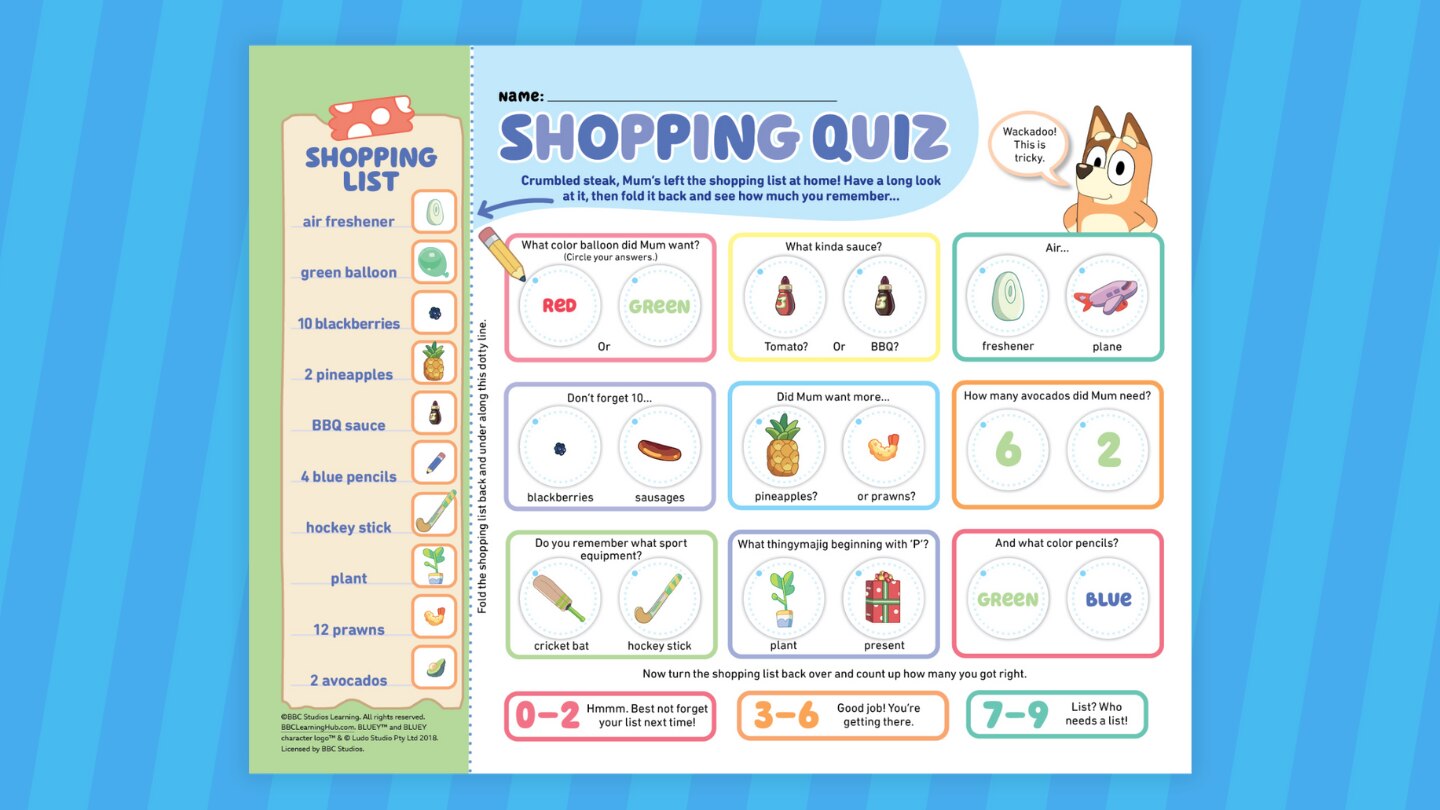
Crumbled steak! Mum's left the shopping list at home! Have a long look at her list, then fold it back and see how much you remember:
- What color balloon did Mum want? Red or green
- How many avocados did Mum need? 6 or 2
- Do you remember what sport equipment? Cricket bat or hockey stick.
Turn the shopping list back over and count up how many you got right. How did you do?
In Memory and the Brain’s Storage System, meet individuals with Highly Superior Autobiographical Memory (HSAM), a condition that allows them to recall dates, events, and personal memories in vivid detail. Explore how these individuals, like Tyler and Tracy, are able to access memories as if they happened yesterday, and how researchers are studying their brains to understand how memory is formed and stored. This video is excerpted from BBC’s The World’s Most Extraordinary People, a documentary series revealing how rare medical conditions inspire groundbreaking scientific discoveries.
In The Impact of Screens on Our Vision and Memory, host Harith Iskander explores how smartphones and other screen devices are affecting our eyes and memory. When we hold our phones close to our faces, it strains our eyes and can cause them to become more elongated, leading to vision problems like myopia (nearsightedness). Additionally, overusing technology can also impact how the brain stores and processes information. This video is excerpted from BBC’s Got Science?, a science magazine series that explores and explains science in everyday life.
Crumbled steak! Mum's left the shopping list at home! Have a long look at her list, then fold it back and see how much you remember:
- What color balloon did Mum want? Red or green
- How many avocados did Mum need? 6 or 2
- Do you remember what sport equipment? Cricket bat or hockey stick.
Turn the shopping list back over and count up how many you got right. How did you do?