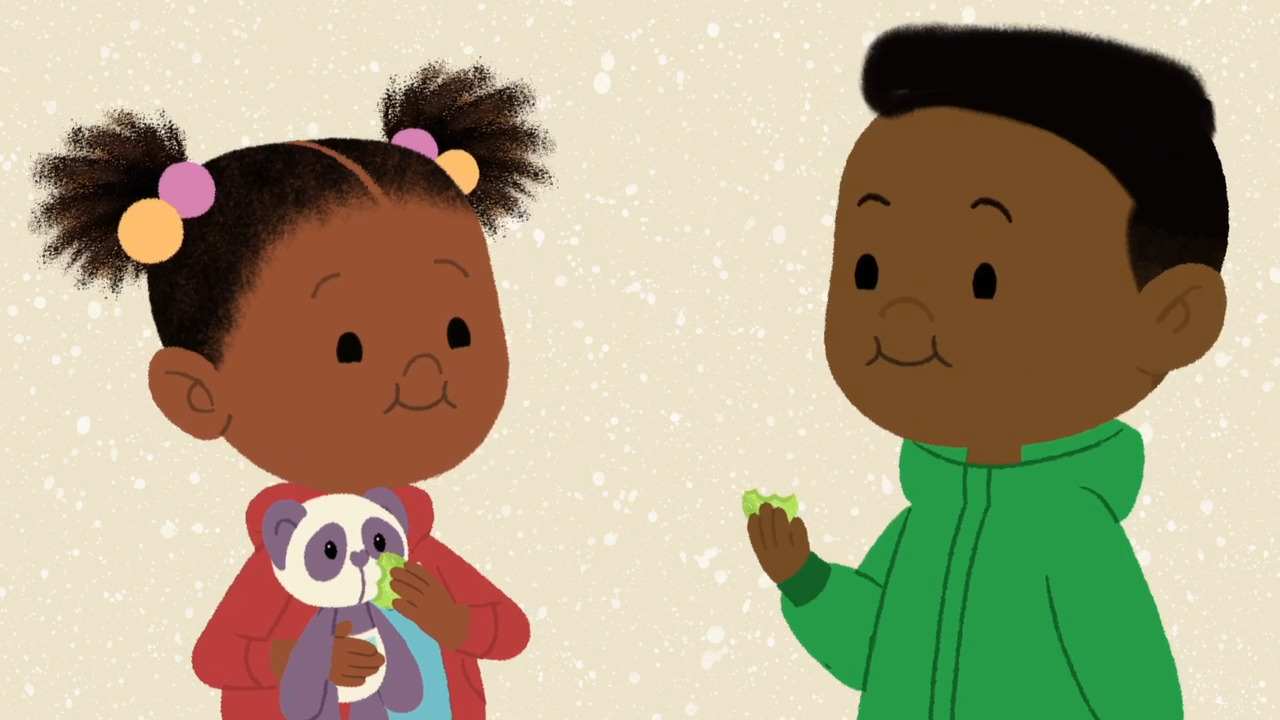
In JoJo and Gran Gran Celebrate Creole Day, JoJo and her grandmother attend a Creole Day celebration. Jojo learns songs in the Creole language. Real kids learn a dance and get dressed to perform! This video is excerpted from BBC’s JoJo & Gran Gran, a children's animated television series following JoJo, an inquisitive and cheerful 4-and-a-half-year-old girl and her loving Gran Gran, who always has something new to teach her.
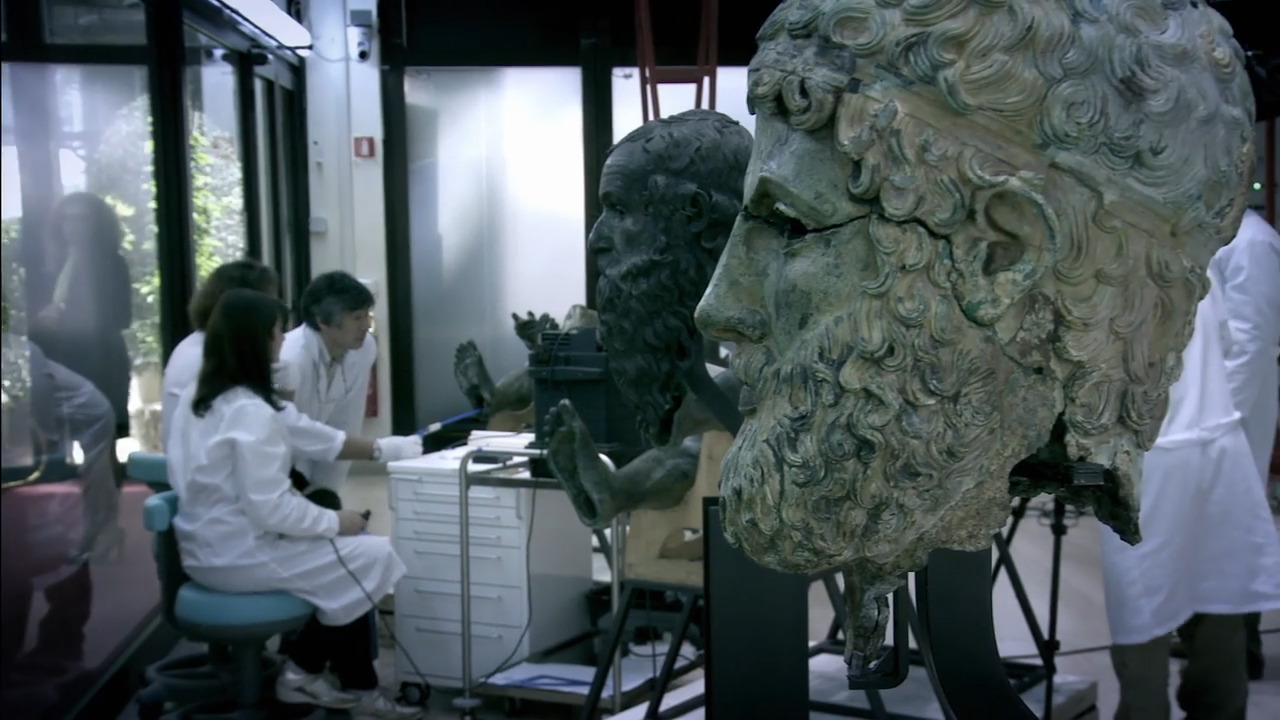
In Democracy and Conflict in Ancient Greece, archaeologist and historian Richard Miles explains the duality of ancient Greece. Advances in philosophy, democracy, and the arts coexisted with political discord, social unrest, and violent power struggles. This video is excerpted from BBC’s Ancient Worlds, an epic series with archaeologist and historian Richard Miles as he explores the roots of civilization from Mesopotamia to the fall of the Roman Empire.
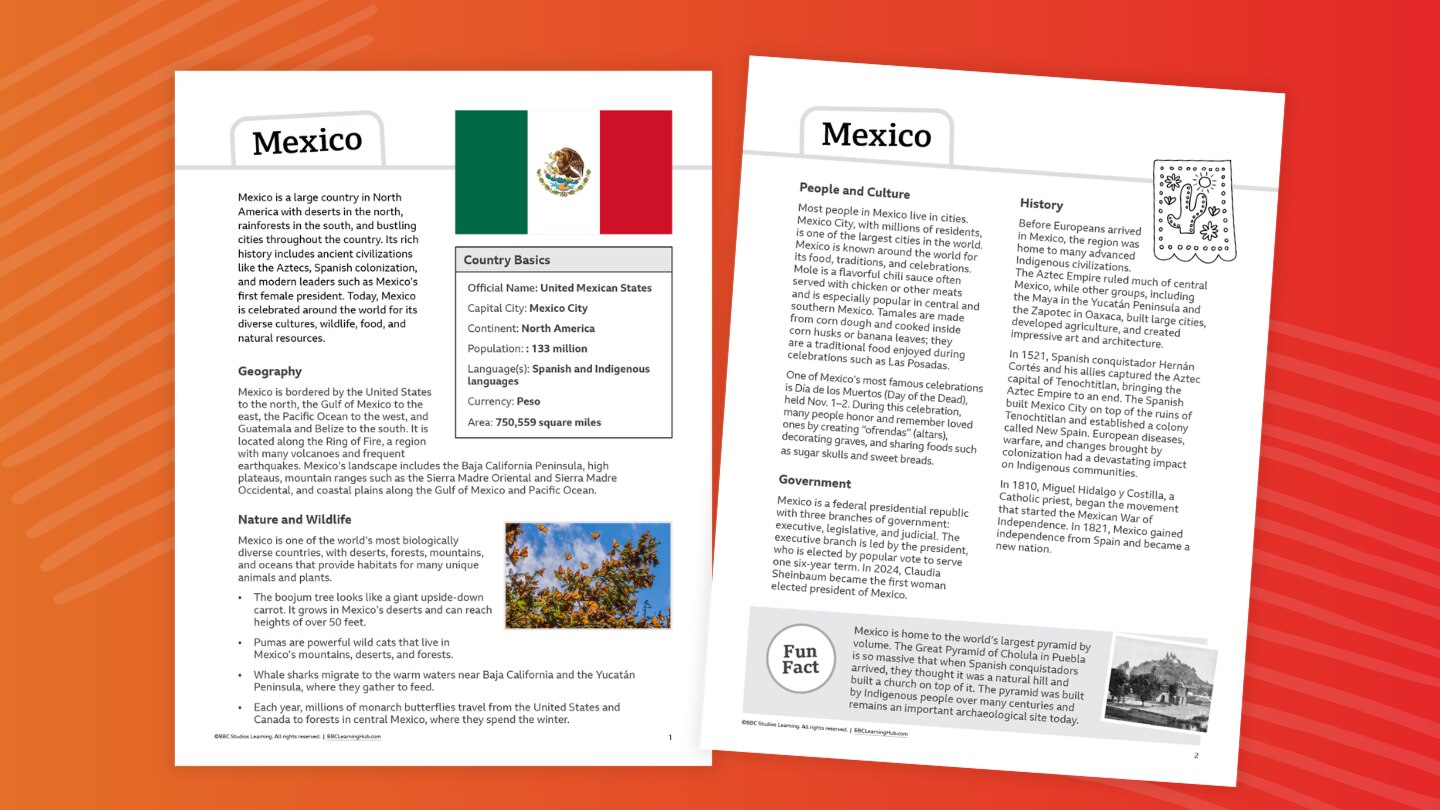
What country is home to ancient pyramids, colorful monarch butterflies, towering volcanoes, and one of the world’s most famous celebrations? Meet Mexico, a country where ancient civilizations, diverse landscapes, and vibrant traditions come together.
From the Aztec and Maya to pumas and whale sharks, Mexico has a remarkable story to tell. Explore the civilizations that shaped the country, discover how Mexico gained independence from Spain, and learn about its food, festivals, languages, government, and cities. You’ll also discover how deserts, mountains, jungles, and coastlines provide habitats for an amazing variety of plants and animals.
Teachers and parents, you can use this fact file to:
- Introduce a geography or social studies unit
- Support nonfiction reading practice
- Compare countries and cultures
- Complete map and research activities
- Prepare students for projects or presentations (use our country report template!)
- Pair with videos, articles, or other informational texts (see Related Resources below)
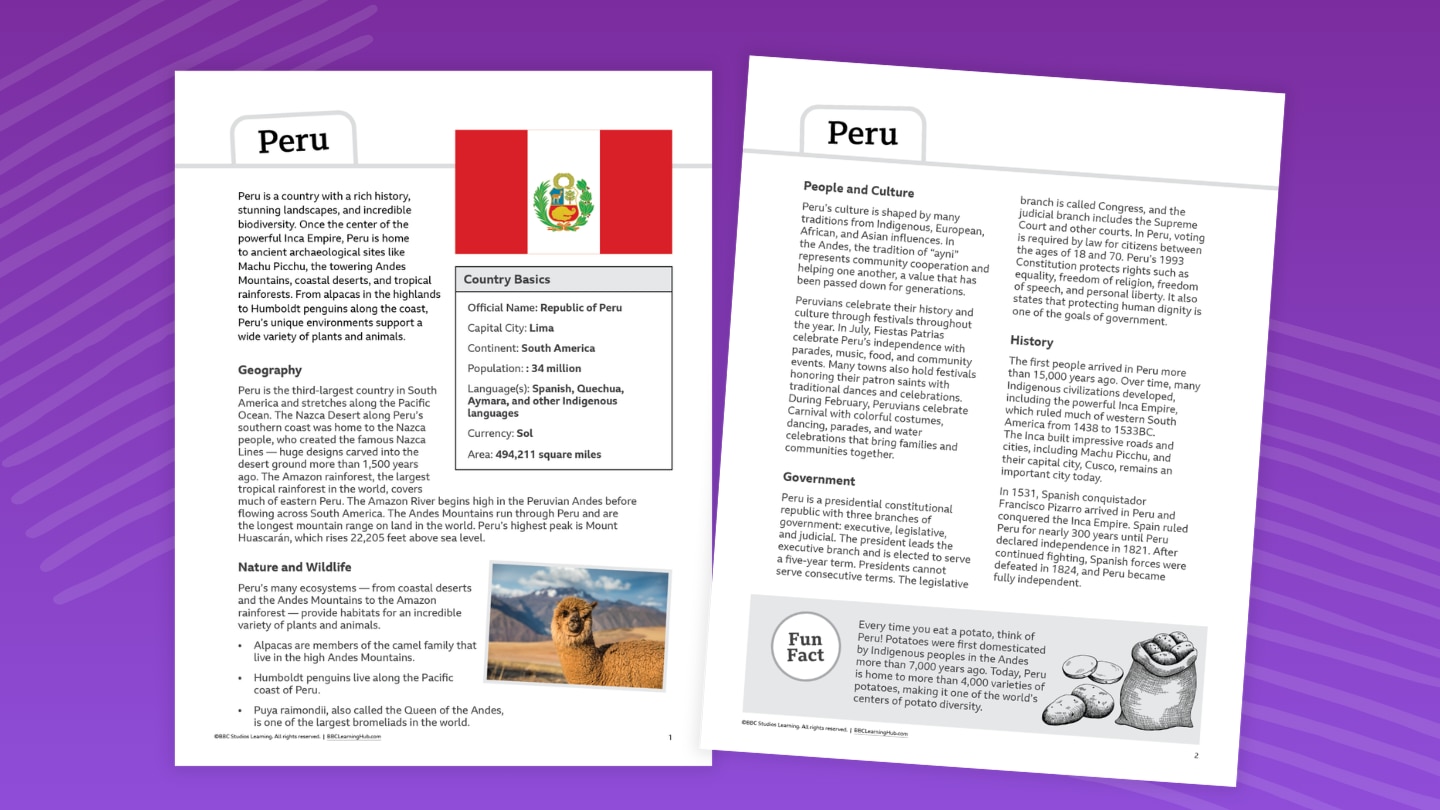
What country is home to the Inca Empire, the Andes Mountains, and more than 3,000 varieties of potatoes? Meet Peru, a country where ancient civilizations and incredible natural landscapes come together.
From Machu Picchu and the ancient city of Cusco to alpacas and the towering Puya Raimondi plant, Peru is full of remarkable discoveries. Explore the civilizations that flourished here, learn how Spanish colonization changed the country, and discover Peru’s languages, traditions, foods, and government. You’ll also travel from the Pacific coast to the high Andes and deep into the Amazon to see how geography shapes life in Peru.
Teachers and parents, you can use this fact file to:
- Introduce a geography or social studies unit
- Support nonfiction reading practice
- Compare countries and cultures
- Complete map and research activities
- Prepare students for projects or presentations (use our country report template!)
- Pair with videos, articles, or other informational texts (see Related Resources below)
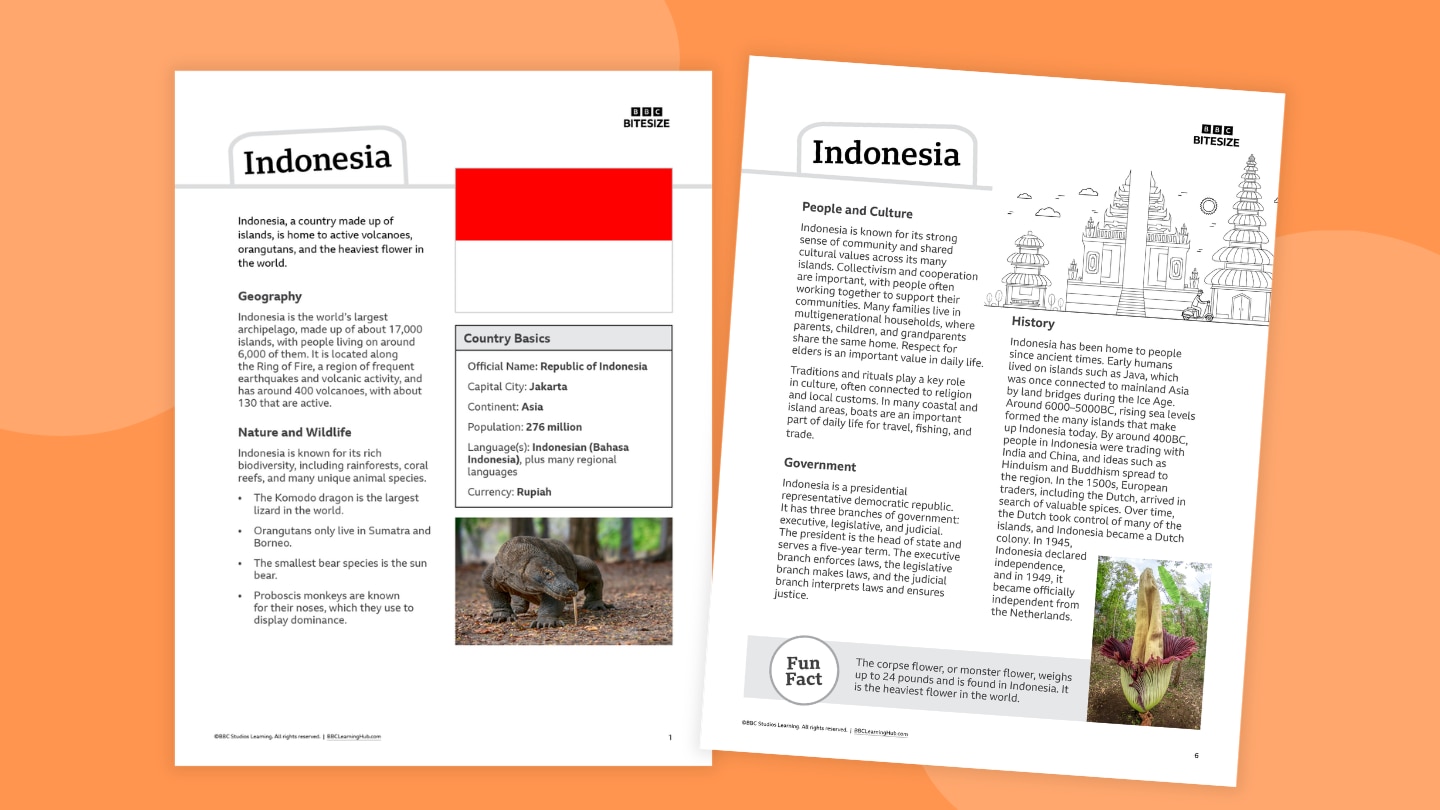
What country is made up of thousands of islands and sits along the Pacific Ring of Fire? Meet Indonesia, an island nation filled with volcanoes, rainforests, coral reefs, and some of the most unusual animals on Earth.
From Komodo dragons and orangutans to vibrant coral reefs and towering volcanoes, Indonesia’s islands are packed with natural wonders. Discover how the country’s geography has shaped the way people live, explore its history and government, and learn about its many languages, traditions, foods, and celebrations. You’ll also meet some of Indonesia’s incredible wildlife.
Teachers and parents, you can use this fact file to:
- Introduce a geography or social studies unit
- Support nonfiction reading practice
- Compare countries and cultures
- Complete map and research activities
- Prepare students for projects or presentations (use our country report template!)
- Pair with videos, articles, or other informational texts (see Related Resources below)
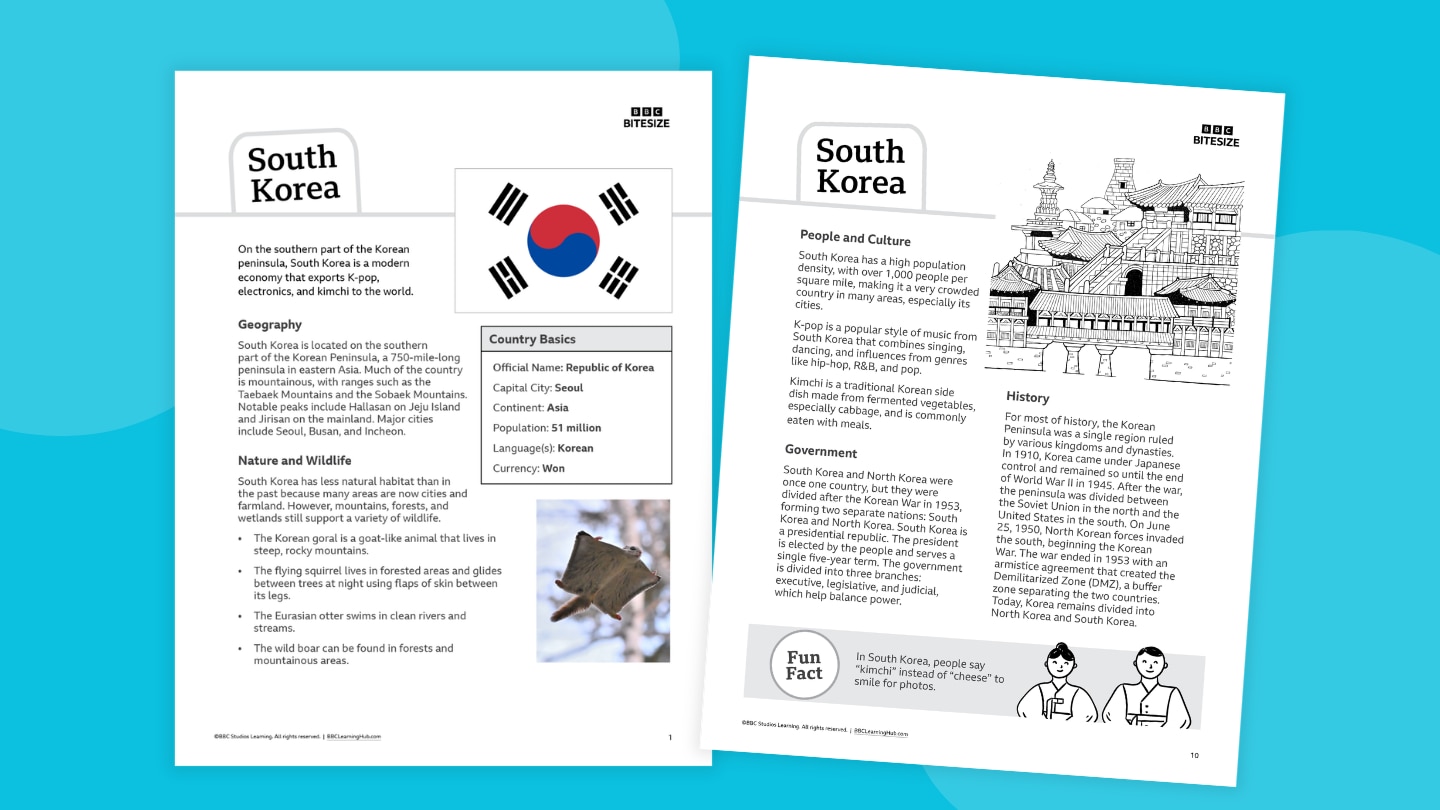
How did a small country on a mountainous peninsula become a global leader in technology, entertainment, and culture? Meet South Korea, a country where ancient traditions and modern innovation are woven together.
From the mountains and islands to the busy streets of Seoul, South Korea has much to explore. Learn how Korea’s history shaped the country it is today, discover the traditions and foods that bring people together, and explore South Korea’s government, economy, language, and culture. You’ll also meet native animals —including a flying squirrel — and discover how wildlife survives in a country where people and cities are never far away.
Teachers and parents, you can use this fact file to:
- Introduce a geography or social studies unit
- Support nonfiction reading practice
- Compare countries and cultures
- Complete map and research activities
- Prepare students for projects or presentations (use our country report template!)
- Pair with videos, articles, or other informational texts (see Related Resources below)
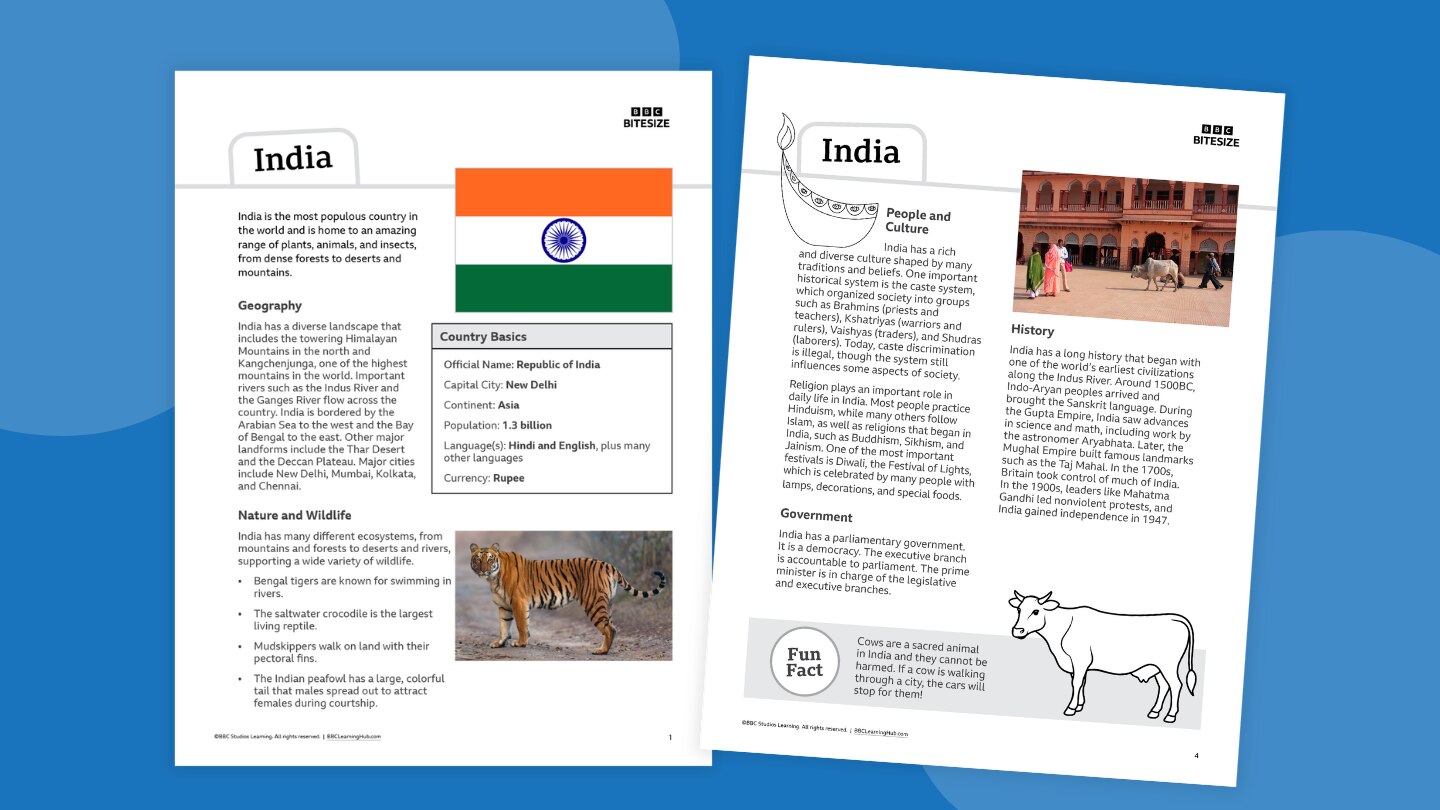
What country is home to more than a billion people, hundreds of languages, the Himalayan Mountains, and some of the world’s most iconic animals? Meet India, a country with an extraordinary mix of landscapes, cultures, religions, and traditions.
From Bengal tigers and colorful peafowl to the Taj Mahal and the mighty Himalayas, India is full of fascinating stories and discoveries. Explore the civilizations and empires that shaped its history, learn about Hinduism and other religions that began there, and discover the foods, festivals, languages, and traditions that make India unique. You’ll also explore the country’s incredible wildlife.
Teachers and parents, you can use this fact file to:
- Introduce a geography or social studies unit
- Support nonfiction reading practice
- Compare countries and cultures
- Complete map and research activities
- Prepare students for projects or presentations (use our country report template!)
- Pair with videos, articles, or other informational texts (see Related Resources below)
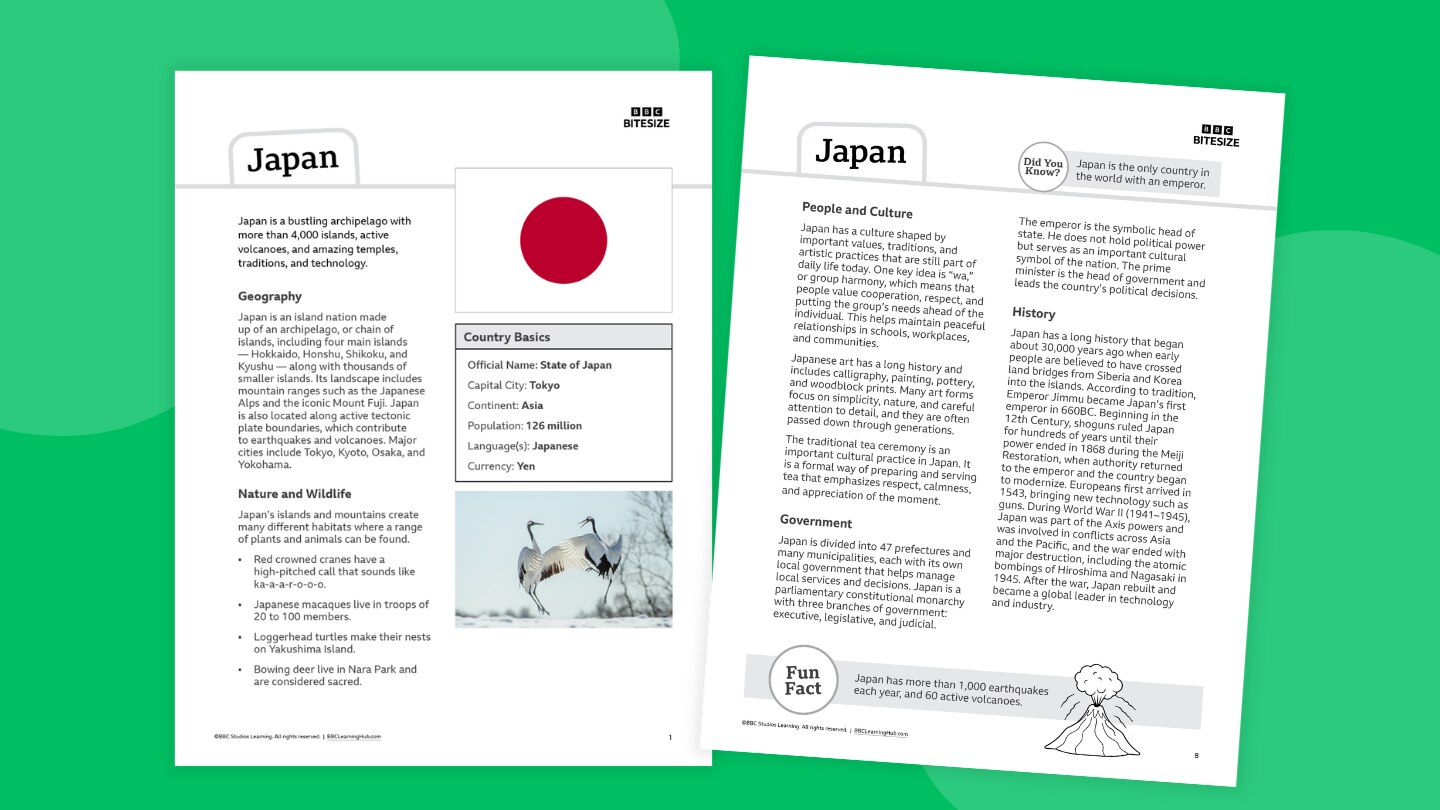
What island country is home to ancient temples, bustling cities, active volcanoes, and some of the world’s most unusual wildlife? Meet Japan, a country where centuries-old traditions and cutting-edge technology come together.
From Mount Fuji and the cherry blossoms to Japanese macaques and loggerhead turtles, Japan has an incredible variety of landscapes and living things. Discover how Japan’s islands and mountains have shaped its people and culture, explore key moments in its history, and learn about its government, language, food, and traditions. Along the way, you’ll uncover some surprising facts about this fascinating country.
Teachers and parents, you can use this fact file to:
- Introduce a geography or social studies unit
- Support nonfiction reading practice
- Compare countries and cultures
- Complete map and research activities
- Prepare students for projects or presentations (use our country report template!)
- Pair with videos, articles, or other informational texts (see Related Resources below)
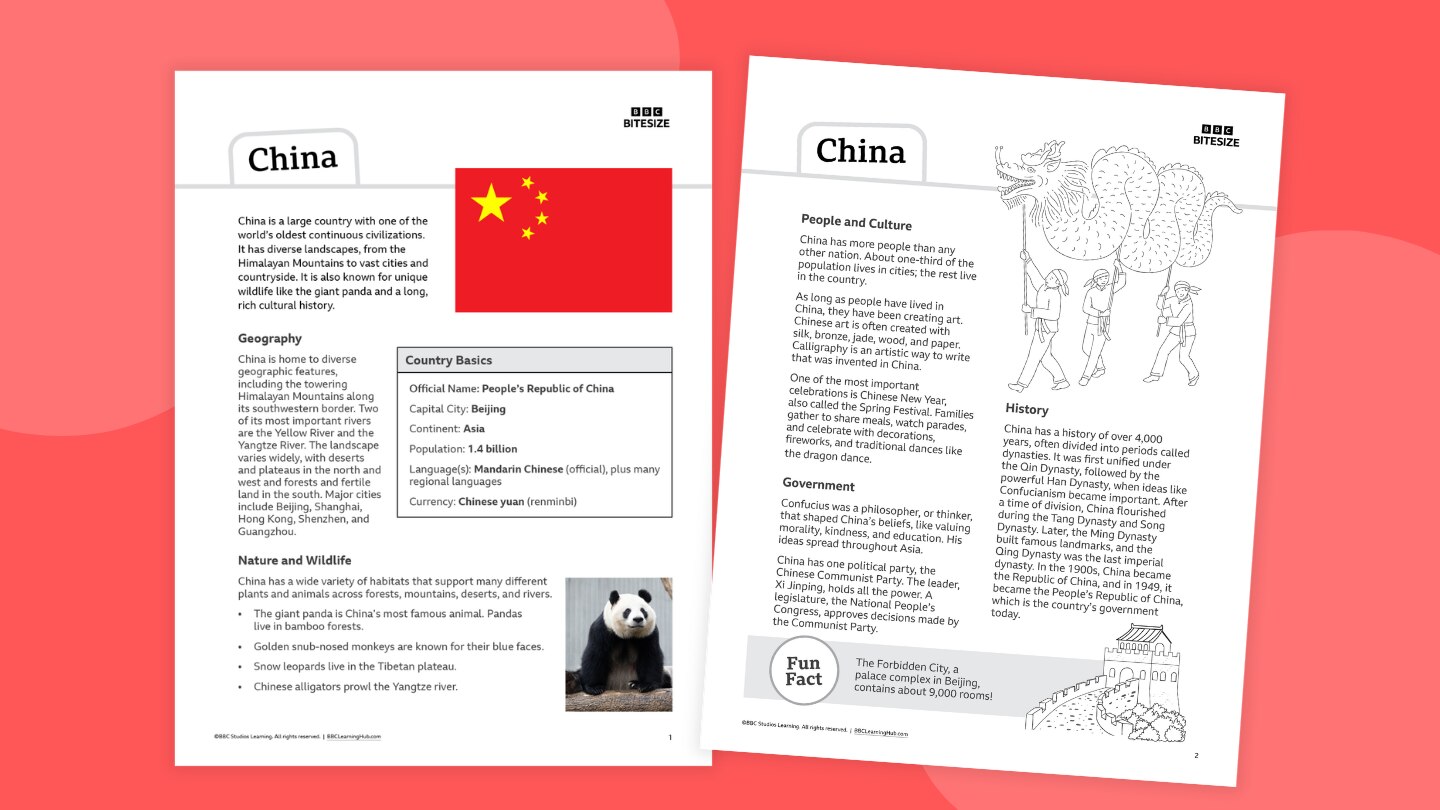
What country has the world’s largest population, some of the oldest traditions on Earth, and landscapes ranging from towering mountains to vast deserts? Meet China, a country where ancient history and modern life exist side by side.
From the Forbidden City to giant pandas to the peaks of the Himalayas, China is filled with remarkable places, people, and wildlife. Explore how geography has shaped life across the country, discover important moments in China’s long history, and learn about its languages, government, food, traditions, and growing cities. You’ll also meet some of China’s unique animals!
Teachers and parents, you can use this fact file to:
- Introduce a geography or social studies unit
- Support nonfiction reading practice
- Compare countries and cultures
- Complete map and research activities
- Prepare students for projects or presentations (use our country report template!)
- Pair with videos, articles, or other informational texts (see Related Resources below)
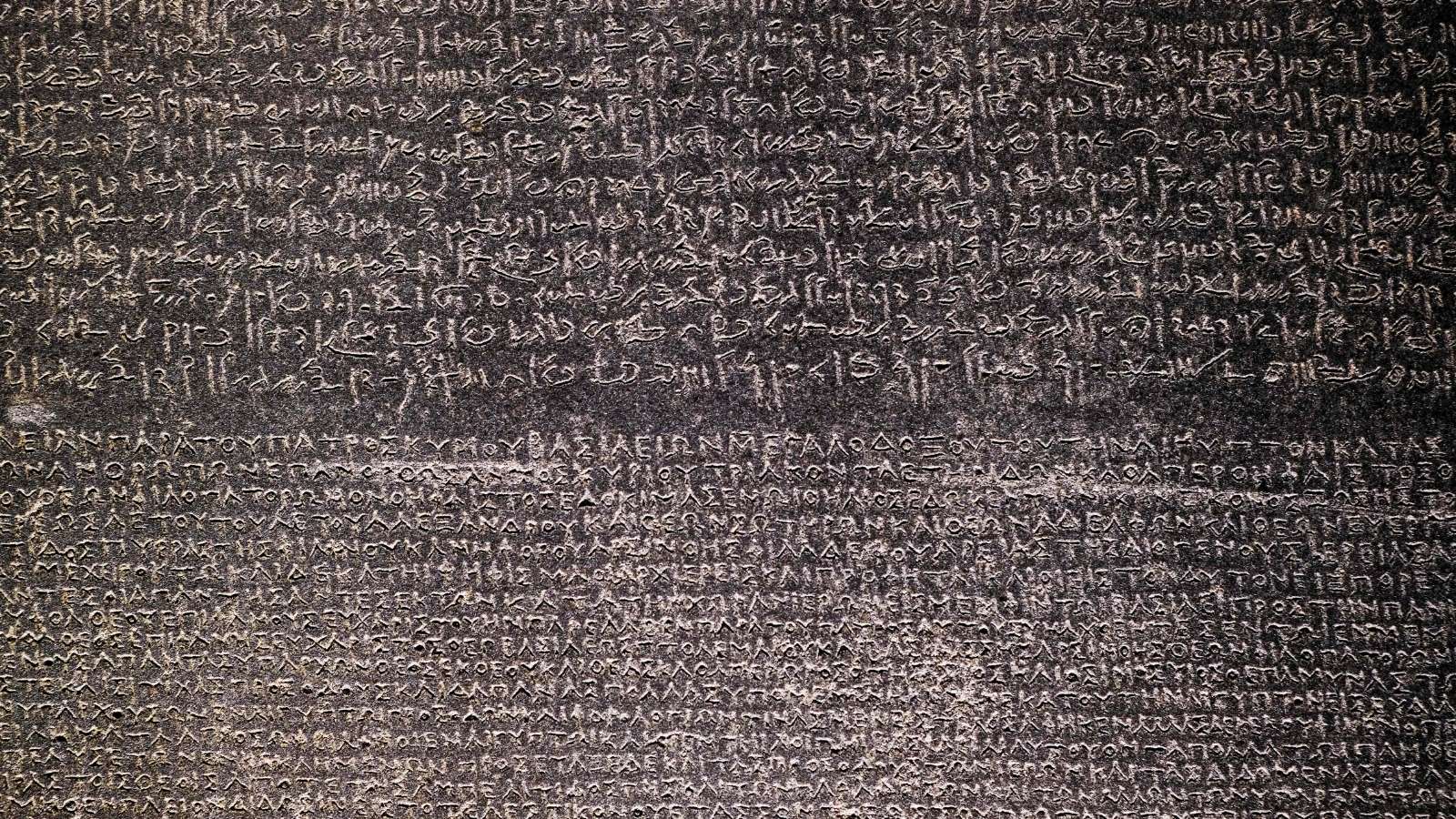
The article "How We Deciphered Ancient Egyptian Hieroglyphs" from BBC's Science Focus explains how archaeologists deciphered ancient Egyptian writing using the Rosetta Stone. It describes the efforts of scholars like Thomas Young and Jean-François Champollion, who unlocked the phonetic and symbolic meanings of hieroglyphs, enabling the translation of ancient texts and revealing insights into Egyptian history and culture.
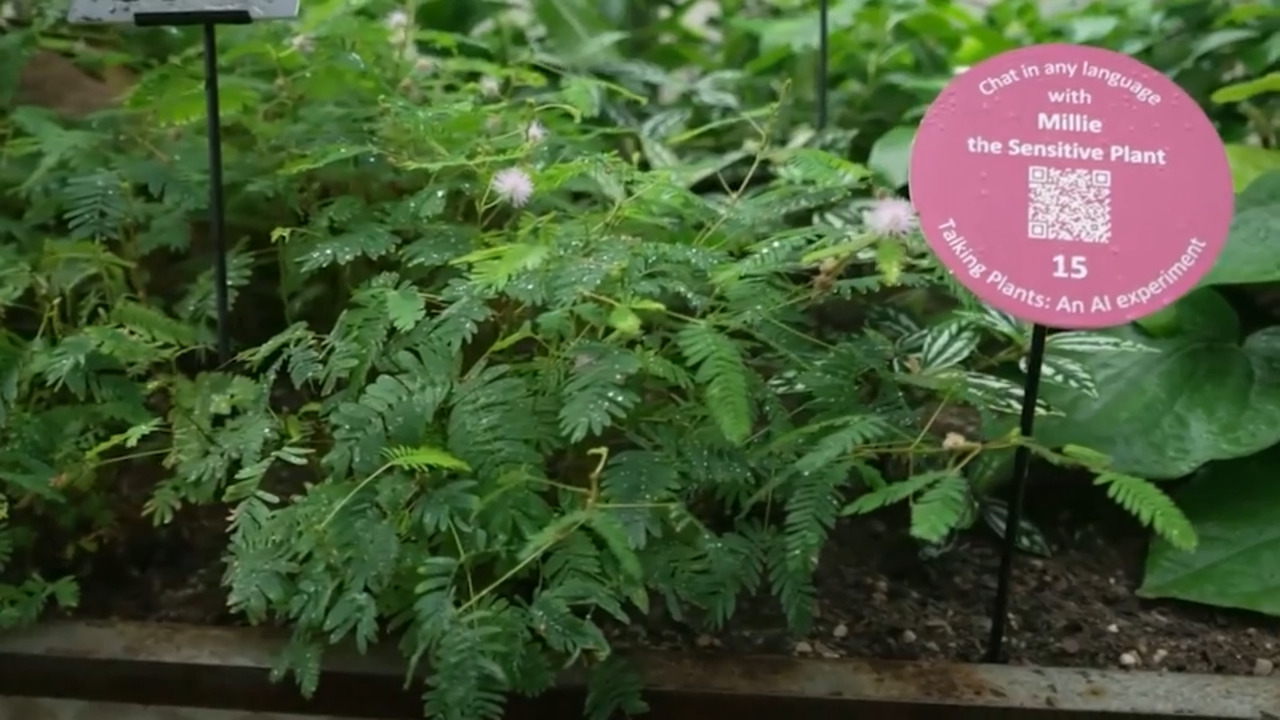
If you’ve ever wanted to ask Brussels sprouts… just… why? Well, you may be able to get pretty close. There’s an exhibition called Talking Plants at Cambridge University Botanic Garden, where visitors can talk to plants! Well, anyone can always talk to plants. But, in this greenhouse, artificial intelligence is being used to get the plants to respond.
The exhibit features a variety of plant life to go with 20 AI personalities a Cambridge professor, Sam, and his team created for the garden. With a QR code and a phone, visitors can come in and engage with the plants, ask them questions, and listen to their responses. Each plant has its own name, personality, and based on where in the world it's from, and some can speak multiple languages. They can even tell jokes!
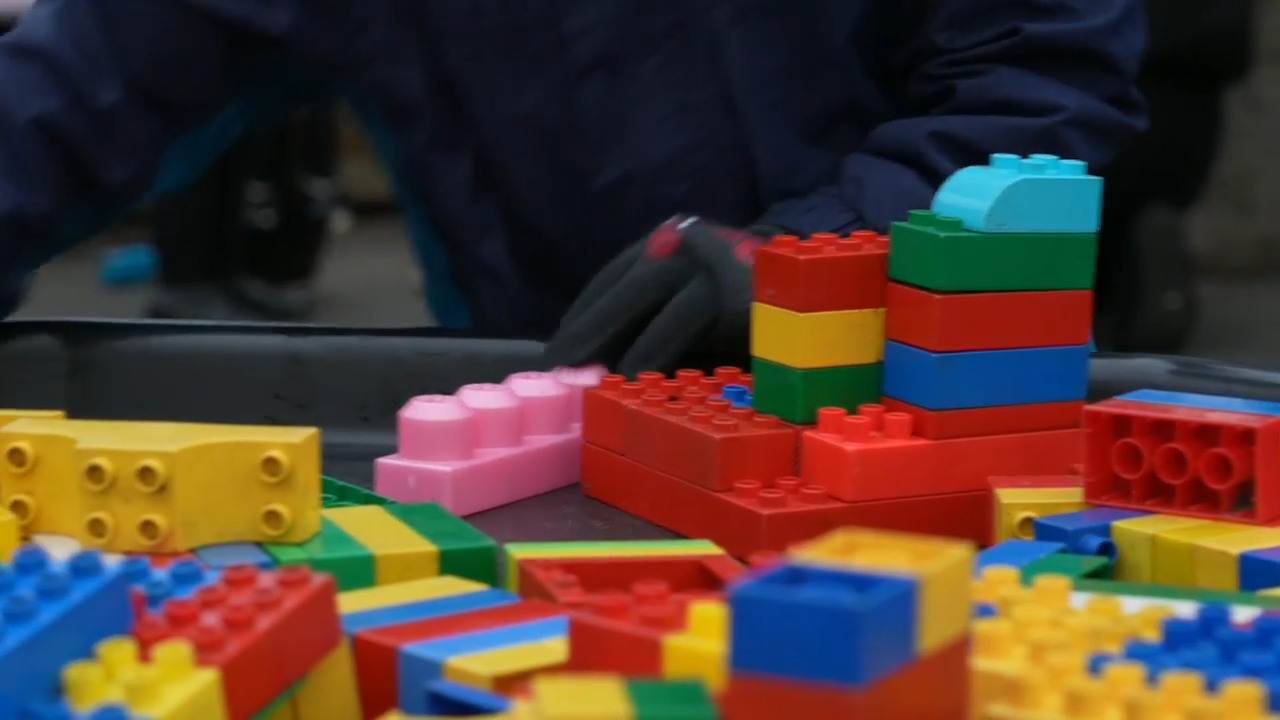
Kids today can swipe before they can tie their shoes — but some teachers say all that screen time may be changing the way young children learn, talk, and handle emotions. One preschool is pushing back by focusing on hands-on play, conversation, creativity, and movement instead of tablets and videos. Teachers say they’re seeing more kids struggle to explain what they want, calm themselves down, or interact socially after spending hours watching screens instead of experiencing the real world firsthand. Experts recommend no screens at all for children under 2, and no more than 30 minutes a day for ages 2–5.
In JoJo and Gran Gran Celebrate Creole Day, JoJo and her grandmother attend a Creole Day celebration. Jojo learns songs in the Creole language. Real kids learn a dance and get dressed to perform! This video is excerpted from BBC’s JoJo & Gran Gran, a children's animated television series following JoJo, an inquisitive and cheerful 4-and-a-half-year-old girl and her loving Gran Gran, who always has something new to teach her.
In Democracy and Conflict in Ancient Greece, archaeologist and historian Richard Miles explains the duality of ancient Greece. Advances in philosophy, democracy, and the arts coexisted with political discord, social unrest, and violent power struggles. This video is excerpted from BBC’s Ancient Worlds, an epic series with archaeologist and historian Richard Miles as he explores the roots of civilization from Mesopotamia to the fall of the Roman Empire.
What country is home to ancient pyramids, colorful monarch butterflies, towering volcanoes, and one of the world’s most famous celebrations? Meet Mexico, a country where ancient civilizations, diverse landscapes, and vibrant traditions come together.
From the Aztec and Maya to pumas and whale sharks, Mexico has a remarkable story to tell. Explore the civilizations that shaped the country, discover how Mexico gained independence from Spain, and learn about its food, festivals, languages, government, and cities. You’ll also discover how deserts, mountains, jungles, and coastlines provide habitats for an amazing variety of plants and animals.
Teachers and parents, you can use this fact file to:
- Introduce a geography or social studies unit
- Support nonfiction reading practice
- Compare countries and cultures
- Complete map and research activities
- Prepare students for projects or presentations (use our country report template!)
- Pair with videos, articles, or other informational texts (see Related Resources below)
What country is home to the Inca Empire, the Andes Mountains, and more than 3,000 varieties of potatoes? Meet Peru, a country where ancient civilizations and incredible natural landscapes come together.
From Machu Picchu and the ancient city of Cusco to alpacas and the towering Puya Raimondi plant, Peru is full of remarkable discoveries. Explore the civilizations that flourished here, learn how Spanish colonization changed the country, and discover Peru’s languages, traditions, foods, and government. You’ll also travel from the Pacific coast to the high Andes and deep into the Amazon to see how geography shapes life in Peru.
Teachers and parents, you can use this fact file to:
- Introduce a geography or social studies unit
- Support nonfiction reading practice
- Compare countries and cultures
- Complete map and research activities
- Prepare students for projects or presentations (use our country report template!)
- Pair with videos, articles, or other informational texts (see Related Resources below)
What country is made up of thousands of islands and sits along the Pacific Ring of Fire? Meet Indonesia, an island nation filled with volcanoes, rainforests, coral reefs, and some of the most unusual animals on Earth.
From Komodo dragons and orangutans to vibrant coral reefs and towering volcanoes, Indonesia’s islands are packed with natural wonders. Discover how the country’s geography has shaped the way people live, explore its history and government, and learn about its many languages, traditions, foods, and celebrations. You’ll also meet some of Indonesia’s incredible wildlife.
Teachers and parents, you can use this fact file to:
- Introduce a geography or social studies unit
- Support nonfiction reading practice
- Compare countries and cultures
- Complete map and research activities
- Prepare students for projects or presentations (use our country report template!)
- Pair with videos, articles, or other informational texts (see Related Resources below)
How did a small country on a mountainous peninsula become a global leader in technology, entertainment, and culture? Meet South Korea, a country where ancient traditions and modern innovation are woven together.
From the mountains and islands to the busy streets of Seoul, South Korea has much to explore. Learn how Korea’s history shaped the country it is today, discover the traditions and foods that bring people together, and explore South Korea’s government, economy, language, and culture. You’ll also meet native animals —including a flying squirrel — and discover how wildlife survives in a country where people and cities are never far away.
Teachers and parents, you can use this fact file to:
- Introduce a geography or social studies unit
- Support nonfiction reading practice
- Compare countries and cultures
- Complete map and research activities
- Prepare students for projects or presentations (use our country report template!)
- Pair with videos, articles, or other informational texts (see Related Resources below)
What country is home to more than a billion people, hundreds of languages, the Himalayan Mountains, and some of the world’s most iconic animals? Meet India, a country with an extraordinary mix of landscapes, cultures, religions, and traditions.
From Bengal tigers and colorful peafowl to the Taj Mahal and the mighty Himalayas, India is full of fascinating stories and discoveries. Explore the civilizations and empires that shaped its history, learn about Hinduism and other religions that began there, and discover the foods, festivals, languages, and traditions that make India unique. You’ll also explore the country’s incredible wildlife.
Teachers and parents, you can use this fact file to:
- Introduce a geography or social studies unit
- Support nonfiction reading practice
- Compare countries and cultures
- Complete map and research activities
- Prepare students for projects or presentations (use our country report template!)
- Pair with videos, articles, or other informational texts (see Related Resources below)
What island country is home to ancient temples, bustling cities, active volcanoes, and some of the world’s most unusual wildlife? Meet Japan, a country where centuries-old traditions and cutting-edge technology come together.
From Mount Fuji and the cherry blossoms to Japanese macaques and loggerhead turtles, Japan has an incredible variety of landscapes and living things. Discover how Japan’s islands and mountains have shaped its people and culture, explore key moments in its history, and learn about its government, language, food, and traditions. Along the way, you’ll uncover some surprising facts about this fascinating country.
Teachers and parents, you can use this fact file to:
- Introduce a geography or social studies unit
- Support nonfiction reading practice
- Compare countries and cultures
- Complete map and research activities
- Prepare students for projects or presentations (use our country report template!)
- Pair with videos, articles, or other informational texts (see Related Resources below)
What country has the world’s largest population, some of the oldest traditions on Earth, and landscapes ranging from towering mountains to vast deserts? Meet China, a country where ancient history and modern life exist side by side.
From the Forbidden City to giant pandas to the peaks of the Himalayas, China is filled with remarkable places, people, and wildlife. Explore how geography has shaped life across the country, discover important moments in China’s long history, and learn about its languages, government, food, traditions, and growing cities. You’ll also meet some of China’s unique animals!
Teachers and parents, you can use this fact file to:
- Introduce a geography or social studies unit
- Support nonfiction reading practice
- Compare countries and cultures
- Complete map and research activities
- Prepare students for projects or presentations (use our country report template!)
- Pair with videos, articles, or other informational texts (see Related Resources below)
The article "How We Deciphered Ancient Egyptian Hieroglyphs" from BBC's Science Focus explains how archaeologists deciphered ancient Egyptian writing using the Rosetta Stone. It describes the efforts of scholars like Thomas Young and Jean-François Champollion, who unlocked the phonetic and symbolic meanings of hieroglyphs, enabling the translation of ancient texts and revealing insights into Egyptian history and culture.
If you’ve ever wanted to ask Brussels sprouts… just… why? Well, you may be able to get pretty close. There’s an exhibition called Talking Plants at Cambridge University Botanic Garden, where visitors can talk to plants! Well, anyone can always talk to plants. But, in this greenhouse, artificial intelligence is being used to get the plants to respond.
The exhibit features a variety of plant life to go with 20 AI personalities a Cambridge professor, Sam, and his team created for the garden. With a QR code and a phone, visitors can come in and engage with the plants, ask them questions, and listen to their responses. Each plant has its own name, personality, and based on where in the world it's from, and some can speak multiple languages. They can even tell jokes!
Kids today can swipe before they can tie their shoes — but some teachers say all that screen time may be changing the way young children learn, talk, and handle emotions. One preschool is pushing back by focusing on hands-on play, conversation, creativity, and movement instead of tablets and videos. Teachers say they’re seeing more kids struggle to explain what they want, calm themselves down, or interact socially after spending hours watching screens instead of experiencing the real world firsthand. Experts recommend no screens at all for children under 2, and no more than 30 minutes a day for ages 2–5.