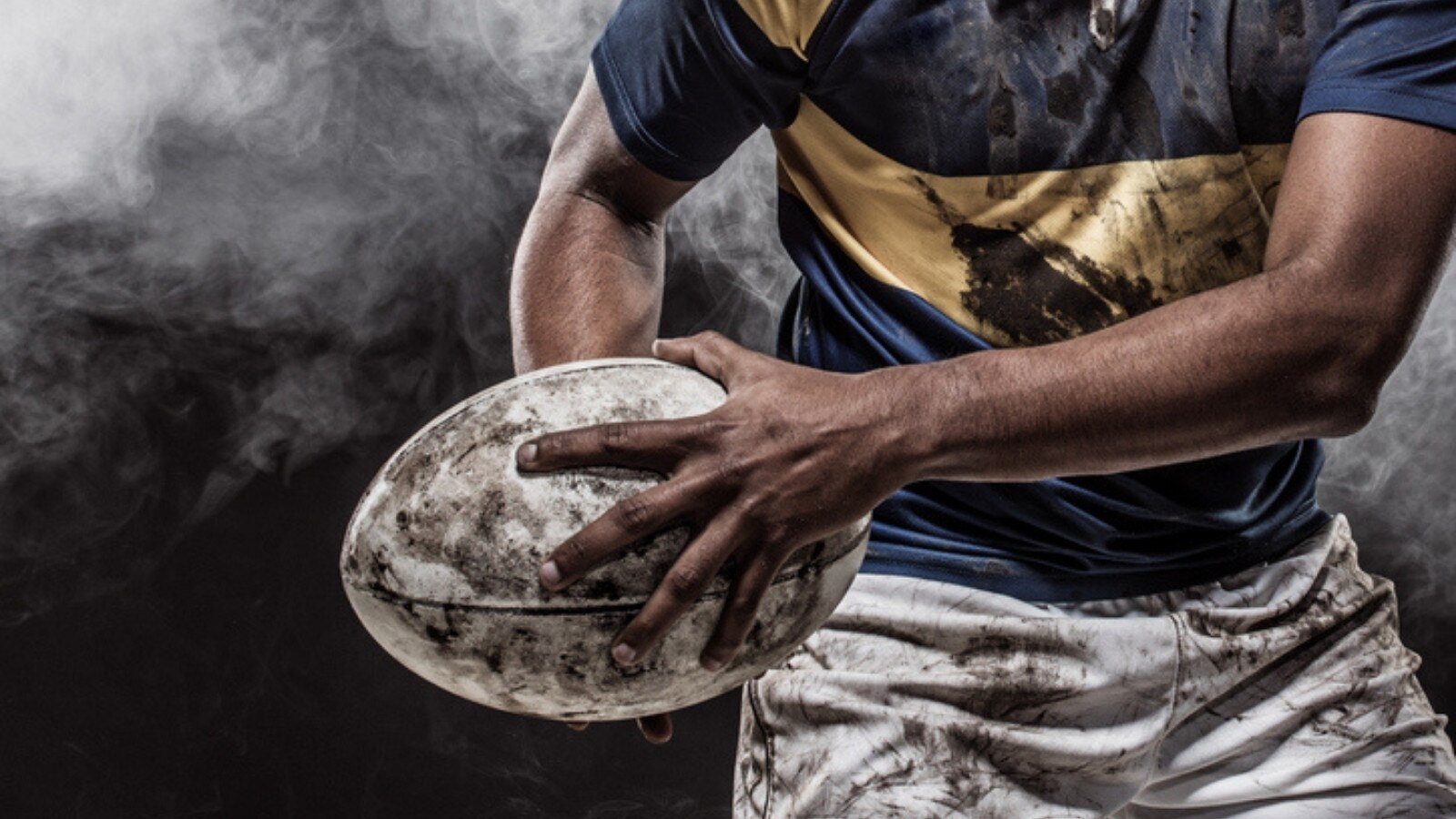
The article "The First Rugby Match Between Nations: Scotland vs. England, 1871" from BBC's HistoryExtra explores the events of March 27, 1871, when the very first international rugby game was played in Edinburgh. It covers the background, gameplay, and how the match marked the beginning of one of the sport’s greatest rivalries.
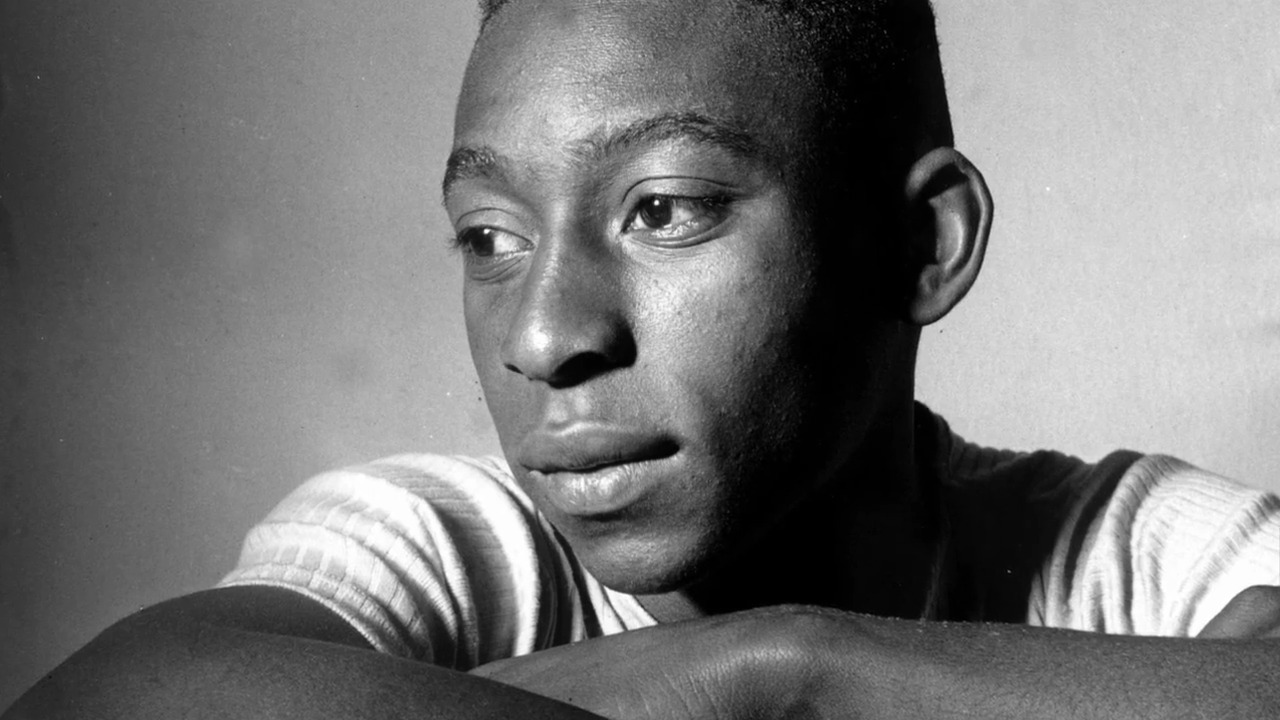
In How Pelé Brought Soccer to the U.S., sports journalist Clare Balding discusses Pelé's contributions to the popularity of soccer. Pelé’s last World Cup match in 1970 helped him emerge as a hero, and in 1971 he brought the game to the United States. This video is excerpted from BBC’s Icons: The Greatest Person of the 20th Century, a documentary series celebrating the achievements of the most influential figures of the era.
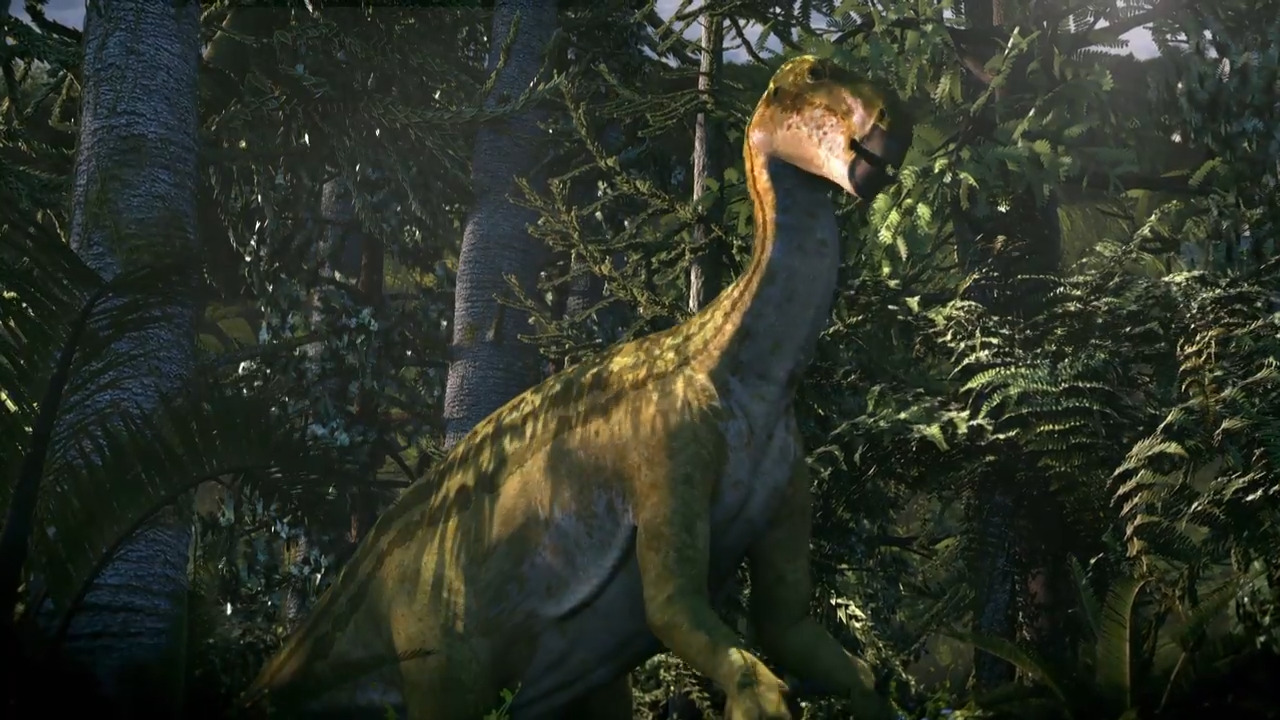
In Iguanodon’s Fancy Thumb, naturalist Steve Backshall explores this fascinating dinosaur, highlighting its diamond-shaped teeth, which resemble those of a present-day iguana. Plus, this segment demonstrates Iguanodon's most remarkable feature — its sharp thumb — by conducting a fencing match. This video is excerpted from BBC’s Deadly Dinosaurs, a documentary series in which host Steve Backshall is on the hunt for the deadliest animals to have walked the Earth — dinosaurs — exploring features of several species and putting their abilities to the test to reveal the raw power of these creatures.
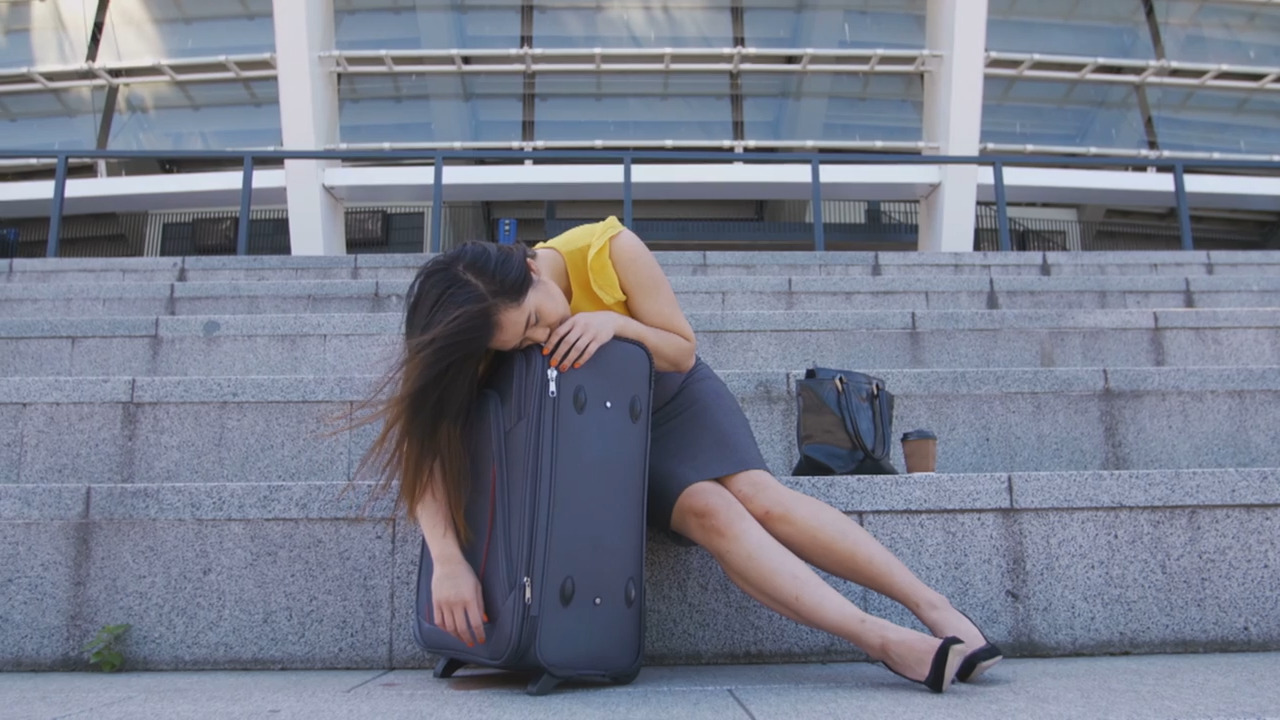
In Understanding Jet Lag, host Harith Iskander explains how jet lag occurs when a person’s internal clock doesn’t match the external time of a new location. The brain’s oscillator cells in the hypothalamus, which help regulate our sleep-wake cycles, struggle to adjust quickly. Traveling east can be especially difficult because it shortens the body’s natural circadian cycle, while flying west allows for more gradual adjustment. This video is excerpted from BBC’s Got Science?, a science magazine series that explores and explains science in everyday life.
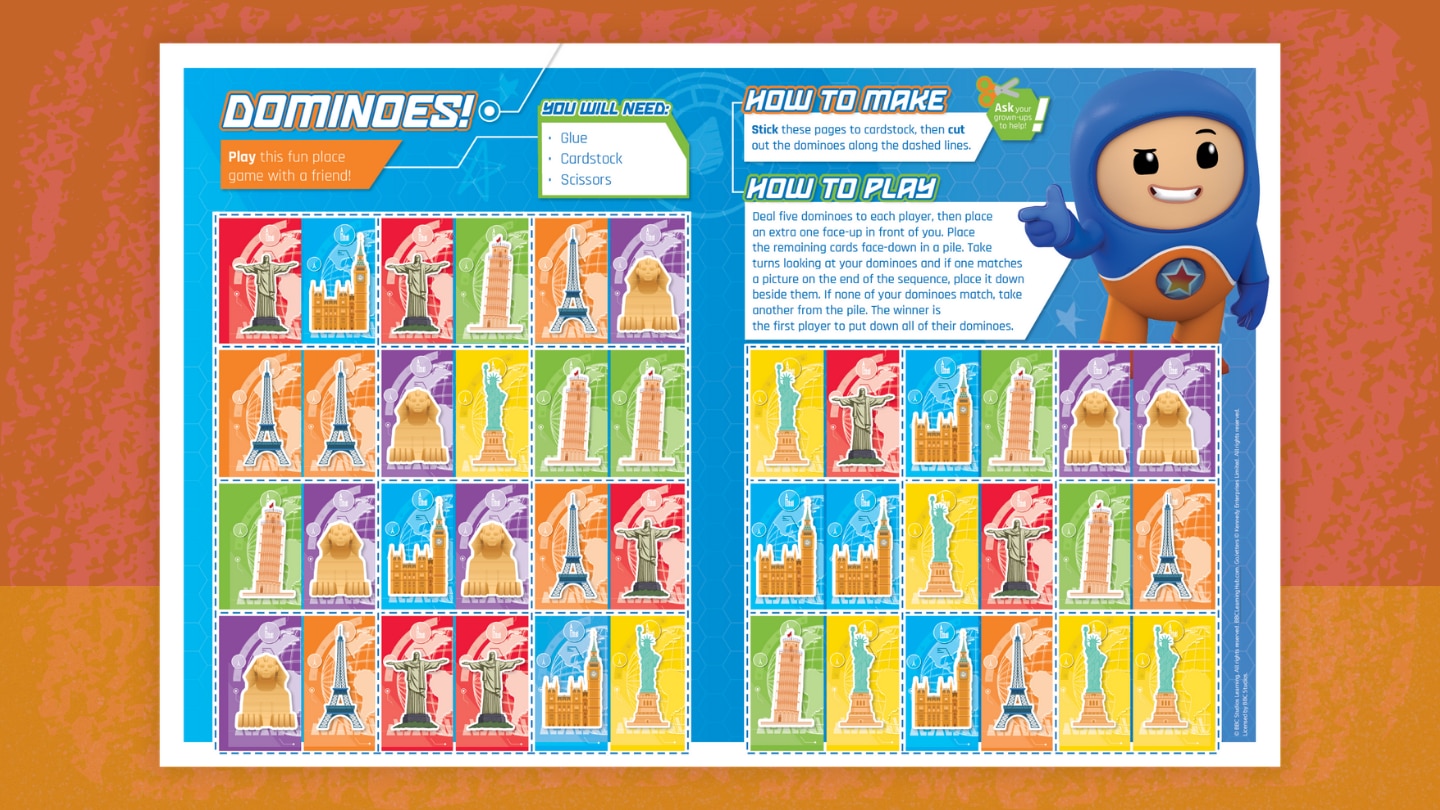
Play this fun Go Jetters dominoes game (featuring famous world landmarks) with a friend! Here's how to play:
- Deal five dominoes to each player, then place an extra one face-up in front of you.
- Place the remaining cards face-down in a pile.
- Take turns looking at your dominoes and if one matches a picture on the end of the sequence, place it down beside them. If none of your dominoes match, take another from the pile.
- The winner is the first player to put down all of their dominoes.
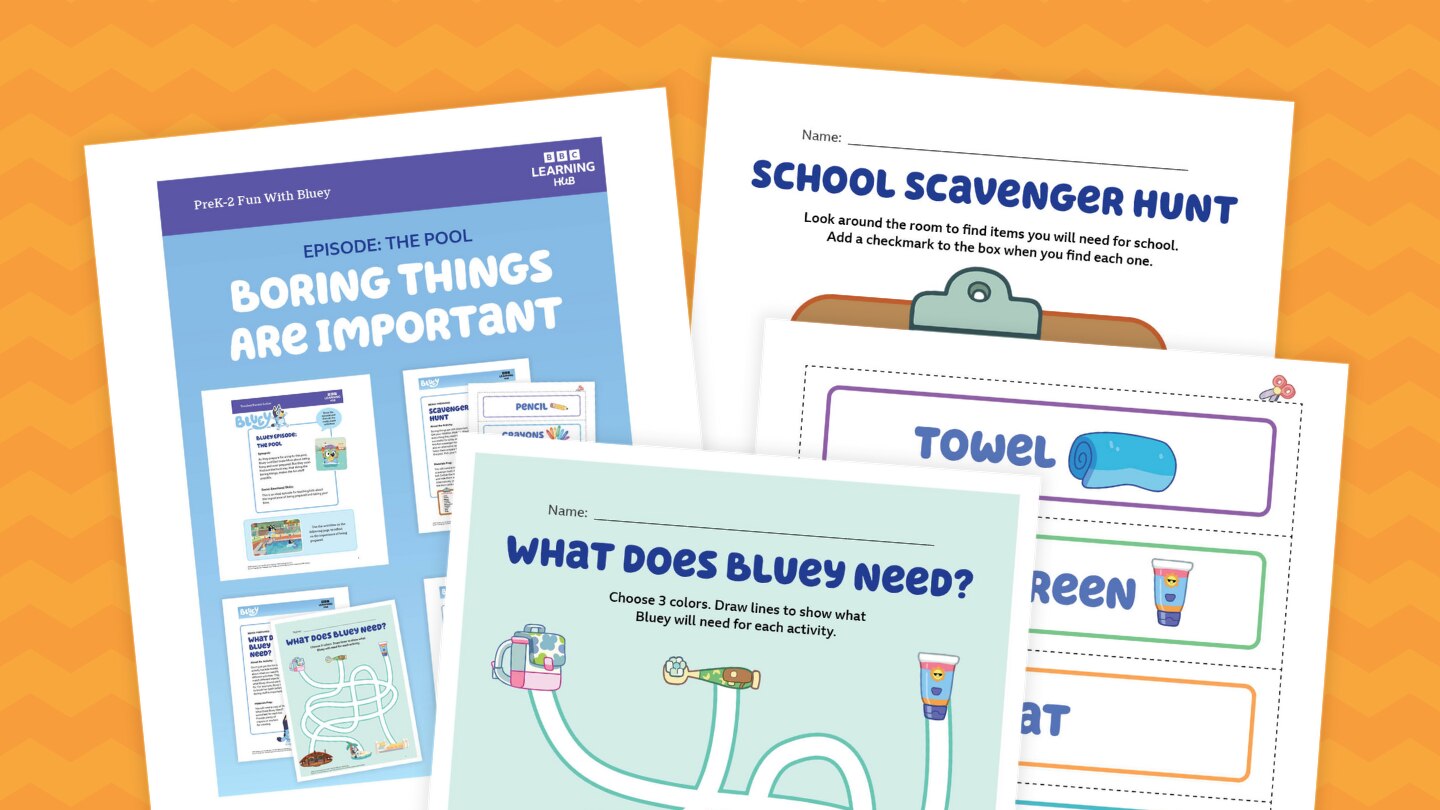
From brushing your teeth to packing the floaties, boring things are important! Try this lesson, which uses the Bluey episode "The Pool" as the kickoff to a classroom conversation about the importance of being prepared. The lesson includes printables for three activities in which kids go on a scavenger hunt to find everything they need to be successful for a day at school or the pool, complete a maze to match different objects to what Bluey should use them for, and figure out where Bluey and her family are going based on what they’ve packed.
The Pool Episode Summary: As they prepare for a trip to the pool, Bluey and Dad tease Mum about being fussy and over-prepared. But they soon find out the hard way that doing the boring things makes the fun stuff possible.
Watch the episode here! (Click here to watch in Australia.)
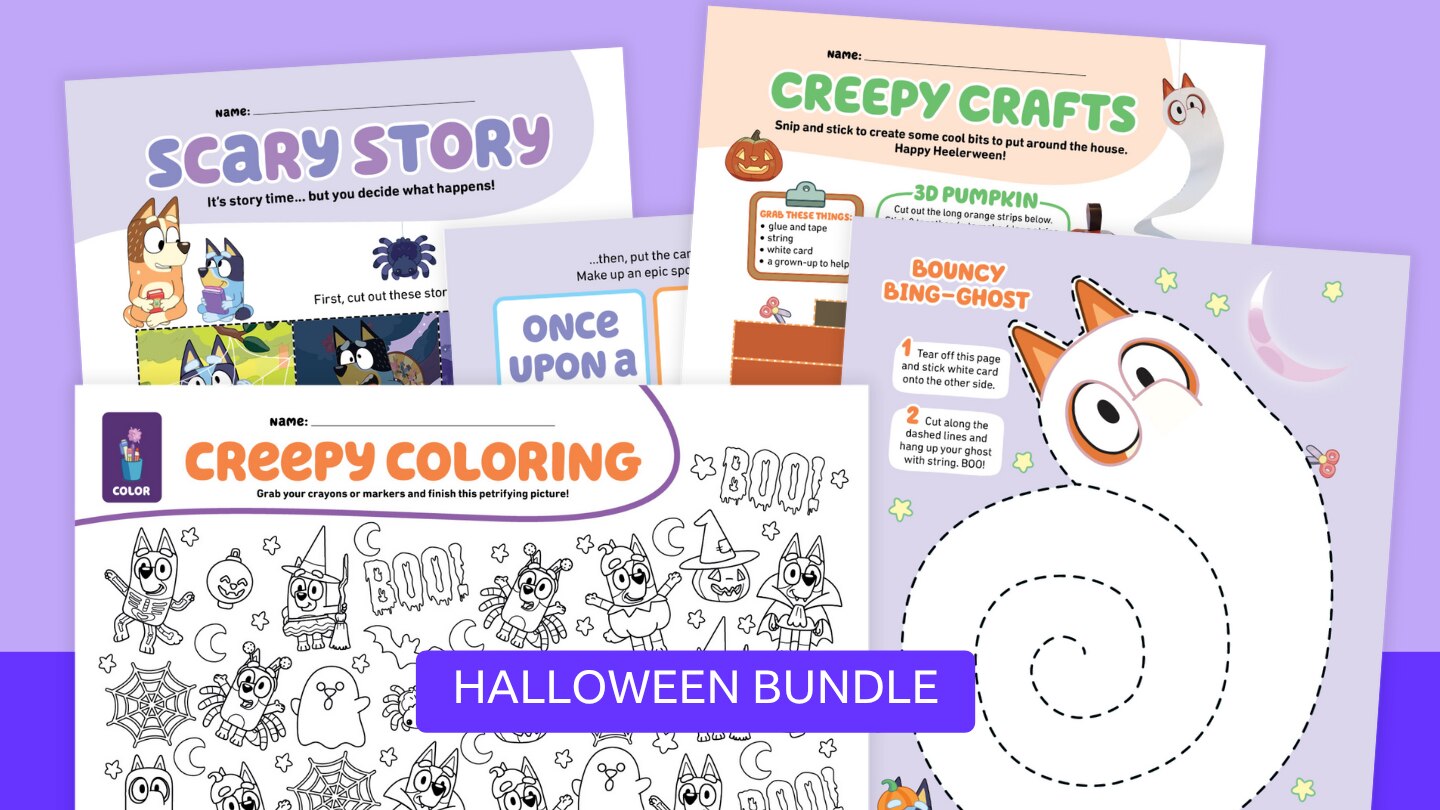
Happy Heelerween! Don’t miss this spook-tacular Bluey bundle of three Halloween-themed printables packed with hands-on fun to get students learning, laughing, and creating. Here's what's included:
- Scary Story: Mix, match, and make up an epic spooky story to go with the story cards!
- Creepy Crafts: Snip and stick to create some cool bits to put around the house.
- Creepy Coloring: Grab your crayons or markers and finish this petrifying picture!
Want more? We have tons on the site. Just search "Bluey"!
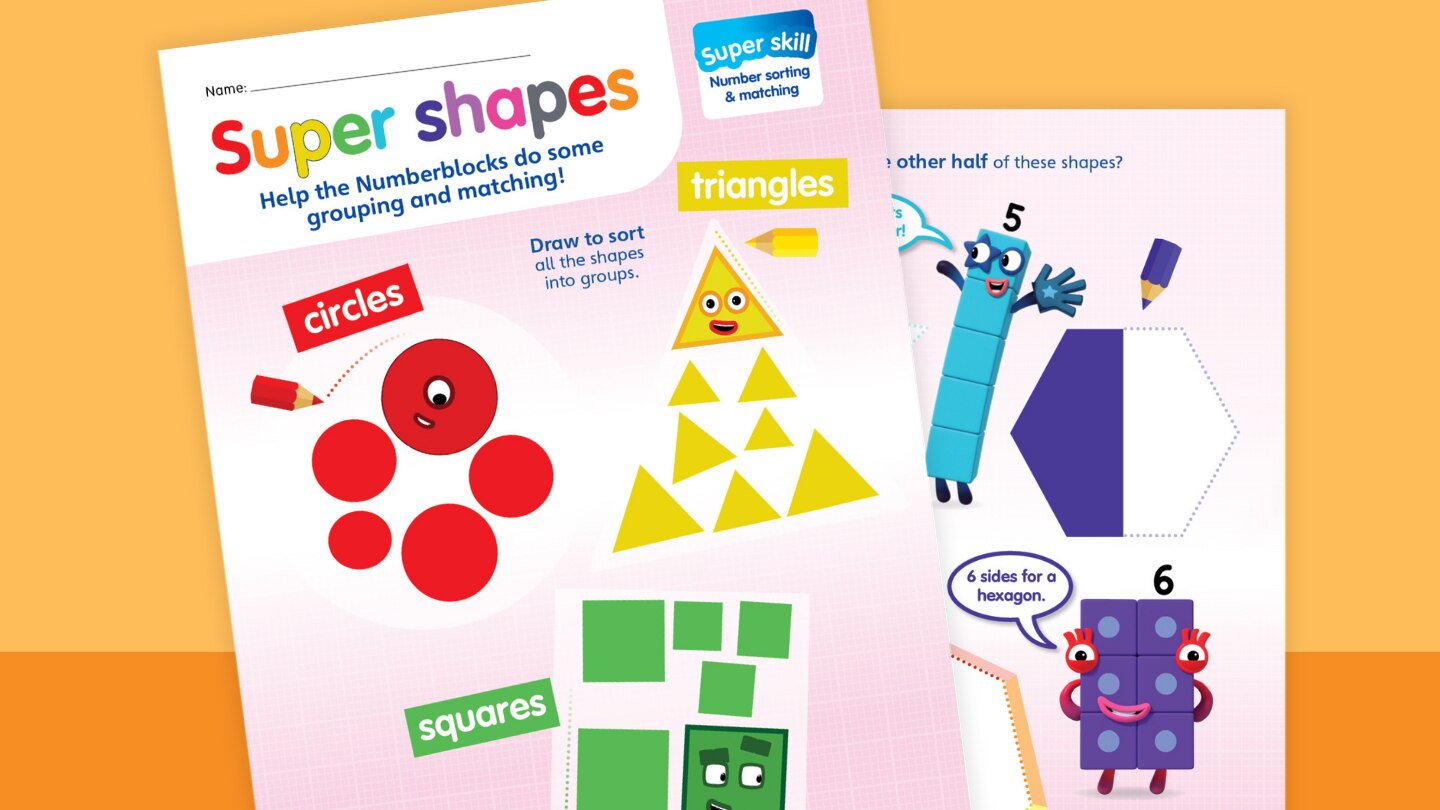
Help the Numberblocks do some grouping and matching. Draw to sort all the shapes into groups: circles, triangles, and squares. Then, can you draw the other half of the star and hexagon? Can you draw a 7-sided shape for 7?
Watch full episodes of Numberblocks on their official YouTube channel!
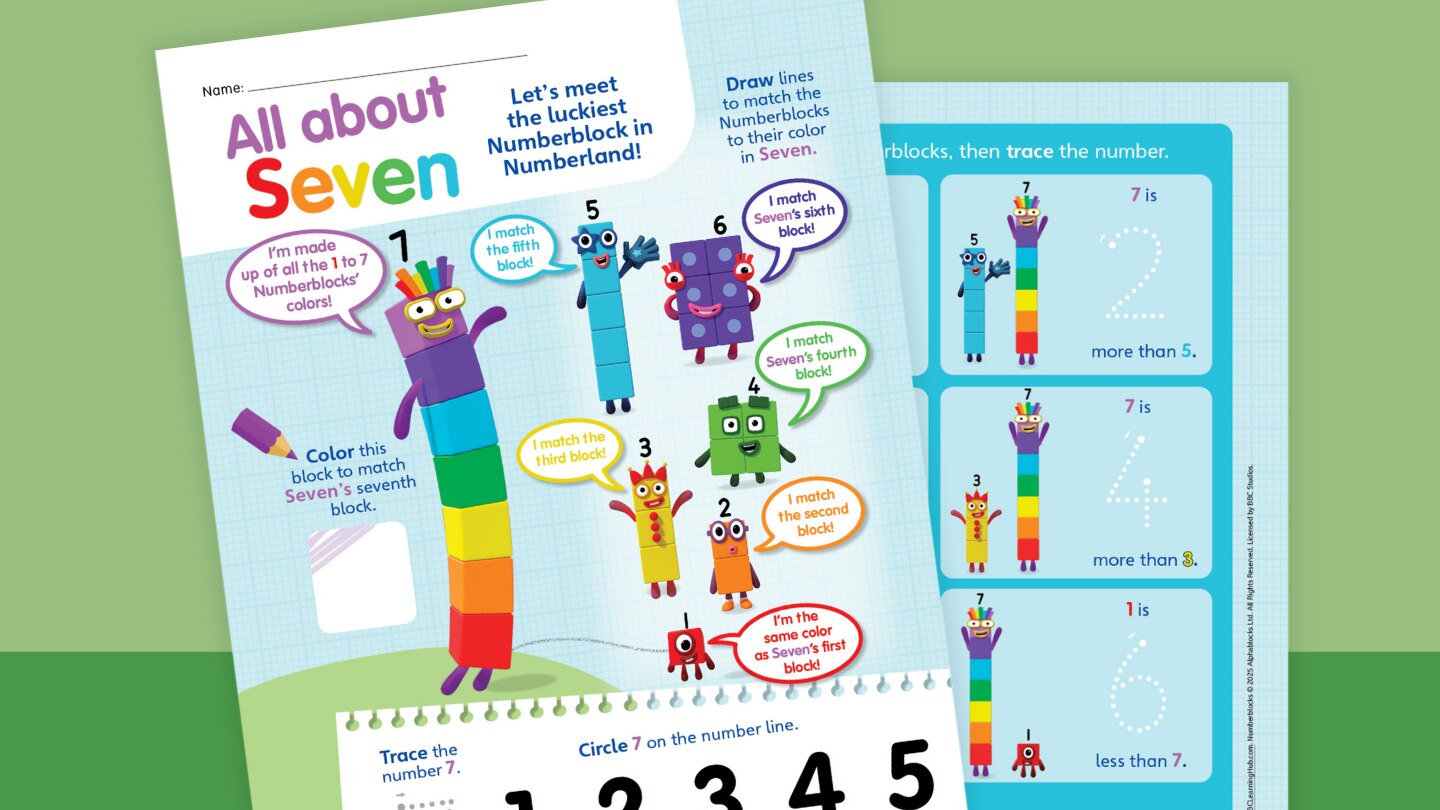
Let's meet the luckiest Numberblock in Numberland! Seven is made up of all the 1 to 7 Numberblocks' colors! Color the blank block to match Seven's seventh block, draw lines to match the Numberblocks to their color in Seven, trace the number 7, circle it on a number line, and more!
Watch full episodes of Numberblocks on their official YouTube channel!
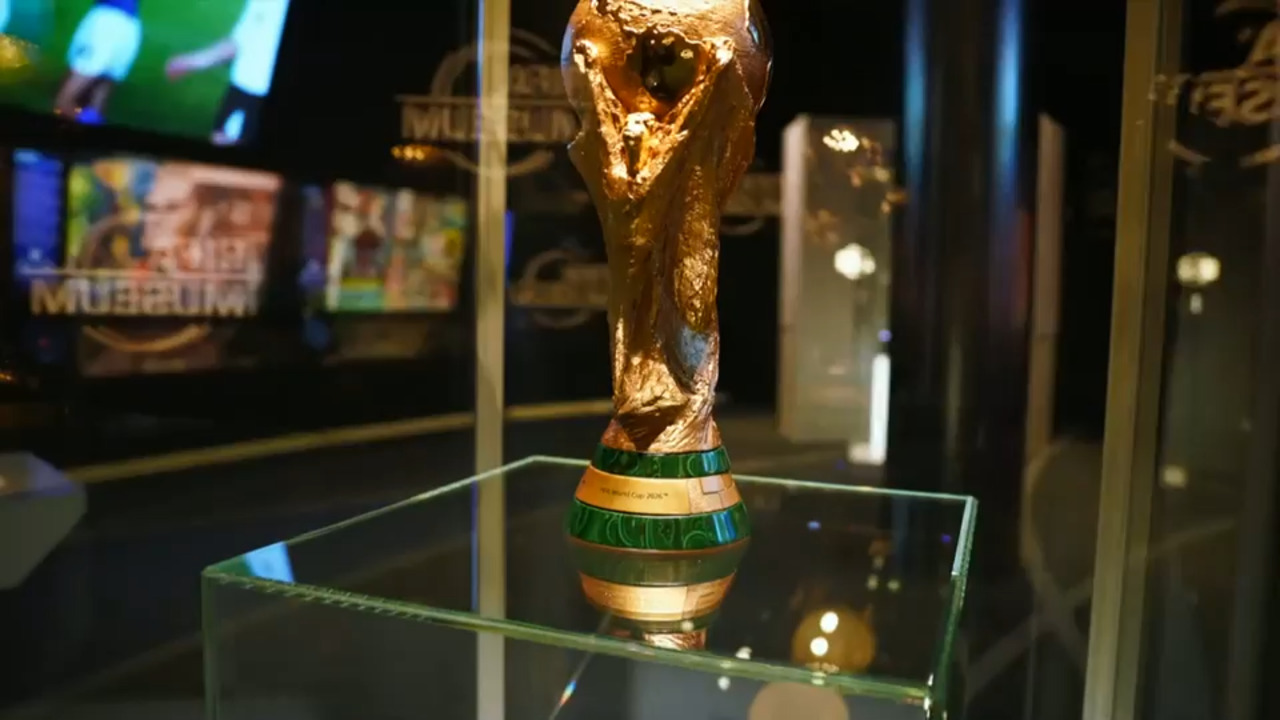
Football is thousands of years old, but who says there's no room for a little new technology? And there's no better place to explore the advancements in football tech than FIFA’s global headquarters in Zurich, where the research team has been paying special attention to the MVP of every match: the football itself.
Meet the Trionda ball. It may look like a standard football, until you open it up to reveal a sensor inside the ball. It’s synced to a computer, and tracks the ball’s behavior on a graph that shows when contact is made with the ball — light touches are small peaks, hard hits are big spikes. This will make it easier to see if a player has actually touched the ball, which is sometimes hard to determine with the naked eye.
For those who are always squinting to watch those teeny tiny players on that giant field, FIFA is also introducing a ref cam. The head-mounted technology lets broadcasters record first-person footage, so spectators can see the game from the referee’s point of view. This means they can get an on-field perspective of the action, even if means an up-close look of players getting mad at the refs! Nothing more authentic than that!
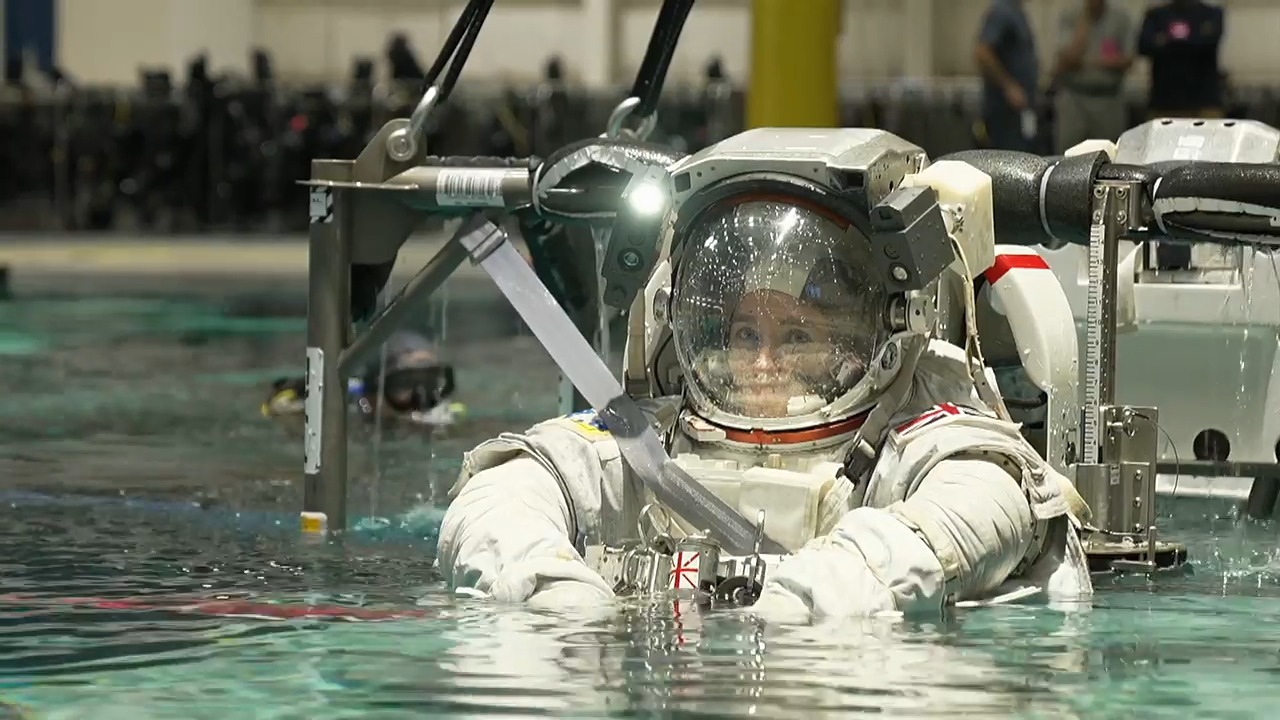
Being an astronaut is no joke — for your brain and your body to be prepared, you need to train, not unlike sports or school. Want to train for a soccer match? You may need to go for runs or lift weights. Need to prepare for a math test? You may need to repeat your times tables. Going into space soon? You may need to put on a space suit and get strapped into a full-sized replica of the International Space Station, then submerged in a 12-meter (40-foot!) deep pool for six hours. At least, that’s what astronaut Rosemary Coogan did to make sure she was ready for her spacewalk.
Coogan was chosen from 22,000 applicants to become a European Space Agency astronaut and may be the first Englishwoman to set foot on the moon.
Space preparation is daunting, but she had teams of supporters like divers and control room workers to make sure she was safe. The spacewalk test is meant to make sure that Rosemary could survive the conditions off of earth, even when things don’t go according to plan.
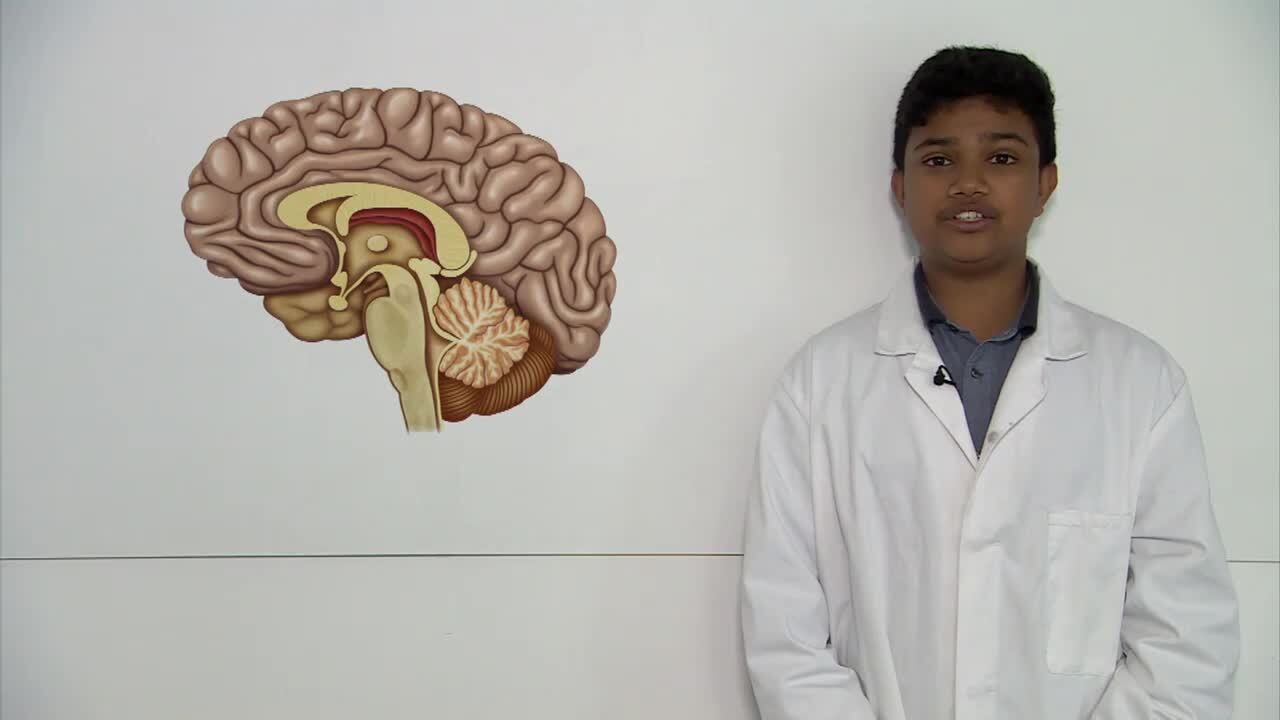
What if school started so early that your brain felt like it was the middle of the night? For a lot of teens, that’s actually what’s happening.
One school decided to take the science seriously. Researchers have found that during adolescence, your body clock shifts later — meaning you naturally fall asleep later and wake up later. So when teens are forced to get up at 7 a.m., it’s not just “early”… it’s the biological equivalent of an adult waking up at 4:30 a.m. Imagine trying to learn, focus, and take tests at that hour every single day.
Instead of ignoring this, the school changed its start time to better match how teenage brains actually work. The goal? Help students get enough sleep, feel more awake in class, and stop the cycle of constant exhaustion.
It raises a big question: if we know teens’ brains are wired this way, should more schools rethink their schedules too?
The article "The First Rugby Match Between Nations: Scotland vs. England, 1871" from BBC's HistoryExtra explores the events of March 27, 1871, when the very first international rugby game was played in Edinburgh. It covers the background, gameplay, and how the match marked the beginning of one of the sport’s greatest rivalries.
In How Pelé Brought Soccer to the U.S., sports journalist Clare Balding discusses Pelé's contributions to the popularity of soccer. Pelé’s last World Cup match in 1970 helped him emerge as a hero, and in 1971 he brought the game to the United States. This video is excerpted from BBC’s Icons: The Greatest Person of the 20th Century, a documentary series celebrating the achievements of the most influential figures of the era.
In Iguanodon’s Fancy Thumb, naturalist Steve Backshall explores this fascinating dinosaur, highlighting its diamond-shaped teeth, which resemble those of a present-day iguana. Plus, this segment demonstrates Iguanodon's most remarkable feature — its sharp thumb — by conducting a fencing match. This video is excerpted from BBC’s Deadly Dinosaurs, a documentary series in which host Steve Backshall is on the hunt for the deadliest animals to have walked the Earth — dinosaurs — exploring features of several species and putting their abilities to the test to reveal the raw power of these creatures.
In Understanding Jet Lag, host Harith Iskander explains how jet lag occurs when a person’s internal clock doesn’t match the external time of a new location. The brain’s oscillator cells in the hypothalamus, which help regulate our sleep-wake cycles, struggle to adjust quickly. Traveling east can be especially difficult because it shortens the body’s natural circadian cycle, while flying west allows for more gradual adjustment. This video is excerpted from BBC’s Got Science?, a science magazine series that explores and explains science in everyday life.
Play this fun Go Jetters dominoes game (featuring famous world landmarks) with a friend! Here's how to play:
- Deal five dominoes to each player, then place an extra one face-up in front of you.
- Place the remaining cards face-down in a pile.
- Take turns looking at your dominoes and if one matches a picture on the end of the sequence, place it down beside them. If none of your dominoes match, take another from the pile.
- The winner is the first player to put down all of their dominoes.
From brushing your teeth to packing the floaties, boring things are important! Try this lesson, which uses the Bluey episode "The Pool" as the kickoff to a classroom conversation about the importance of being prepared. The lesson includes printables for three activities in which kids go on a scavenger hunt to find everything they need to be successful for a day at school or the pool, complete a maze to match different objects to what Bluey should use them for, and figure out where Bluey and her family are going based on what they’ve packed.
The Pool Episode Summary: As they prepare for a trip to the pool, Bluey and Dad tease Mum about being fussy and over-prepared. But they soon find out the hard way that doing the boring things makes the fun stuff possible.
Watch the episode here! (Click here to watch in Australia.)
Happy Heelerween! Don’t miss this spook-tacular Bluey bundle of three Halloween-themed printables packed with hands-on fun to get students learning, laughing, and creating. Here's what's included:
- Scary Story: Mix, match, and make up an epic spooky story to go with the story cards!
- Creepy Crafts: Snip and stick to create some cool bits to put around the house.
- Creepy Coloring: Grab your crayons or markers and finish this petrifying picture!
Want more? We have tons on the site. Just search "Bluey"!
Help the Numberblocks do some grouping and matching. Draw to sort all the shapes into groups: circles, triangles, and squares. Then, can you draw the other half of the star and hexagon? Can you draw a 7-sided shape for 7?
Watch full episodes of Numberblocks on their official YouTube channel!
Let's meet the luckiest Numberblock in Numberland! Seven is made up of all the 1 to 7 Numberblocks' colors! Color the blank block to match Seven's seventh block, draw lines to match the Numberblocks to their color in Seven, trace the number 7, circle it on a number line, and more!
Watch full episodes of Numberblocks on their official YouTube channel!
Football is thousands of years old, but who says there's no room for a little new technology? And there's no better place to explore the advancements in football tech than FIFA’s global headquarters in Zurich, where the research team has been paying special attention to the MVP of every match: the football itself.
Meet the Trionda ball. It may look like a standard football, until you open it up to reveal a sensor inside the ball. It’s synced to a computer, and tracks the ball’s behavior on a graph that shows when contact is made with the ball — light touches are small peaks, hard hits are big spikes. This will make it easier to see if a player has actually touched the ball, which is sometimes hard to determine with the naked eye.
For those who are always squinting to watch those teeny tiny players on that giant field, FIFA is also introducing a ref cam. The head-mounted technology lets broadcasters record first-person footage, so spectators can see the game from the referee’s point of view. This means they can get an on-field perspective of the action, even if means an up-close look of players getting mad at the refs! Nothing more authentic than that!
Being an astronaut is no joke — for your brain and your body to be prepared, you need to train, not unlike sports or school. Want to train for a soccer match? You may need to go for runs or lift weights. Need to prepare for a math test? You may need to repeat your times tables. Going into space soon? You may need to put on a space suit and get strapped into a full-sized replica of the International Space Station, then submerged in a 12-meter (40-foot!) deep pool for six hours. At least, that’s what astronaut Rosemary Coogan did to make sure she was ready for her spacewalk.
Coogan was chosen from 22,000 applicants to become a European Space Agency astronaut and may be the first Englishwoman to set foot on the moon.
Space preparation is daunting, but she had teams of supporters like divers and control room workers to make sure she was safe. The spacewalk test is meant to make sure that Rosemary could survive the conditions off of earth, even when things don’t go according to plan.
What if school started so early that your brain felt like it was the middle of the night? For a lot of teens, that’s actually what’s happening.
One school decided to take the science seriously. Researchers have found that during adolescence, your body clock shifts later — meaning you naturally fall asleep later and wake up later. So when teens are forced to get up at 7 a.m., it’s not just “early”… it’s the biological equivalent of an adult waking up at 4:30 a.m. Imagine trying to learn, focus, and take tests at that hour every single day.
Instead of ignoring this, the school changed its start time to better match how teenage brains actually work. The goal? Help students get enough sleep, feel more awake in class, and stop the cycle of constant exhaustion.
It raises a big question: if we know teens’ brains are wired this way, should more schools rethink their schedules too?