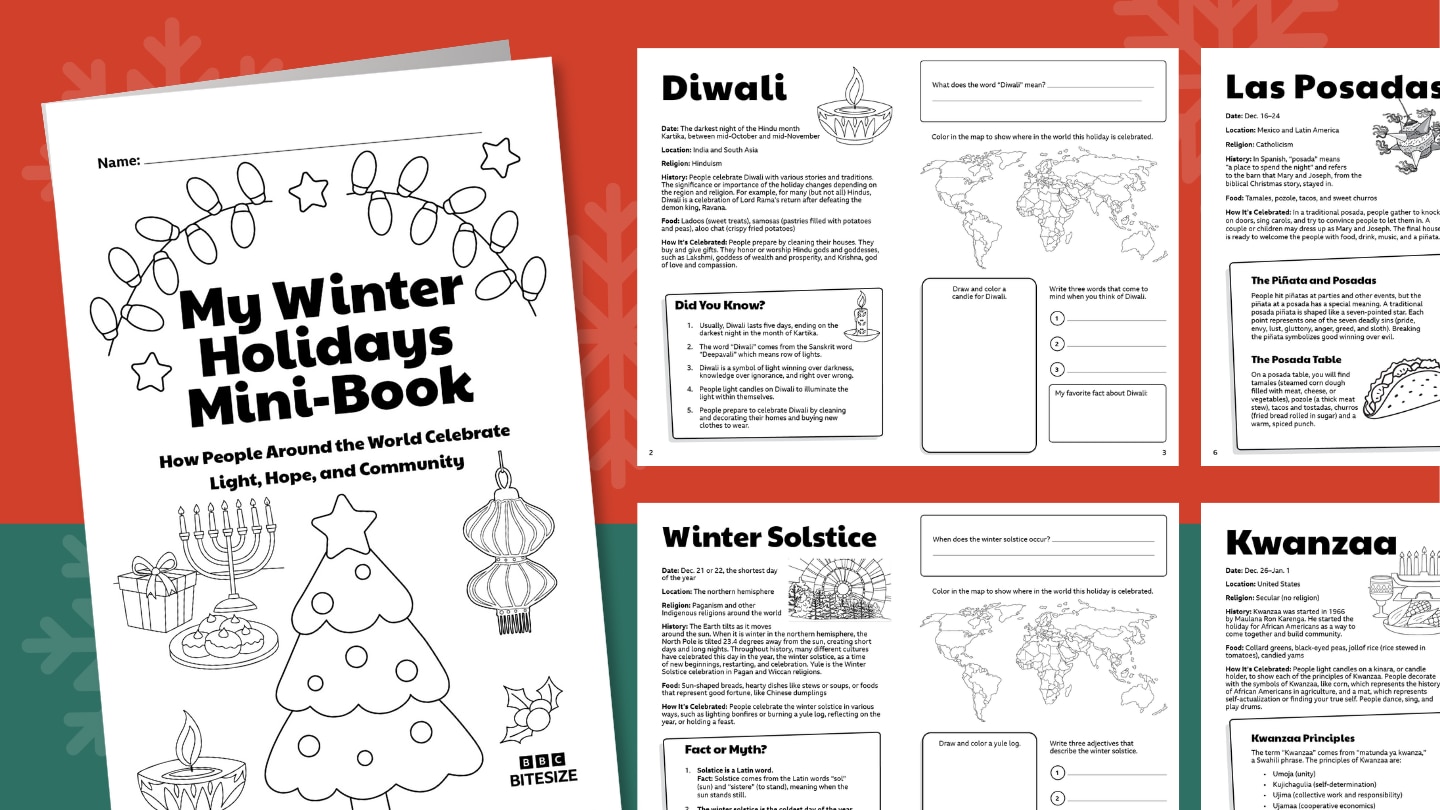
Happy holidays! With so many celebrations all over the globe during this season, it's the perfect time to teach your Grade 3–5 students about winter holidays around the world. Make copies of this mini-book (simply print on both sides flipped on the short edge, stack, and fold to assemble) for your students and invite them to read about each holiday and complete a simple report page full of questions, coloring, drawing, favorite facts, and more. Here are the eight winter holidays covered:
-
Diwali: A Hindu Festival of Lights celebrating the victory of light over darkness, with lamps, fireworks, and family gatherings.
-
St. Lucia Day: A Scandinavian holiday honoring St. Lucia, featuring processions with candles and special buns to bring light during the dark winter.
-
Las Posadas: A Mexican tradition reenacting Mary and Joseph’s search for shelter, celebrated with processions, songs, and parties.
-
Hanukkah: A Jewish holiday celebrating the miracle of the Temple’s menorah oil lasting eight days, marked with candles, dreidel games, and fried foods.
-
Winter Solstice: The shortest day and longest night of the year, celebrated by many cultures as the return of the sun with feasts and light-themed traditions.
-
Christmas: A Christian holiday celebrating the birth of Jesus, often marked with gift-giving, decorations, and family gatherings.
-
Kwanzaa: A weeklong African American celebration honoring African heritage and the Seven Principles through candles, reflection, and community activities.
-
Lunar New Year: An Asian cultural holiday welcoming the new year on the lunar calendar, celebrated with family reunions, special foods, and traditions for good luck.
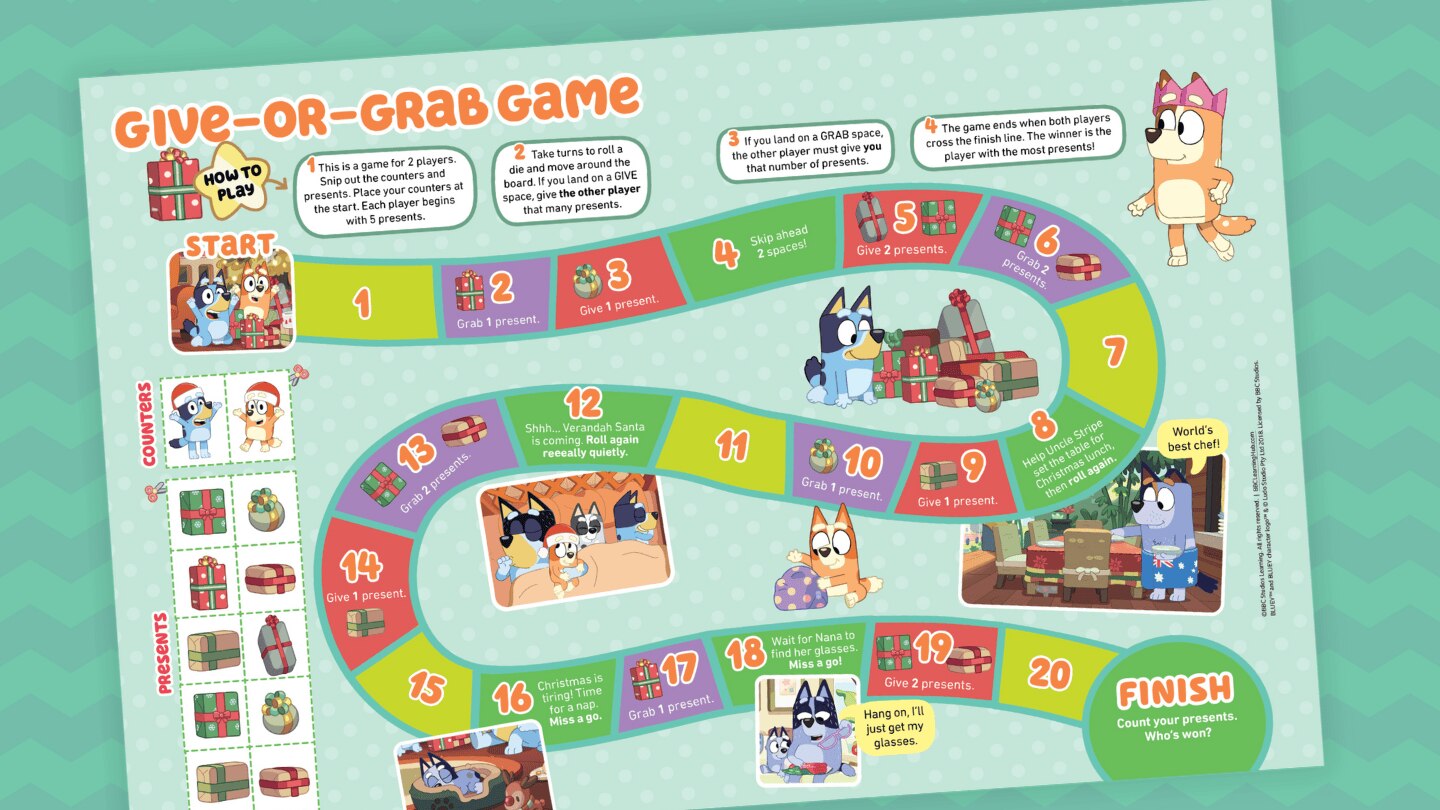
It's the holiday season! Grab a pal and play this fun game. Here's how:
- This is a game for two players. Snip out the counters and presents. Place your counters at the start. Each player begins with five presents.
- Take turns to roll a die and move around the board. If you land on a GIVE space, give the other player that many presents.
- If you land on a GRAB space, the other player must give you that number of presents.
- The game ends when both players cross the finish line. The winner is the player with the most presents!

Think You’re a Winter Holidays Expert? Let’s Find Out!
Winter is a magical time of year, filled with lights, music, and celebrations around the world. There's so much to discover: Diwali’s glowing lamps, St. Lucia Day’s candlelit processions, the posadas of Mexico, Hanukkah’s spinning dreidels, Christmas trees, Kwanzaa candles, Lunar New Year’s red envelopes, and the winter solstice’s longest night.
But how much do you really know about these special winter holidays? This quiz is packed with fun facts, traditions, and a few surprises that only the most festive holiday experts will ace. Get ready to test your knowledge and see if you can shine bright like the season itself!
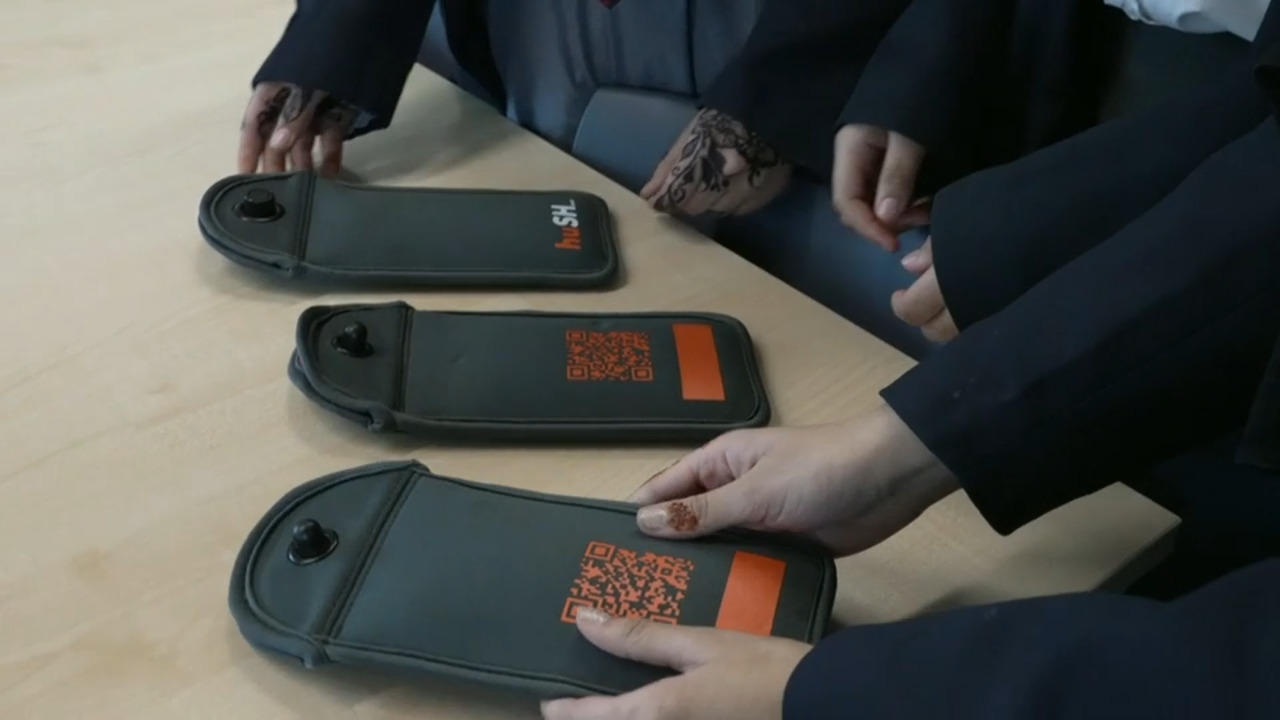
Your phone goes in a pouch the moment you walk in. If it's seen or heard, it's gone — for 4 weeks. That's the policy at Astrea Academy, one of the strictest phone bans in the UK, and yes, those 4 weeks can run straight through school holidays.
Harsh? Maybe. But teachers say it's working. Focus is up, behavior has improved, and students' overall wellbeing has shifted noticeably since the policy took hold.
Student reactions are split. Some think the rules go too far. Others — perhaps surprisingly — admit they don't really need their phones during the school day anyway. Both groups are probably right about something.
Parents are largely on board, and for reasons that go beyond test scores. They're noticing their kids coming home and actually talking — asking questions, making eye contact, and reconnecting in small ways that are easy to dismiss until they're gone. One thing the ban has surfaced that nobody quite expected: parents realizing they have a phone problem too. Several reflected that if they want their kids to put the devices down, they probably need to do the same. Role modeling, it turns out, works both ways.
Phone-free schools aren't going away. The UK is already moving toward national guidelines pushing schools in this direction, alongside measures to encourage more moderate social media use. The experiment at Astrea Academy may be ahead of its time — or just ahead of the curve.
Happy holidays! With so many celebrations all over the globe during this season, it's the perfect time to teach your Grade 3–5 students about winter holidays around the world. Make copies of this mini-book (simply print on both sides flipped on the short edge, stack, and fold to assemble) for your students and invite them to read about each holiday and complete a simple report page full of questions, coloring, drawing, favorite facts, and more. Here are the eight winter holidays covered:
-
Diwali: A Hindu Festival of Lights celebrating the victory of light over darkness, with lamps, fireworks, and family gatherings.
-
St. Lucia Day: A Scandinavian holiday honoring St. Lucia, featuring processions with candles and special buns to bring light during the dark winter.
-
Las Posadas: A Mexican tradition reenacting Mary and Joseph’s search for shelter, celebrated with processions, songs, and parties.
-
Hanukkah: A Jewish holiday celebrating the miracle of the Temple’s menorah oil lasting eight days, marked with candles, dreidel games, and fried foods.
-
Winter Solstice: The shortest day and longest night of the year, celebrated by many cultures as the return of the sun with feasts and light-themed traditions.
-
Christmas: A Christian holiday celebrating the birth of Jesus, often marked with gift-giving, decorations, and family gatherings.
-
Kwanzaa: A weeklong African American celebration honoring African heritage and the Seven Principles through candles, reflection, and community activities.
-
Lunar New Year: An Asian cultural holiday welcoming the new year on the lunar calendar, celebrated with family reunions, special foods, and traditions for good luck.
It's the holiday season! Grab a pal and play this fun game. Here's how:
- This is a game for two players. Snip out the counters and presents. Place your counters at the start. Each player begins with five presents.
- Take turns to roll a die and move around the board. If you land on a GIVE space, give the other player that many presents.
- If you land on a GRAB space, the other player must give you that number of presents.
- The game ends when both players cross the finish line. The winner is the player with the most presents!
Think You’re a Winter Holidays Expert? Let’s Find Out!
Winter is a magical time of year, filled with lights, music, and celebrations around the world. There's so much to discover: Diwali’s glowing lamps, St. Lucia Day’s candlelit processions, the posadas of Mexico, Hanukkah’s spinning dreidels, Christmas trees, Kwanzaa candles, Lunar New Year’s red envelopes, and the winter solstice’s longest night.
But how much do you really know about these special winter holidays? This quiz is packed with fun facts, traditions, and a few surprises that only the most festive holiday experts will ace. Get ready to test your knowledge and see if you can shine bright like the season itself!
Your phone goes in a pouch the moment you walk in. If it's seen or heard, it's gone — for 4 weeks. That's the policy at Astrea Academy, one of the strictest phone bans in the UK, and yes, those 4 weeks can run straight through school holidays.
Harsh? Maybe. But teachers say it's working. Focus is up, behavior has improved, and students' overall wellbeing has shifted noticeably since the policy took hold.
Student reactions are split. Some think the rules go too far. Others — perhaps surprisingly — admit they don't really need their phones during the school day anyway. Both groups are probably right about something.
Parents are largely on board, and for reasons that go beyond test scores. They're noticing their kids coming home and actually talking — asking questions, making eye contact, and reconnecting in small ways that are easy to dismiss until they're gone. One thing the ban has surfaced that nobody quite expected: parents realizing they have a phone problem too. Several reflected that if they want their kids to put the devices down, they probably need to do the same. Role modeling, it turns out, works both ways.
Phone-free schools aren't going away. The UK is already moving toward national guidelines pushing schools in this direction, alongside measures to encourage more moderate social media use. The experiment at Astrea Academy may be ahead of its time — or just ahead of the curve.