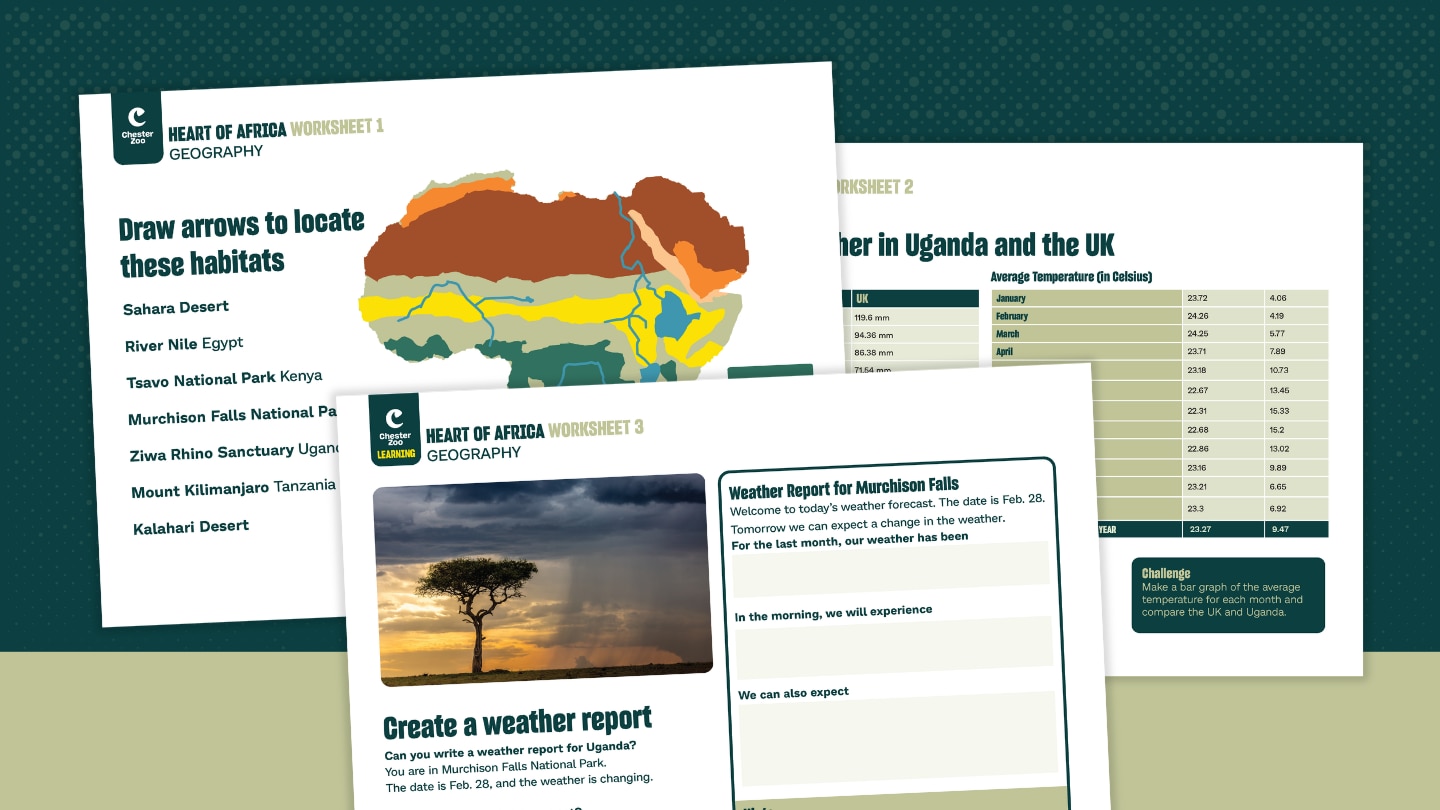
Did you know that Africa is the second largest continent in the world? Or that the equator runs right through the middle? Get an introduction to Africa through its amazing geography. With these worksheets, you'll:
- Identify different types of Afrrican habitats using map of the continent
- Compare the average rainfall and temperature in Uganda and the UK
- Write your own weather report for Murchison Falls in Uganda
These worksheets accompany a Chester Zoo interactive lesson on habitats and weather.
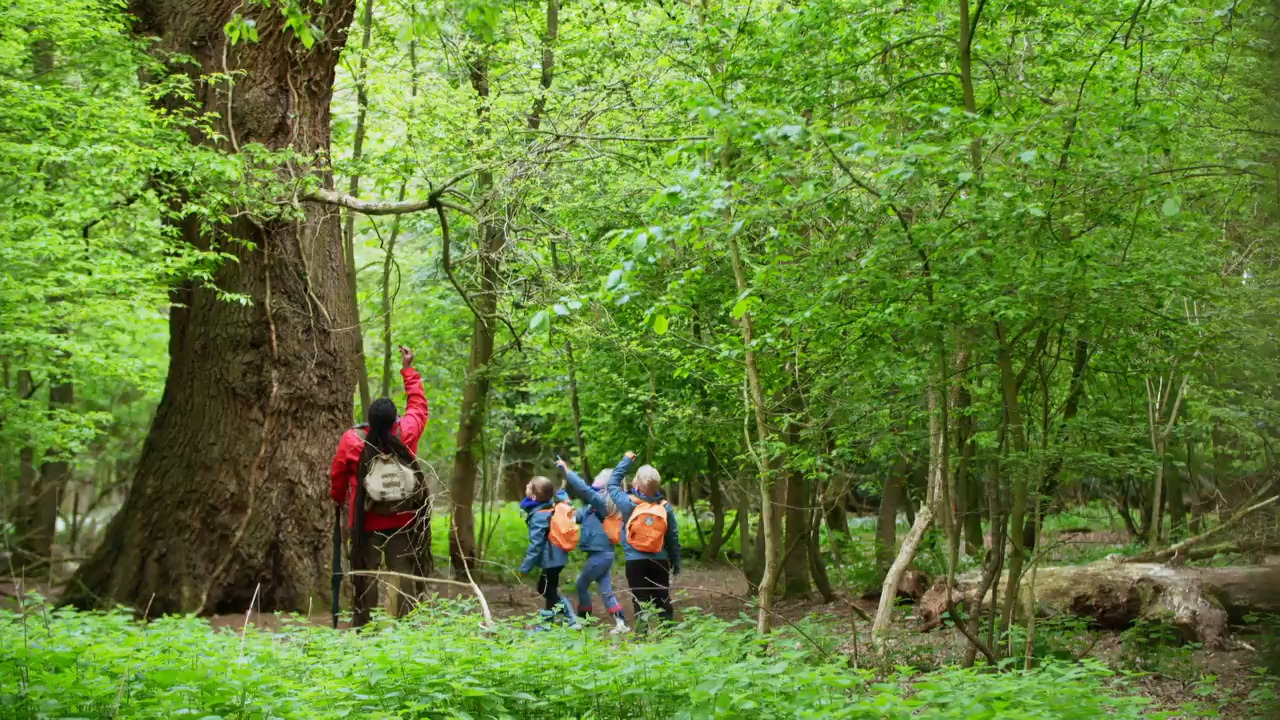
In Ancient Oaks Make for Amazing Habitats, Ranger Hamza and the Ramblers find an oak tree. Join them as they learn about this amazing, 400-year-old oak tree and how it provides a home for lots of animals! This video is excerpted from BBC's Ranger Hamza’s Eco Quest, a nature exploration show in which Ranger Hamza and the Ramblers go on quests to discover nature’s wonders and the important role they play in our environment.

In Insect Habitats Close Up, Ranger Hamza and the Ramblers explore long grass. They learn how the grass protects and provides shelter for insects and how it can make compost, which helps gardens and the environment. This video is excerpted from BBC's Ranger Hamza’s Eco Quest, a nature exploration show in which Ranger Hamza and the Ramblers go on quests to discover nature’s wonders and the important role they play in our environment.

The article "Habitats and Ecosystems: Understanding Their Differences and Impact on Biodiversity" from BBC's Discover Wildlife explains the differences between habitats, ecosystems, environments, and niches, as well as how these concepts affect biodiversity and the importance of understanding them for conservation efforts.

The UK wants to see more hedgehogs, and it’s not because hedgehogs are incredibly cute. Well, not just because of that. The UK’s hedgehog population is in dangerous decline, but part of the solution could be an AI tool called Tessera that uses satellite images to help build a map of hedgehog habitats.
Before Tessera can work its magic, it needs some input. Researchers need to find and learn hedgehogs’ preferred environments by identifying the habitat’s fingerprint. A fingerprint, in this case, is a pattern or collection of characteristics generally found in hedgehog habitats. Maybe your habitat fingerprint would include a freezer full of ice cream and trampoline floors! It has nothing to do with actual fingers, even though that would be a great excuse to spend all day looking at hedgehog paws.
Researchers do their field work in small areas, then input their findings into the software that can extrapolate, show where the other similar habitats are, and record changes over time. The project will hopefully help us learn about where hedgehogs live, how we can help them survive, and how we can set up our homes to comfortably accommodate a hedgehog houseguest.
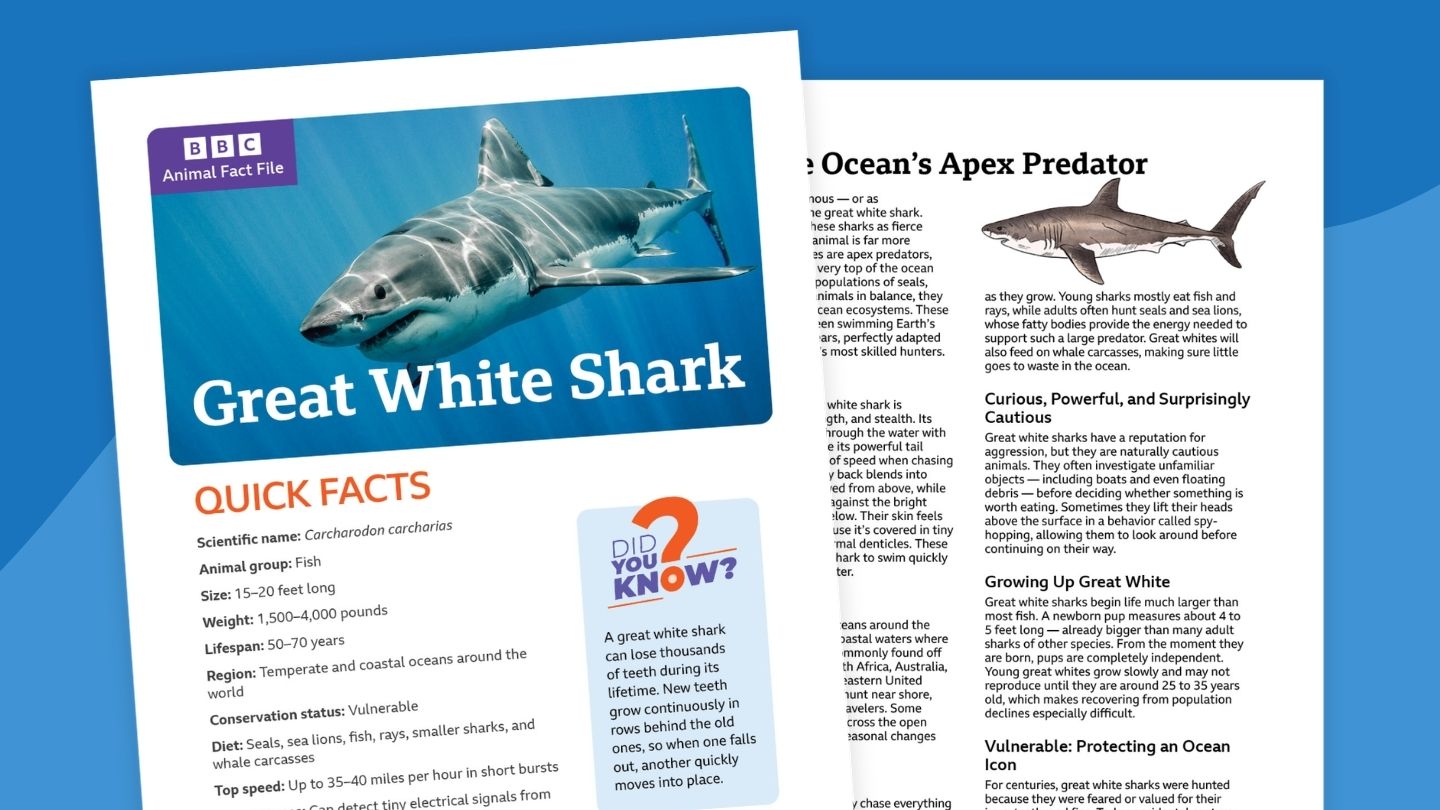
What predator can burst through the ocean at nearly 40 miles per hour, replace thousands of teeth during its lifetime, and help keep marine ecosystems healthy? The answer may surprise you.
Separate fact from fiction as you dive into the world of the great white shark. Discover the incredible adaptations that make it one of the ocean's most successful hunters, from powerful jaws and razor-sharp senses to stealthy hunting strategies. You'll also learn why great white sharks are essential to healthy oceans and how conservation efforts are helping protect this iconic predator.
Teachers and parents, you can use this fact file to:
- Introduce an animal, wildlife, or life science unit
- Support nonfiction reading and vocabulary practice
- Explore animal adaptations, behaviors, and habitats
- Compare animals and the ecosystems they live in
- Practice finding and organizing information from nonfiction texts
- Prepare students for animal research projects or presentations (use our animal report templates!)
- Connect science learning to conservation and environmental issues
- Pair with videos, articles, or other informational texts (see Related Resources below)
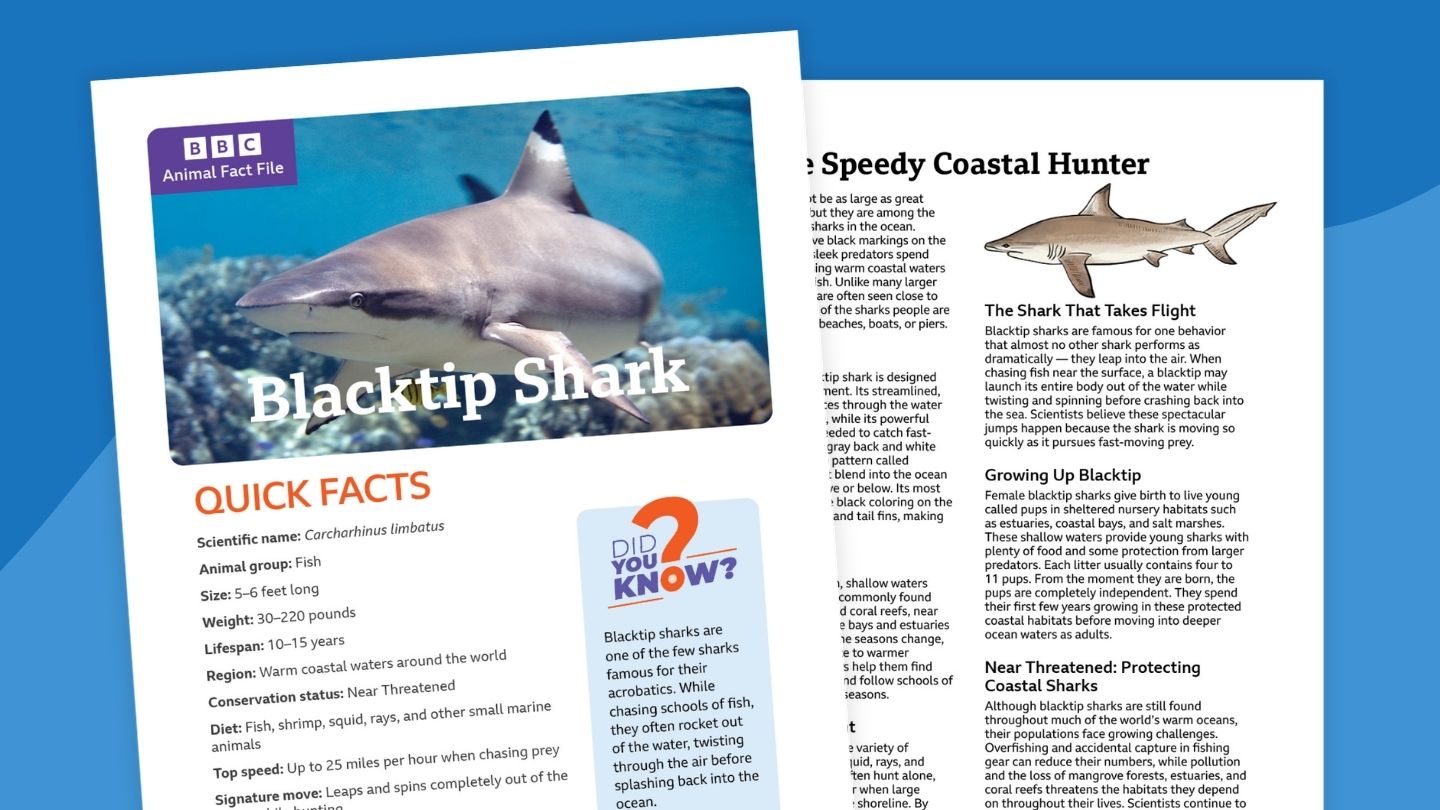
What shark can leap completely out of the water while chasing its dinner? If you guessed the blacktip shark, you're right!
Known for their speed, agility, and spectacular spinning jumps, blacktip sharks are among the ocean's most exciting predators. Explore the warm coastal waters they call home, discover how they sometimes work together to herd schools of fish, and learn why mangroves, coral reefs, and estuaries are so important to their survival. You'll also find out how people are helping keep these remarkable coastal sharks thriving.
Teachers and parents, you can use this fact file to:
- Introduce an animal, wildlife, or life science unit
- Support nonfiction reading and vocabulary practice
- Explore animal adaptations, behaviors, and habitats
- Compare animals and the ecosystems they live in
- Practice finding and organizing information from nonfiction texts
- Prepare students for animal research projects or presentations (use our animal report templates!)
- Connect science learning to conservation and environmental issues
- Pair with videos, articles, or other informational texts (see Related Resources below)
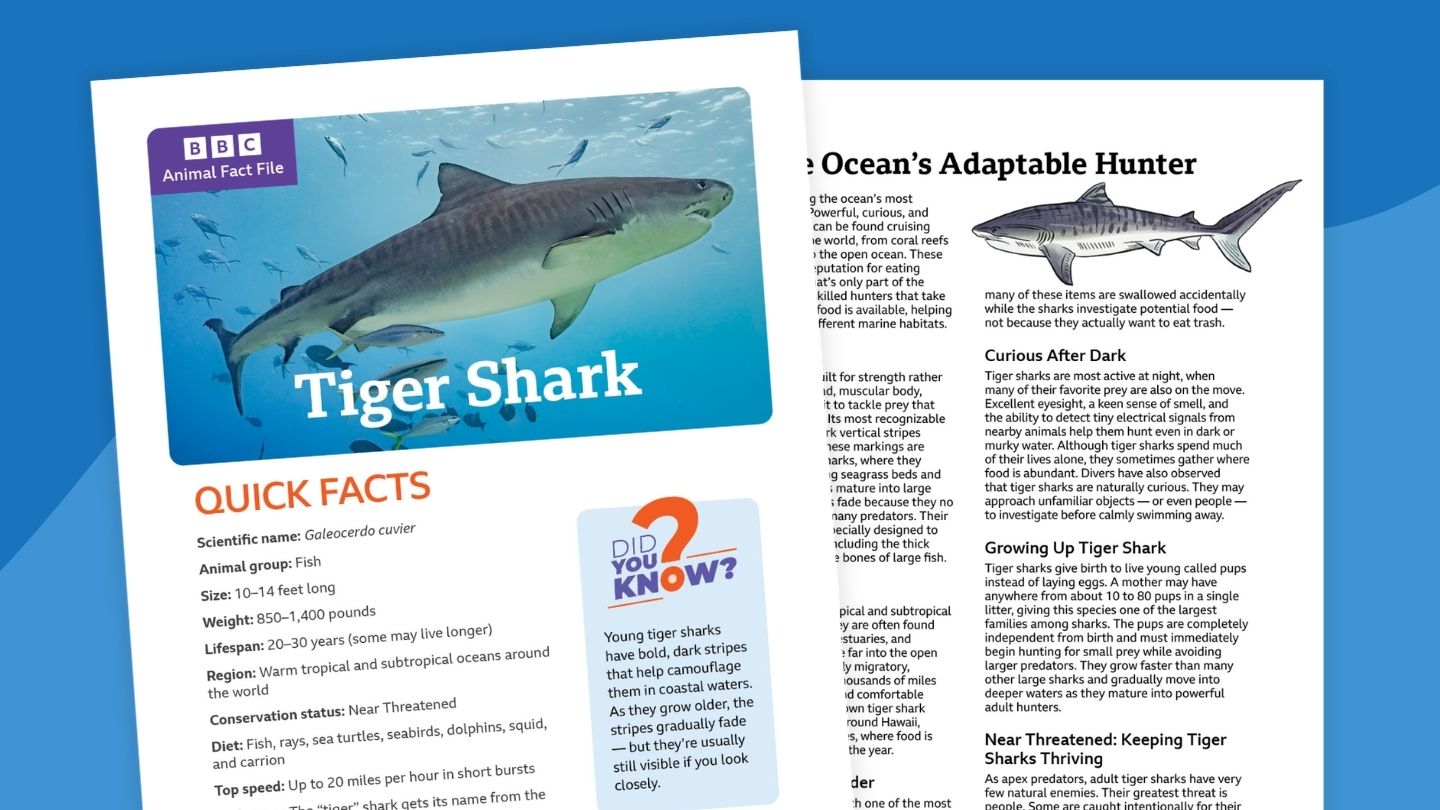
What shark gets its name from the dark stripes along its body and has one of the most varied diets in the ocean? Meet one of the sea's most adaptable predators.
Powerful, curious, and built to thrive in a wide range of habitats, tiger sharks are among the ocean's most successful hunters. Discover how they use their keen senses and powerful jaws to find food, why they migrate across thousands of miles of ocean, and what role they play in keeping marine ecosystems in balance. You'll also learn about the challenges tiger sharks face and the efforts underway to protect them.
Teachers and parents, you can use this fact file to:
- Introduce an animal, wildlife, or life science unit
- Support nonfiction reading and vocabulary practice
- Explore animal adaptations, behaviors, and habitats
- Compare animals and the ecosystems they live in
- Practice finding and organizing information from nonfiction texts
- Prepare students for animal research projects or presentations (use our animal report templates!)
- Connect science learning to conservation and environmental issues
- Pair with videos, articles, or other informational texts (see Related Resources below)
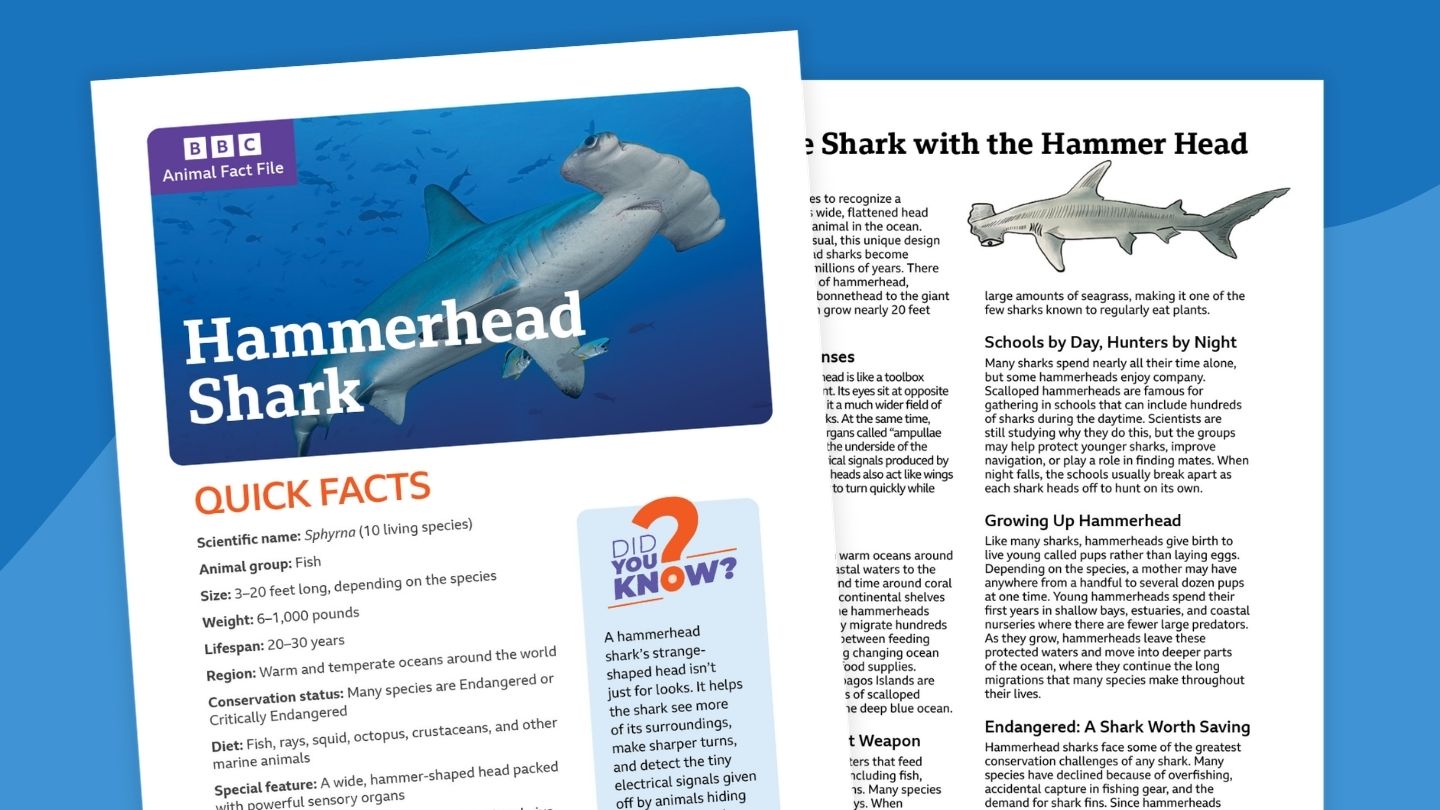
What shark has a head shaped like a hammer — and uses it like a high-tech hunting tool? Hammerhead sharks may look unusual, but every part of their unique design helps them survive.
Explore the fascinating world of these extraordinary sharks and discover how their wide heads help them see more, sense hidden prey, and make sharp turns while hunting. Learn why some hammerheads gather in schools of hundreds, travel thousands of miles across the ocean, and face growing conservation challenges that make protecting them more important than ever.
Teachers and parents, you can use this fact file to:
- Introduce an animal, wildlife, or life science unit
- Support nonfiction reading and vocabulary practice
- Explore animal adaptations, behaviors, and habitats
- Compare animals and the ecosystems they live in
- Practice finding and organizing information from nonfiction texts
- Prepare students for animal research projects or presentations (use our animal report templates!)
- Connect science learning to conservation and environmental issues
- Pair with videos, articles, or other informational texts (see Related Resources below)
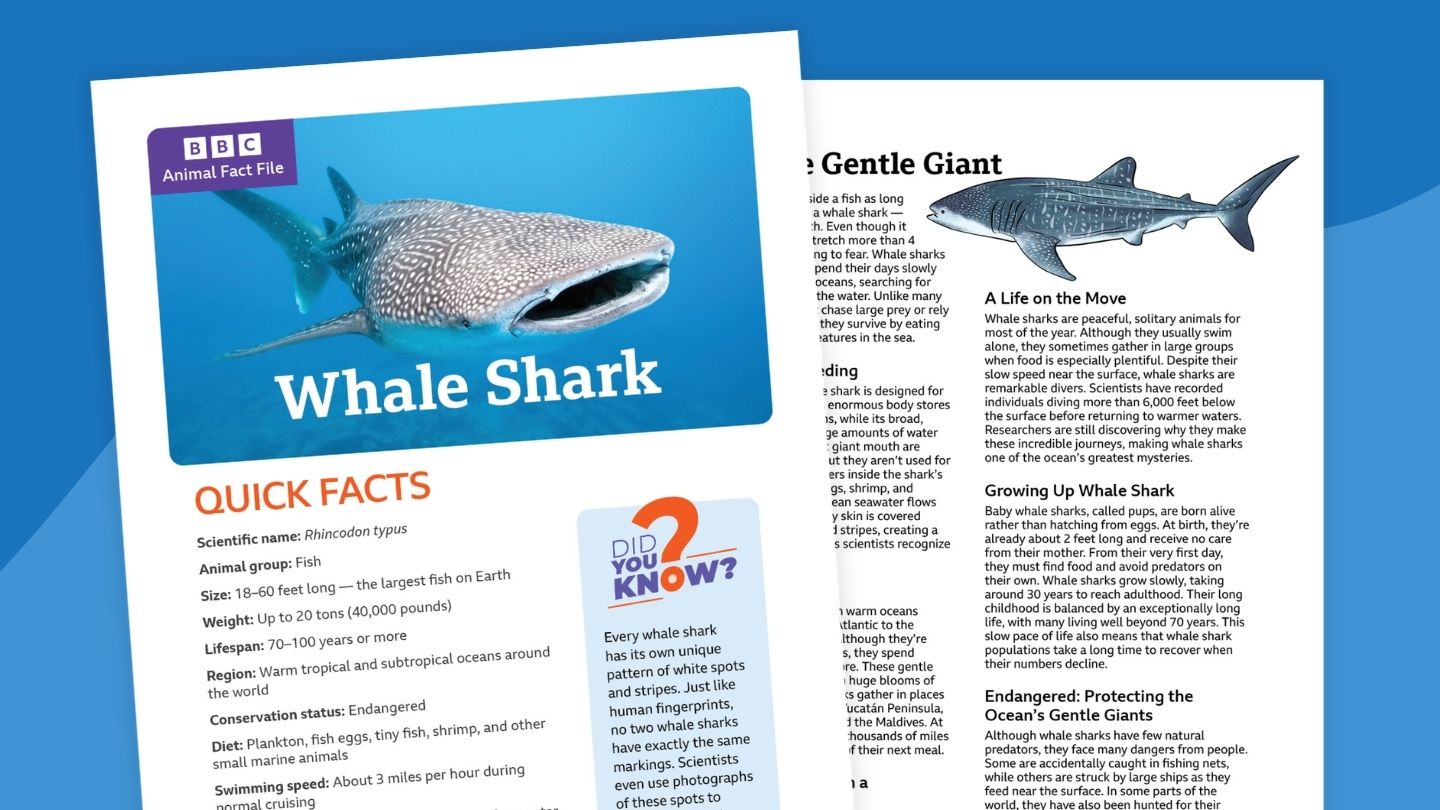
What fish can grow longer than a school bus but feeds on tiny plankton? The whale shark is the largest fish on Earth — and one of its gentlest.
From tropical coastlines to the open ocean, these enormous fish spend their lives searching for tiny creatures drifting through the water. Discover how whale sharks use filter feeding instead of hunting, dive thousands of feet beneath the surface, and migrate incredible distances across the globe. You'll also learn why these gentle giants are endangered and how scientists are working to protect them for generations to come.
Teachers and parents, you can use this fact file to:
- Introduce an animal, wildlife, or life science unit
- Support nonfiction reading and vocabulary practice
- Explore animal adaptations, behaviors, and habitats
- Compare animals and the ecosystems they live in
- Practice finding and organizing information from nonfiction texts
- Prepare students for animal research projects or presentations (use our animal report templates!)
- Connect science learning to conservation and environmental issues
- Pair with videos, articles, or other informational texts (see Related Resources below)
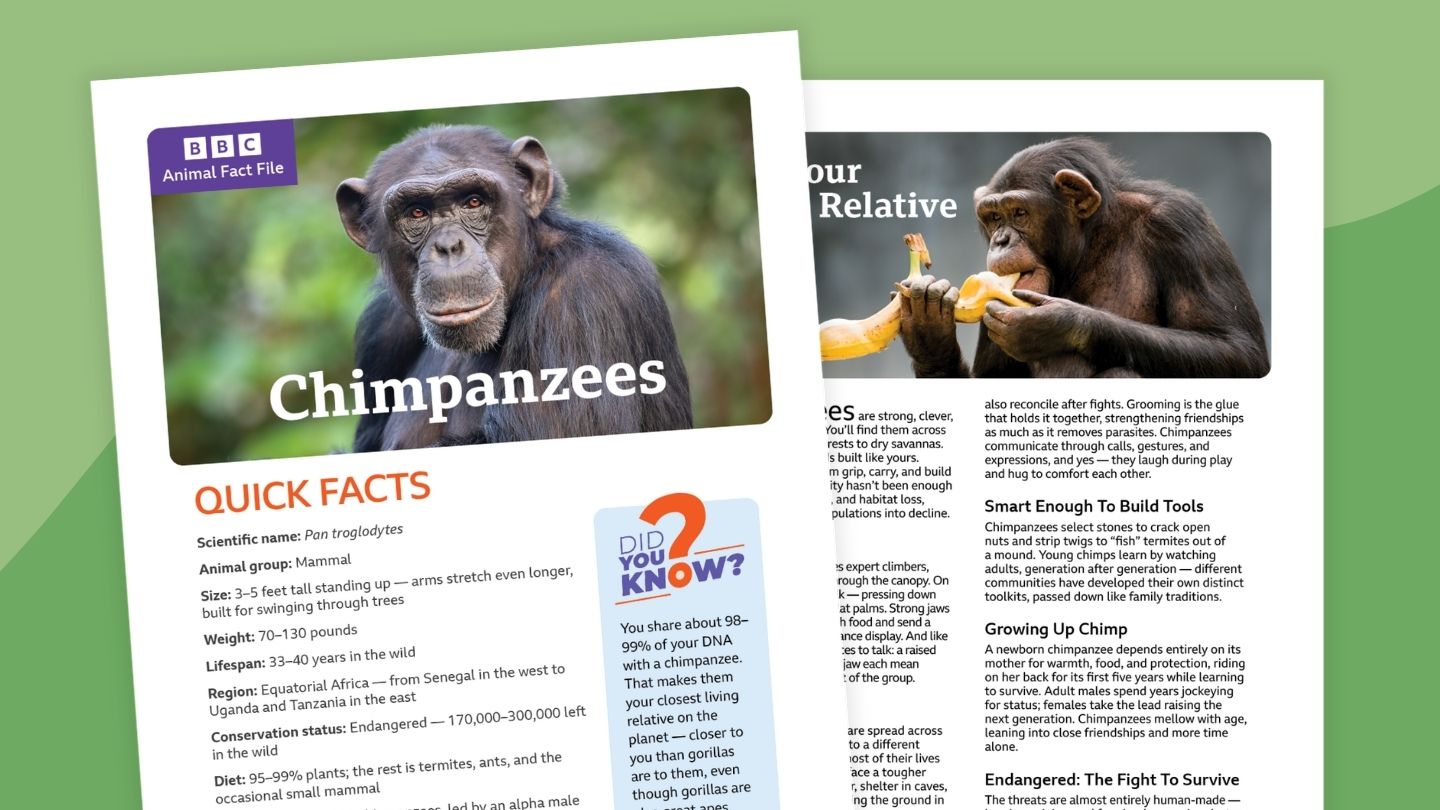
What animal laughs during play, uses tools to solve problems, and shares nearly 99% of its DNA with you? Meet the chimpanzee — one of the smartest and most fascinating animals on Earth.
This fact file takes you on a journey into the world of chimpanzees, from the rainforests and savannas they call home to the remarkable ways they communicate, work together, and care for their families. Along the way, discover how chimpanzees use tools, build friendships, raise their young, and face challenges in the wild.
Teachers and parents, you can use this fact file to:
- Introduce an animal, wildlife, or life science unit
- Support nonfiction reading and vocabulary practice
- Explore animal adaptations, behaviors, and habitats
- Compare animals and the ecosystems they live in
- Practice finding and organizing information from nonfiction texts
- Prepare students for animal research projects or presentations (use our animal report templates!)
- Connect science learning to conservation and environmental issues
- Pair with videos, articles, or other informational texts (see Related Resources below)
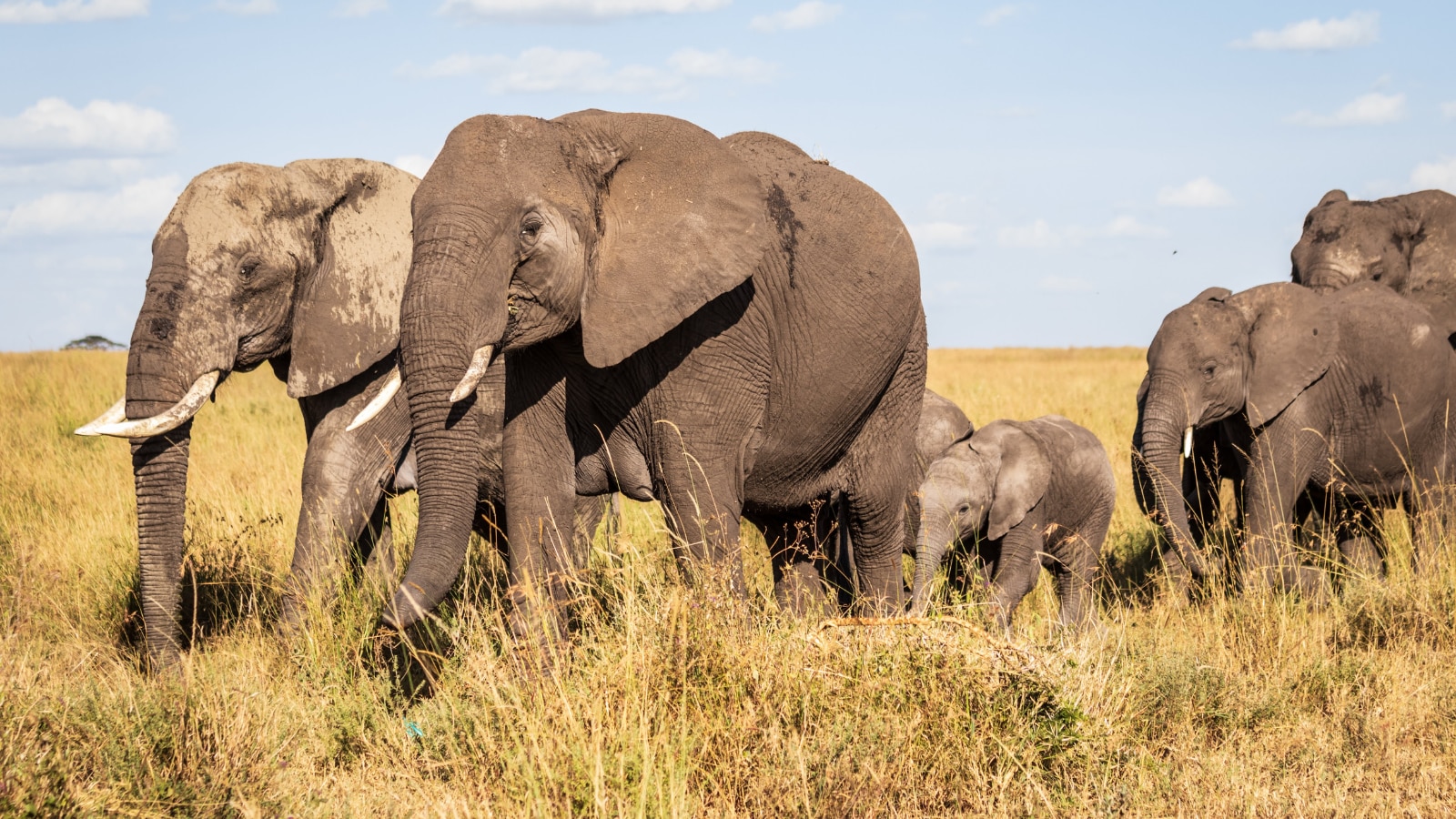
Step into the (very large) footsteps of Earth’s gentle giants. This playlist of eight video clips from BBC programs Planet Earth; Seven Worlds, One Planet; and Animal Babies follows elephants as they search for water, navigate Congo forests, communicate, and rely on the matriarch to stay safe. Learn how elephant families work together, adapt to challenges, and shape their ecosystems. Perfect for sparking curiosity about wildlife and habitats.
Did you know that Africa is the second largest continent in the world? Or that the equator runs right through the middle? Get an introduction to Africa through its amazing geography. With these worksheets, you'll:
- Identify different types of Afrrican habitats using map of the continent
- Compare the average rainfall and temperature in Uganda and the UK
- Write your own weather report for Murchison Falls in Uganda
These worksheets accompany a Chester Zoo interactive lesson on habitats and weather.
In Ancient Oaks Make for Amazing Habitats, Ranger Hamza and the Ramblers find an oak tree. Join them as they learn about this amazing, 400-year-old oak tree and how it provides a home for lots of animals! This video is excerpted from BBC's Ranger Hamza’s Eco Quest, a nature exploration show in which Ranger Hamza and the Ramblers go on quests to discover nature’s wonders and the important role they play in our environment.
In Insect Habitats Close Up, Ranger Hamza and the Ramblers explore long grass. They learn how the grass protects and provides shelter for insects and how it can make compost, which helps gardens and the environment. This video is excerpted from BBC's Ranger Hamza’s Eco Quest, a nature exploration show in which Ranger Hamza and the Ramblers go on quests to discover nature’s wonders and the important role they play in our environment.
The article "Habitats and Ecosystems: Understanding Their Differences and Impact on Biodiversity" from BBC's Discover Wildlife explains the differences between habitats, ecosystems, environments, and niches, as well as how these concepts affect biodiversity and the importance of understanding them for conservation efforts.
The UK wants to see more hedgehogs, and it’s not because hedgehogs are incredibly cute. Well, not just because of that. The UK’s hedgehog population is in dangerous decline, but part of the solution could be an AI tool called Tessera that uses satellite images to help build a map of hedgehog habitats.
Before Tessera can work its magic, it needs some input. Researchers need to find and learn hedgehogs’ preferred environments by identifying the habitat’s fingerprint. A fingerprint, in this case, is a pattern or collection of characteristics generally found in hedgehog habitats. Maybe your habitat fingerprint would include a freezer full of ice cream and trampoline floors! It has nothing to do with actual fingers, even though that would be a great excuse to spend all day looking at hedgehog paws.
Researchers do their field work in small areas, then input their findings into the software that can extrapolate, show where the other similar habitats are, and record changes over time. The project will hopefully help us learn about where hedgehogs live, how we can help them survive, and how we can set up our homes to comfortably accommodate a hedgehog houseguest.
What predator can burst through the ocean at nearly 40 miles per hour, replace thousands of teeth during its lifetime, and help keep marine ecosystems healthy? The answer may surprise you.
Separate fact from fiction as you dive into the world of the great white shark. Discover the incredible adaptations that make it one of the ocean's most successful hunters, from powerful jaws and razor-sharp senses to stealthy hunting strategies. You'll also learn why great white sharks are essential to healthy oceans and how conservation efforts are helping protect this iconic predator.
Teachers and parents, you can use this fact file to:
- Introduce an animal, wildlife, or life science unit
- Support nonfiction reading and vocabulary practice
- Explore animal adaptations, behaviors, and habitats
- Compare animals and the ecosystems they live in
- Practice finding and organizing information from nonfiction texts
- Prepare students for animal research projects or presentations (use our animal report templates!)
- Connect science learning to conservation and environmental issues
- Pair with videos, articles, or other informational texts (see Related Resources below)
What shark can leap completely out of the water while chasing its dinner? If you guessed the blacktip shark, you're right!
Known for their speed, agility, and spectacular spinning jumps, blacktip sharks are among the ocean's most exciting predators. Explore the warm coastal waters they call home, discover how they sometimes work together to herd schools of fish, and learn why mangroves, coral reefs, and estuaries are so important to their survival. You'll also find out how people are helping keep these remarkable coastal sharks thriving.
Teachers and parents, you can use this fact file to:
- Introduce an animal, wildlife, or life science unit
- Support nonfiction reading and vocabulary practice
- Explore animal adaptations, behaviors, and habitats
- Compare animals and the ecosystems they live in
- Practice finding and organizing information from nonfiction texts
- Prepare students for animal research projects or presentations (use our animal report templates!)
- Connect science learning to conservation and environmental issues
- Pair with videos, articles, or other informational texts (see Related Resources below)
What shark gets its name from the dark stripes along its body and has one of the most varied diets in the ocean? Meet one of the sea's most adaptable predators.
Powerful, curious, and built to thrive in a wide range of habitats, tiger sharks are among the ocean's most successful hunters. Discover how they use their keen senses and powerful jaws to find food, why they migrate across thousands of miles of ocean, and what role they play in keeping marine ecosystems in balance. You'll also learn about the challenges tiger sharks face and the efforts underway to protect them.
Teachers and parents, you can use this fact file to:
- Introduce an animal, wildlife, or life science unit
- Support nonfiction reading and vocabulary practice
- Explore animal adaptations, behaviors, and habitats
- Compare animals and the ecosystems they live in
- Practice finding and organizing information from nonfiction texts
- Prepare students for animal research projects or presentations (use our animal report templates!)
- Connect science learning to conservation and environmental issues
- Pair with videos, articles, or other informational texts (see Related Resources below)
What shark has a head shaped like a hammer — and uses it like a high-tech hunting tool? Hammerhead sharks may look unusual, but every part of their unique design helps them survive.
Explore the fascinating world of these extraordinary sharks and discover how their wide heads help them see more, sense hidden prey, and make sharp turns while hunting. Learn why some hammerheads gather in schools of hundreds, travel thousands of miles across the ocean, and face growing conservation challenges that make protecting them more important than ever.
Teachers and parents, you can use this fact file to:
- Introduce an animal, wildlife, or life science unit
- Support nonfiction reading and vocabulary practice
- Explore animal adaptations, behaviors, and habitats
- Compare animals and the ecosystems they live in
- Practice finding and organizing information from nonfiction texts
- Prepare students for animal research projects or presentations (use our animal report templates!)
- Connect science learning to conservation and environmental issues
- Pair with videos, articles, or other informational texts (see Related Resources below)
What fish can grow longer than a school bus but feeds on tiny plankton? The whale shark is the largest fish on Earth — and one of its gentlest.
From tropical coastlines to the open ocean, these enormous fish spend their lives searching for tiny creatures drifting through the water. Discover how whale sharks use filter feeding instead of hunting, dive thousands of feet beneath the surface, and migrate incredible distances across the globe. You'll also learn why these gentle giants are endangered and how scientists are working to protect them for generations to come.
Teachers and parents, you can use this fact file to:
- Introduce an animal, wildlife, or life science unit
- Support nonfiction reading and vocabulary practice
- Explore animal adaptations, behaviors, and habitats
- Compare animals and the ecosystems they live in
- Practice finding and organizing information from nonfiction texts
- Prepare students for animal research projects or presentations (use our animal report templates!)
- Connect science learning to conservation and environmental issues
- Pair with videos, articles, or other informational texts (see Related Resources below)
What animal laughs during play, uses tools to solve problems, and shares nearly 99% of its DNA with you? Meet the chimpanzee — one of the smartest and most fascinating animals on Earth.
This fact file takes you on a journey into the world of chimpanzees, from the rainforests and savannas they call home to the remarkable ways they communicate, work together, and care for their families. Along the way, discover how chimpanzees use tools, build friendships, raise their young, and face challenges in the wild.
Teachers and parents, you can use this fact file to:
- Introduce an animal, wildlife, or life science unit
- Support nonfiction reading and vocabulary practice
- Explore animal adaptations, behaviors, and habitats
- Compare animals and the ecosystems they live in
- Practice finding and organizing information from nonfiction texts
- Prepare students for animal research projects or presentations (use our animal report templates!)
- Connect science learning to conservation and environmental issues
- Pair with videos, articles, or other informational texts (see Related Resources below)
Step into the (very large) footsteps of Earth’s gentle giants. This playlist of eight video clips from BBC programs Planet Earth; Seven Worlds, One Planet; and Animal Babies follows elephants as they search for water, navigate Congo forests, communicate, and rely on the matriarch to stay safe. Learn how elephant families work together, adapt to challenges, and shape their ecosystems. Perfect for sparking curiosity about wildlife and habitats.