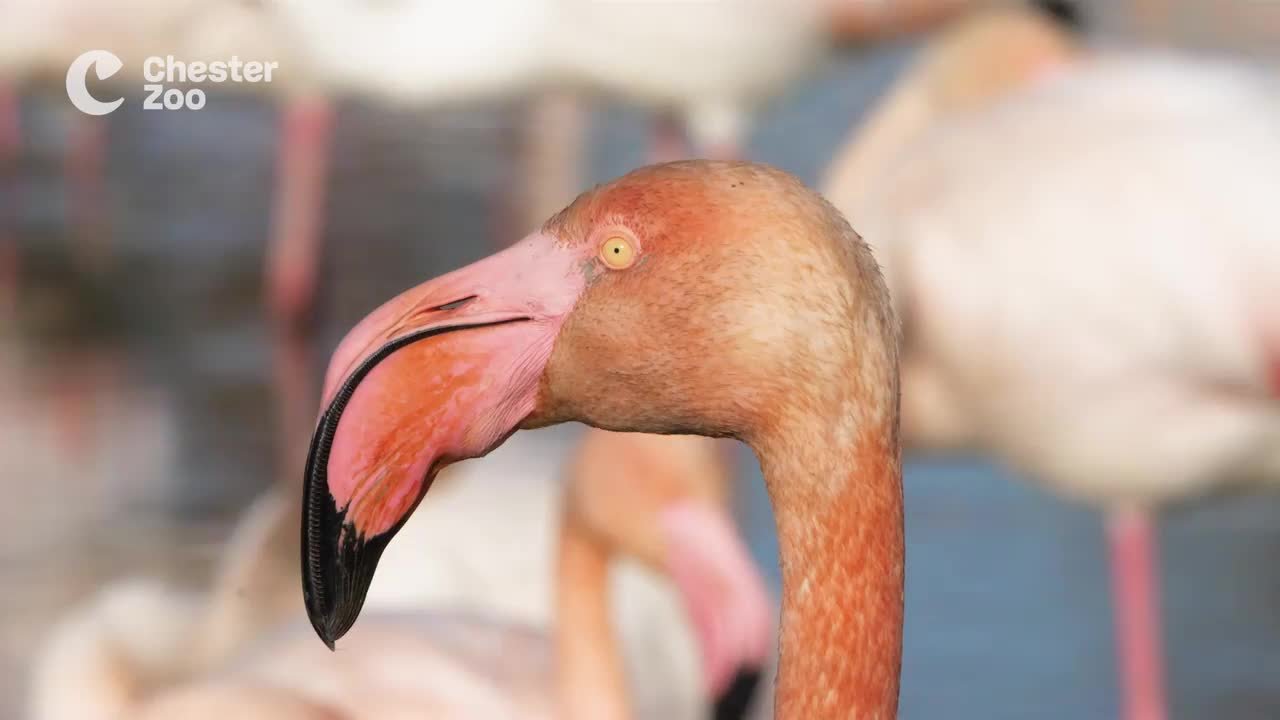
Meet some of the most recognizable birds in the world — flamingos! With their long legs, graceful curved necks, and vibrant pink feathers, these iconic birds are perfectly adapted for life in wetlands across Africa, Asia, and Europe.
In this fact file video from Chester Zoo, discover how greater flamingos use their remarkable sieve-like beaks to find food, learn why their feathers are pink, explore how they work together to raise their young, and uncover the challenges they face in the wild. You'll also see why protecting wetlands is so important for the future of these fascinating birds and the many other species that share their habitat.
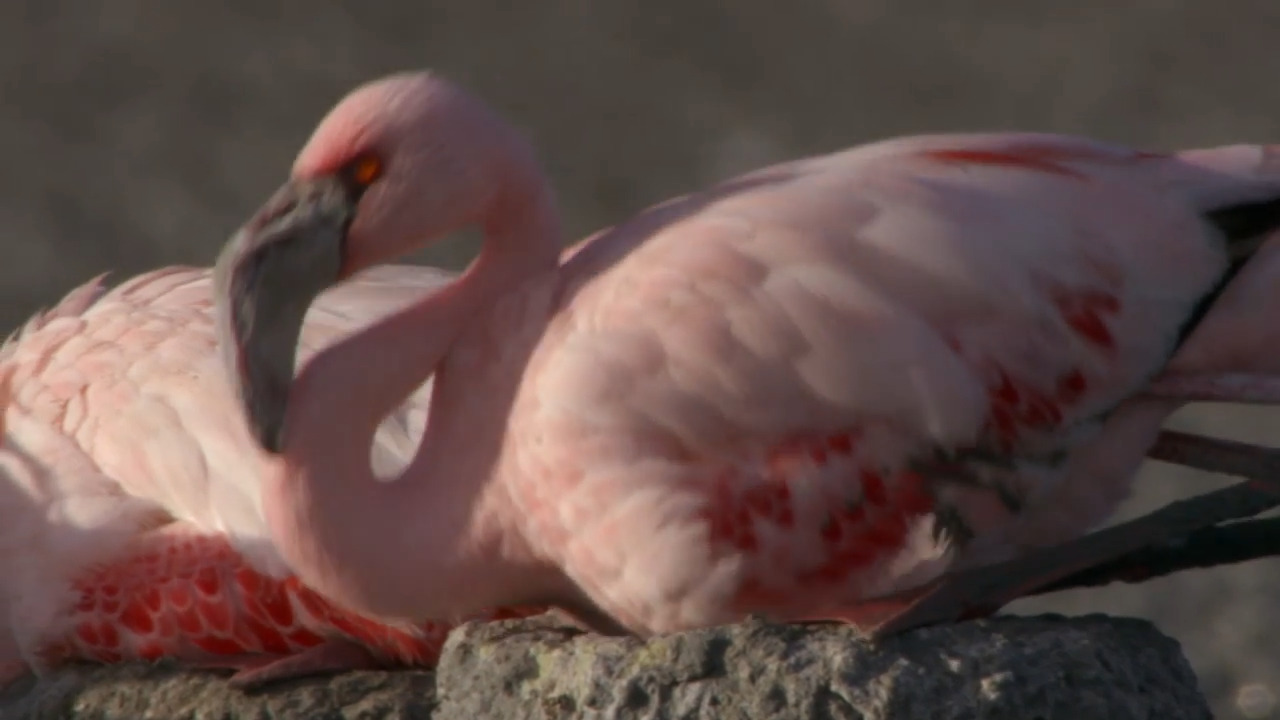
In How Flamingos Keep Their Babies Safe, narrator Sir David Attenborough shows how flamingos build their nests on tall mud stacks in Africa’s caustic soda lakes to stay safe from predators. The mud keeps most animals away, but flamingos can walk through it with their long legs. After a chick hatches, it stays in the nest for a week, as a fall into the mud too soon can prove dangerous or fatal. This video is excerpted from BBC's Life, a show that explores the remarkable strategies animals and plants use to ensure their survival.
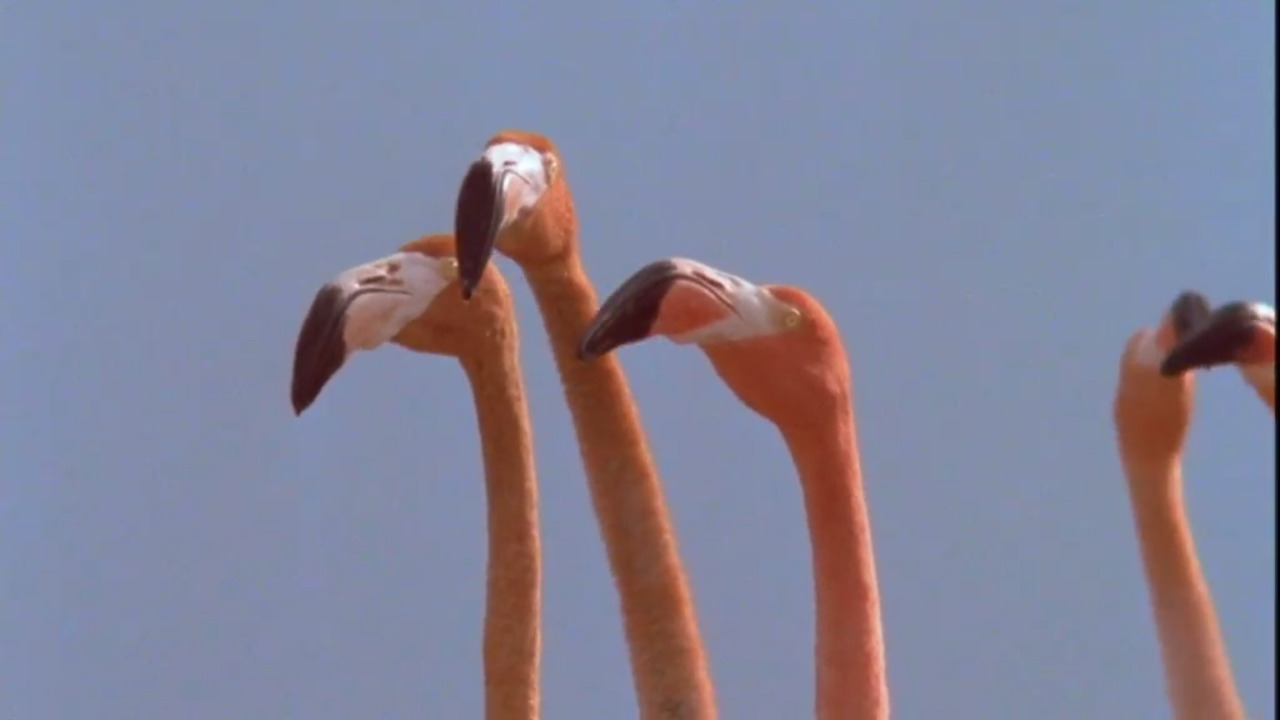
In Flamingos Thrive in Post-Storm Brine, narrator Sir David Attenborough explains how the aftermath of hurricanes, and a briny, corrosive environment, benefits flamingos. This video is excerpted from BBC’s Blue Planet, a definitive documentary series diving into the mysterious depths of the sea to discover the natural history of the world’s oceans and the rarely seen marine life that reside there.
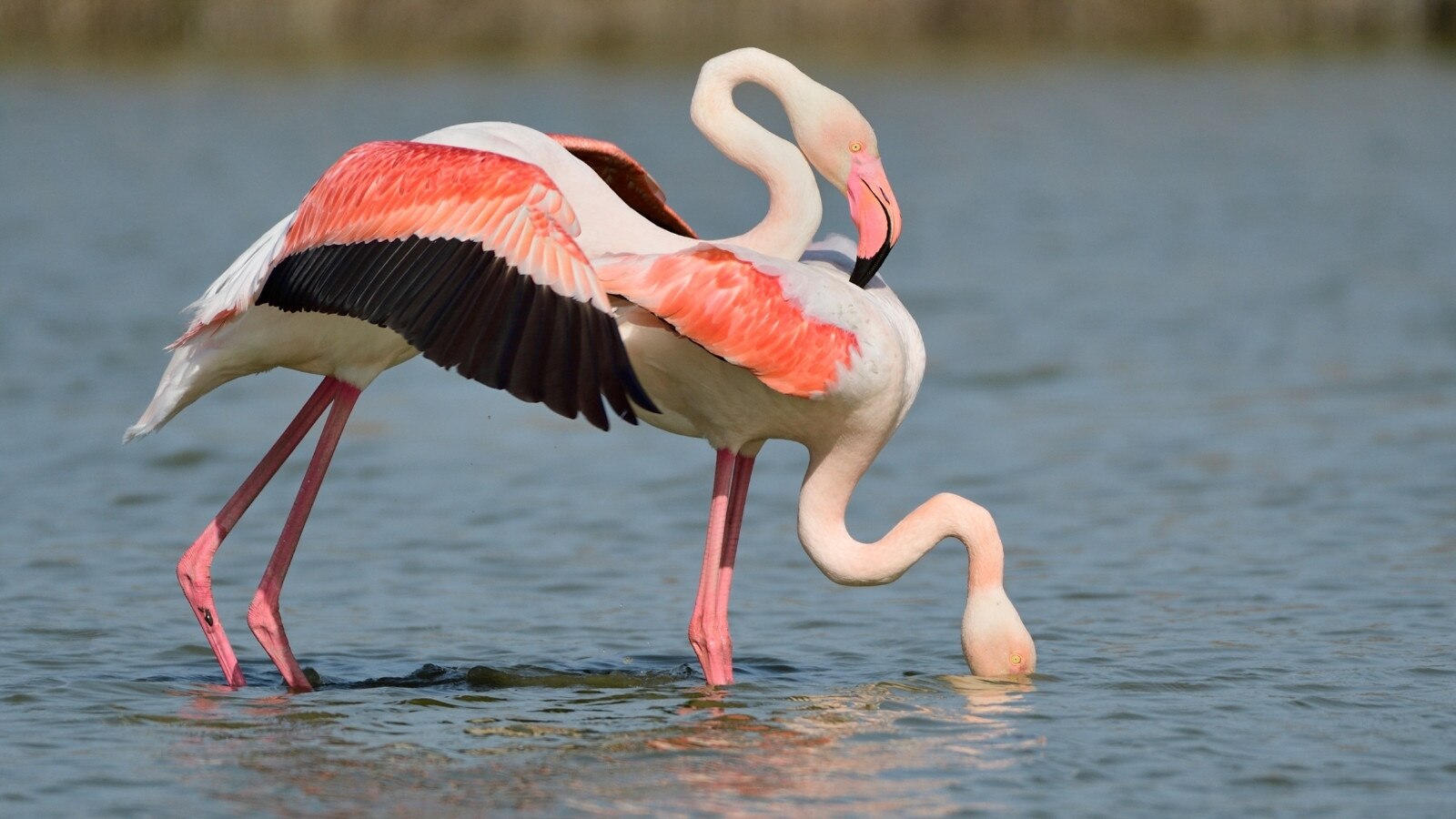
The article "Flamingo Guide: How to Identify Each Species, Where to See Them — and Why Flamingos Are Pink" from BBC's Discover Wildlife is a colorful exploration of one of the world’s most striking birds. It explains the six different flamingo species, how diet affects their bright coloring, and where to find them in the wild. The article also highlights flamingo behavior, nesting, communication, and how they feed their chicks pink "milk."
Meet some of the most recognizable birds in the world — flamingos! With their long legs, graceful curved necks, and vibrant pink feathers, these iconic birds are perfectly adapted for life in wetlands across Africa, Asia, and Europe.
In this fact file video from Chester Zoo, discover how greater flamingos use their remarkable sieve-like beaks to find food, learn why their feathers are pink, explore how they work together to raise their young, and uncover the challenges they face in the wild. You'll also see why protecting wetlands is so important for the future of these fascinating birds and the many other species that share their habitat.
In How Flamingos Keep Their Babies Safe, narrator Sir David Attenborough shows how flamingos build their nests on tall mud stacks in Africa’s caustic soda lakes to stay safe from predators. The mud keeps most animals away, but flamingos can walk through it with their long legs. After a chick hatches, it stays in the nest for a week, as a fall into the mud too soon can prove dangerous or fatal. This video is excerpted from BBC's Life, a show that explores the remarkable strategies animals and plants use to ensure their survival.
In Flamingos Thrive in Post-Storm Brine, narrator Sir David Attenborough explains how the aftermath of hurricanes, and a briny, corrosive environment, benefits flamingos. This video is excerpted from BBC’s Blue Planet, a definitive documentary series diving into the mysterious depths of the sea to discover the natural history of the world’s oceans and the rarely seen marine life that reside there.
The article "Flamingo Guide: How to Identify Each Species, Where to See Them — and Why Flamingos Are Pink" from BBC's Discover Wildlife is a colorful exploration of one of the world’s most striking birds. It explains the six different flamingo species, how diet affects their bright coloring, and where to find them in the wild. The article also highlights flamingo behavior, nesting, communication, and how they feed their chicks pink "milk."