Most of our sub-par pictures just take up space on our phones and show off the insides of our pockets, but one blurry photo launched an almost two decades-long scientific endeavor.
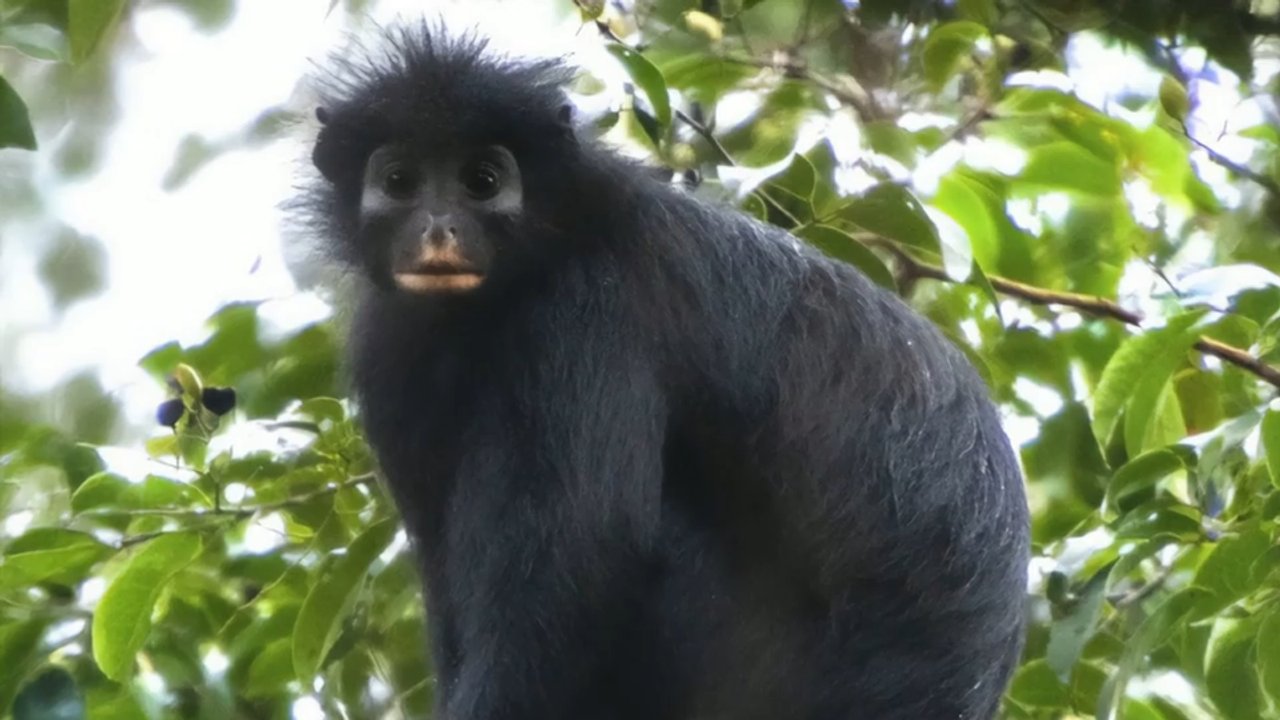
A search that began with a picture of a tail in the trees eventually took researchers deep into Lomami National Park in the Democratic Republic of Congo on a quest to find out exactly what kind of monkey they were dealing with. Using microphones, cameras and genetic testing, they gathered enough evidence to confirm that the animal is a distinct species, now named Colobus congoensis — the first time a monkey is being named after the Congo!
It belongs to a group of plant-eating primates that live high in trees and do not have thumbs, but the Colobus congoensis has some unique characteristics. It uses a roaring call that announces its presence through dense tropical forest and has distinctive pinkish-orange lips that researchers think could act as a visual signal, perhaps helping it attract a mate. It also gives you someone to blame if your sibling asks, “Who ate the last orange creamsicle?!”
Scientists still have a lot to learn about this monkey, but it seems rare and limited to a particular habitat in the central-eastern part of the country. Researchers hope that officially recognizing it as a separate species will help protect both the monkey and the environment it depends on.

End-to-end encryption prevents anyone from viewing online communications except the sender and the receiver. Or, it prevents anyone online from viewing it. Can’t do much about someone looking over your shoulder on the subway.
In 2019, Meta CEO Mark Zuckerberg promised to roll it out across his suite of apps — you know, those Facebook and Instagram things you may have heard of? But that promise was met with mixed results. On one hand, many were happy that their private conversations could be kept, well, private. On the other hand, there was pushback from police and government groups that could use messages to catch criminals.
Implementing end-to-end encryption was a years-long process for Zuckerberg, until his platforms abandoned the concept just this year. The company tweaked their terms and conditions to suggest that not enough people were opting into the encryption, but critics have questioned that explanation, pointing out that private messaging is an important part of how platforms keep users engaged and can support their advertising business.
Most of our sub-par pictures just take up space on our phones and show off the insides of our pockets, but one blurry photo launched an almost two decades-long scientific endeavor.
A search that began with a picture of a tail in the trees eventually took researchers deep into Lomami National Park in the Democratic Republic of Congo on a quest to find out exactly what kind of monkey they were dealing with. Using microphones, cameras and genetic testing, they gathered enough evidence to confirm that the animal is a distinct species, now named Colobus congoensis — the first time a monkey is being named after the Congo!
It belongs to a group of plant-eating primates that live high in trees and do not have thumbs, but the Colobus congoensis has some unique characteristics. It uses a roaring call that announces its presence through dense tropical forest and has distinctive pinkish-orange lips that researchers think could act as a visual signal, perhaps helping it attract a mate. It also gives you someone to blame if your sibling asks, “Who ate the last orange creamsicle?!”
Scientists still have a lot to learn about this monkey, but it seems rare and limited to a particular habitat in the central-eastern part of the country. Researchers hope that officially recognizing it as a separate species will help protect both the monkey and the environment it depends on.
End-to-end encryption prevents anyone from viewing online communications except the sender and the receiver. Or, it prevents anyone online from viewing it. Can’t do much about someone looking over your shoulder on the subway.
In 2019, Meta CEO Mark Zuckerberg promised to roll it out across his suite of apps — you know, those Facebook and Instagram things you may have heard of? But that promise was met with mixed results. On one hand, many were happy that their private conversations could be kept, well, private. On the other hand, there was pushback from police and government groups that could use messages to catch criminals.
Implementing end-to-end encryption was a years-long process for Zuckerberg, until his platforms abandoned the concept just this year. The company tweaked their terms and conditions to suggest that not enough people were opting into the encryption, but critics have questioned that explanation, pointing out that private messaging is an important part of how platforms keep users engaged and can support their advertising business.