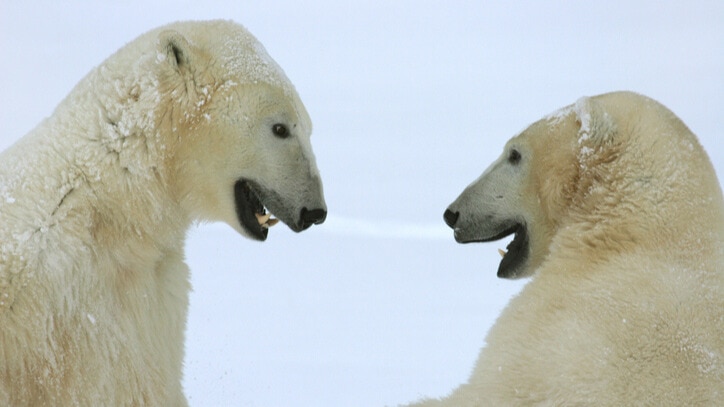
Get your students excited about wildlife with this collection of engaging articles! Covering elephants, polar bears, whales, and even the rarest creatures on Earth, these resources are perfect for sparking curiosity. Each article is available at three reading levels, making it easy for you to share with readers of all abilities in your classroom.
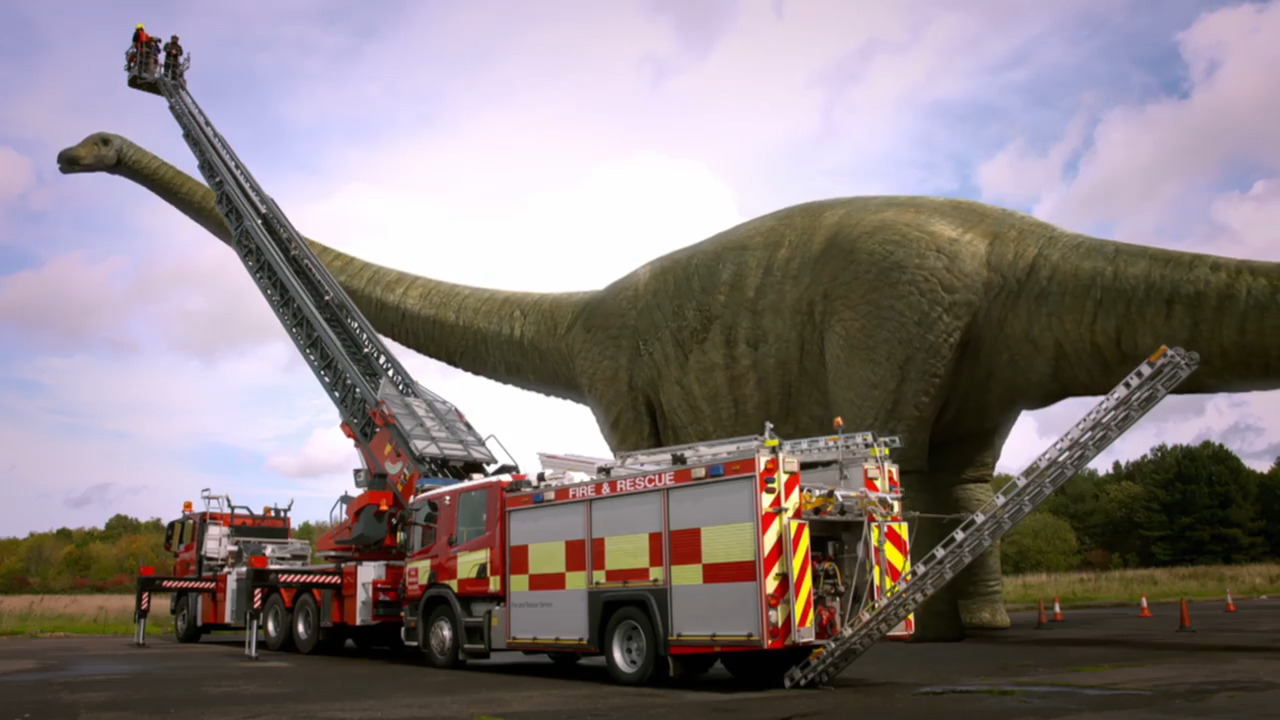
In Patagotitan — The Largest Animal to Walk the Planet, naturalist Steve Backshall explores this seriously huge dinosaur and its massive heart, which measured over 6.5 feet (2 meters) in circumference. Plus, watch an experiment take place to visualize just how powerful the Patagotitan’s heart had to be in order to pump blood throughout its body. This video is excerpted from BBC’s Deadly Dinosaurs, a documentary series in which host Steve Backshall is on the hunt for the deadliest animals to have walked the Earth — dinosaurs — exploring features of several species and putting their abilities to the test to reveal the raw power of these creatures.
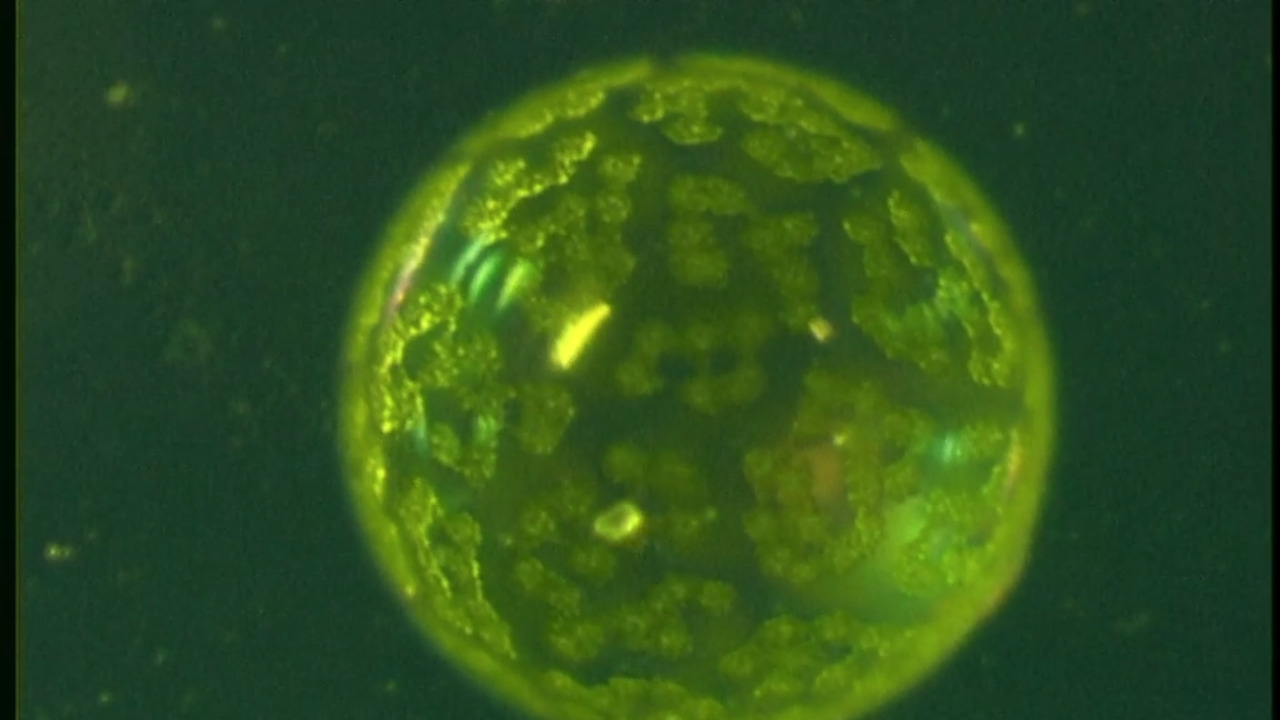
In The Blooming Sea: Animal Life Reacts, narrator Sir David Attenborough describes the scale of the plankton bloom. Learn about how copepods grow and thrive until predators find them. This video is excerpted from BBC’s Blue Planet, a definitive documentary series diving into the mysterious depths of the sea to discover the natural history of the world’s oceans and the rarely seen marine life that reside there.
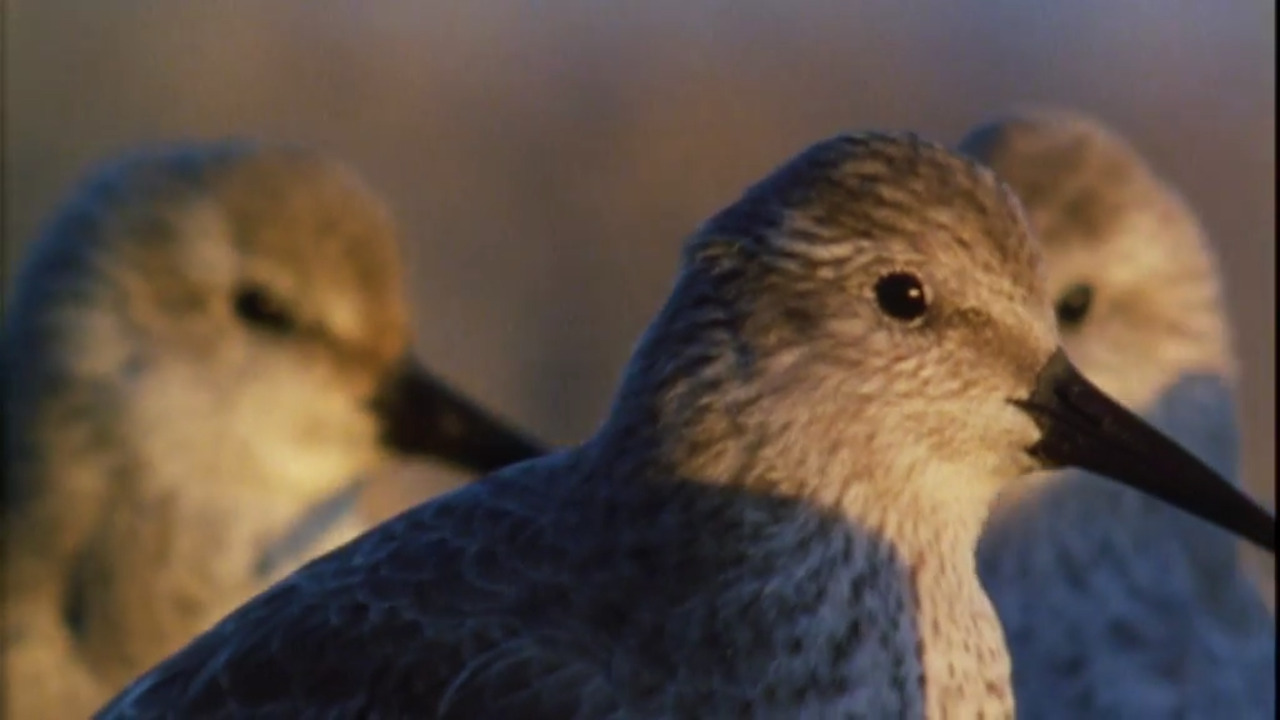
In Animal Adaptations Due to Receding Tides, narrator Sir David Attenborough explains how invertebrates in the mud are impacted by the receding tide, how flounder use the currents, and how ospreys hunt. Observe animal adaptations in the wading birds and the flounder. This video is excerpted from BBC’s Blue Planet, a definitive documentary series diving into the mysterious depths of the sea to discover the natural history of the world’s oceans and the rarely seen marine life that reside there.
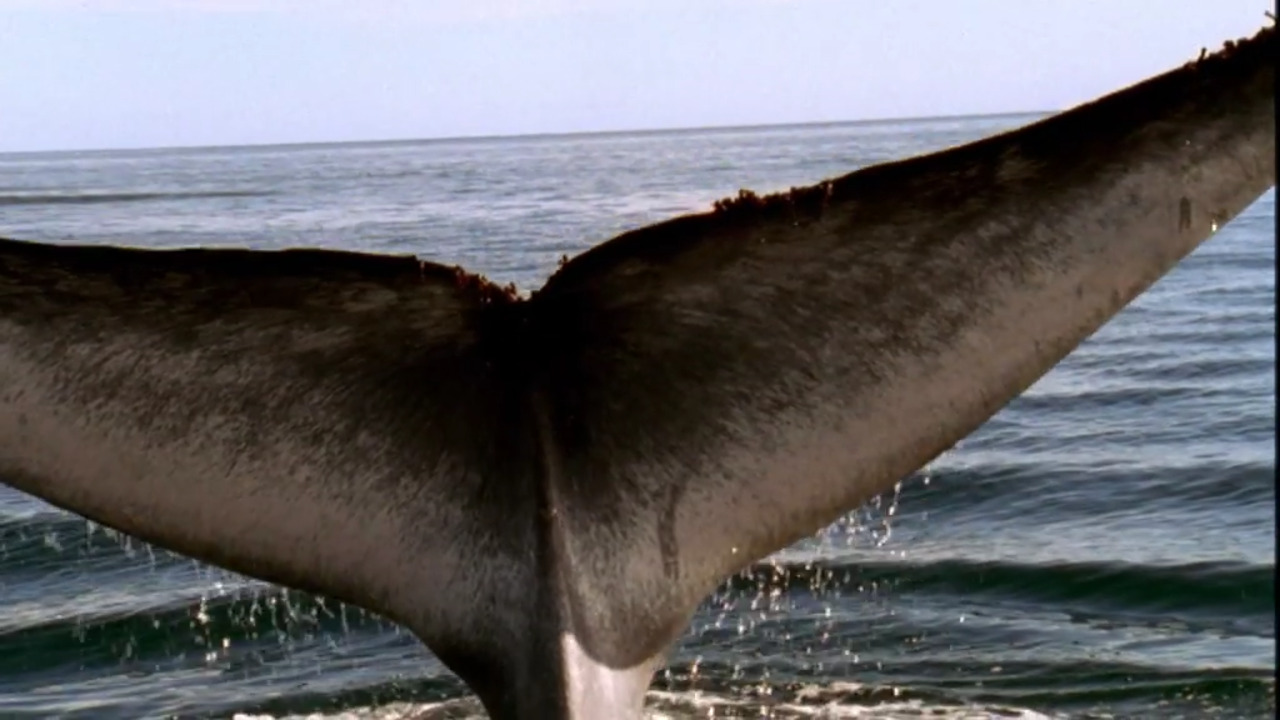
In The Blue Whale is The Biggest Animal That Has Ever Lived, narrator Sir David Attenborough investigates the largest animal on Earth, the blue whale, and what it reminds us about the oceans. This video is excerpted from BBC’s Blue Planet, a definitive documentary series diving into the mysterious depths of the sea to discover the natural history of the world’s oceans and the rarely seen marine life that reside there.
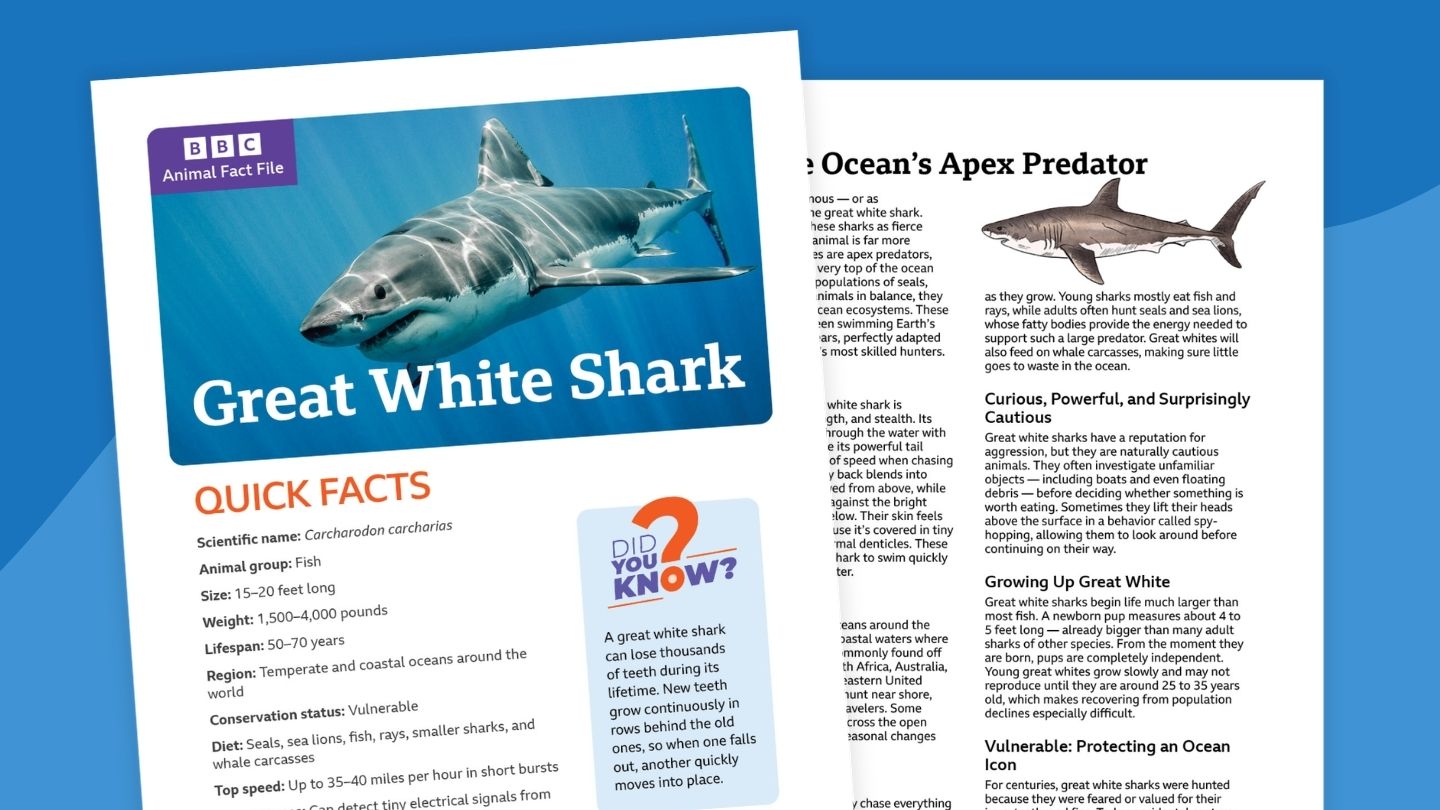
What predator can burst through the ocean at nearly 40 miles per hour, replace thousands of teeth during its lifetime, and help keep marine ecosystems healthy? The answer may surprise you.
Separate fact from fiction as you dive into the world of the great white shark. Discover the incredible adaptations that make it one of the ocean's most successful hunters, from powerful jaws and razor-sharp senses to stealthy hunting strategies. You'll also learn why great white sharks are essential to healthy oceans and how conservation efforts are helping protect this iconic predator.
Teachers and parents, you can use this fact file to:
- Introduce an animal, wildlife, or life science unit
- Support nonfiction reading and vocabulary practice
- Explore animal adaptations, behaviors, and habitats
- Compare animals and the ecosystems they live in
- Practice finding and organizing information from nonfiction texts
- Prepare students for animal research projects or presentations (use our animal report templates!)
- Connect science learning to conservation and environmental issues
- Pair with videos, articles, or other informational texts (see Related Resources below)
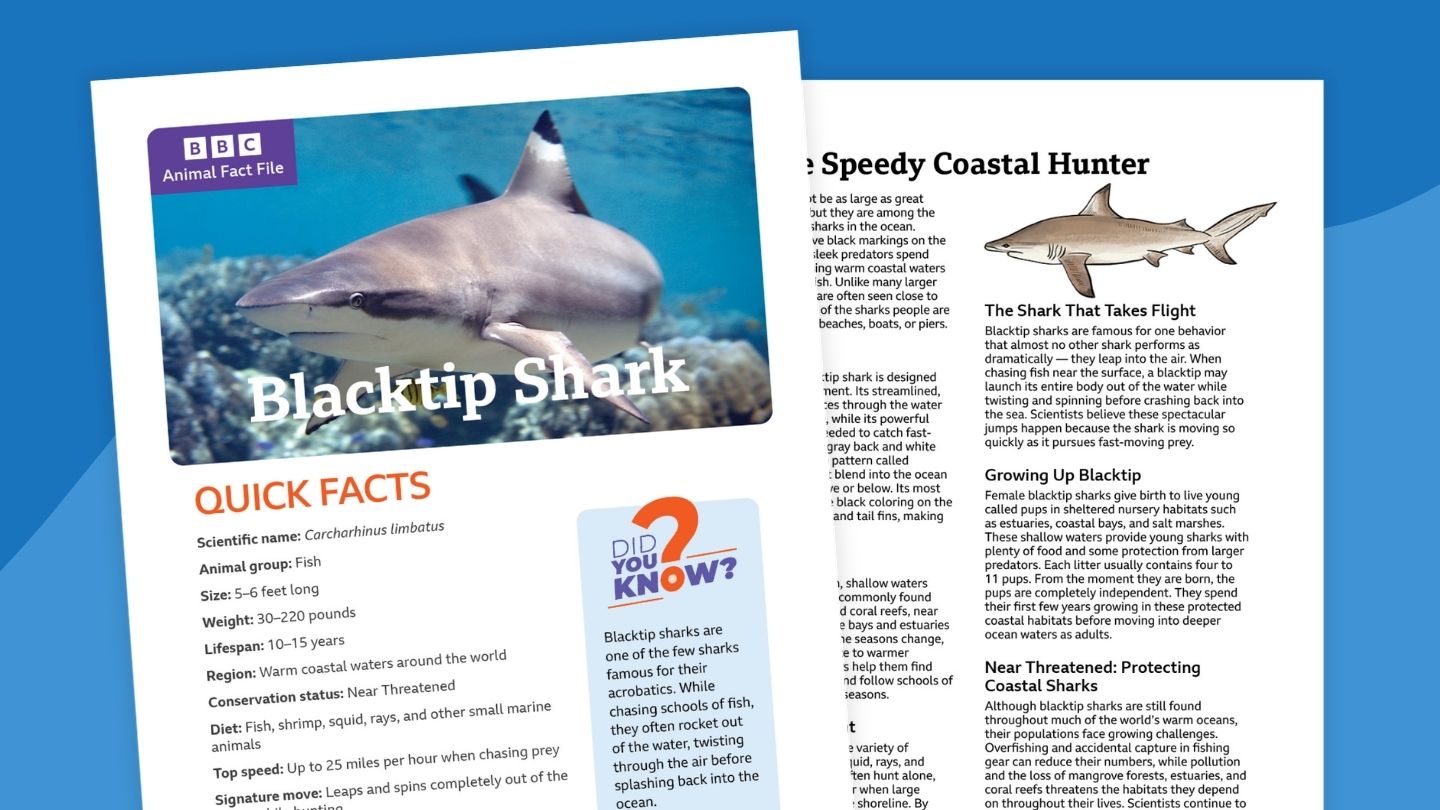
What shark can leap completely out of the water while chasing its dinner? If you guessed the blacktip shark, you're right!
Known for their speed, agility, and spectacular spinning jumps, blacktip sharks are among the ocean's most exciting predators. Explore the warm coastal waters they call home, discover how they sometimes work together to herd schools of fish, and learn why mangroves, coral reefs, and estuaries are so important to their survival. You'll also find out how people are helping keep these remarkable coastal sharks thriving.
Teachers and parents, you can use this fact file to:
- Introduce an animal, wildlife, or life science unit
- Support nonfiction reading and vocabulary practice
- Explore animal adaptations, behaviors, and habitats
- Compare animals and the ecosystems they live in
- Practice finding and organizing information from nonfiction texts
- Prepare students for animal research projects or presentations (use our animal report templates!)
- Connect science learning to conservation and environmental issues
- Pair with videos, articles, or other informational texts (see Related Resources below)
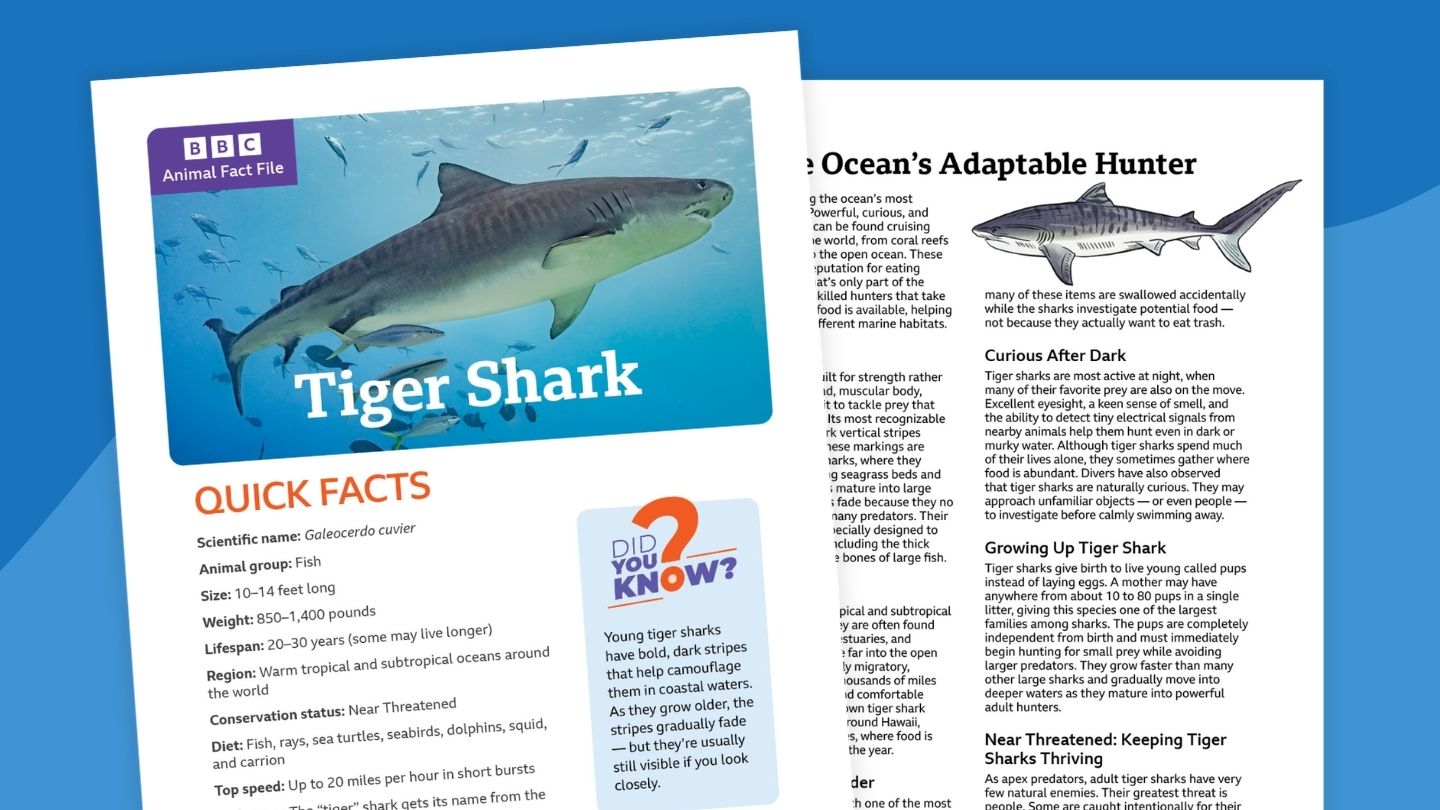
What shark gets its name from the dark stripes along its body and has one of the most varied diets in the ocean? Meet one of the sea's most adaptable predators.
Powerful, curious, and built to thrive in a wide range of habitats, tiger sharks are among the ocean's most successful hunters. Discover how they use their keen senses and powerful jaws to find food, why they migrate across thousands of miles of ocean, and what role they play in keeping marine ecosystems in balance. You'll also learn about the challenges tiger sharks face and the efforts underway to protect them.
Teachers and parents, you can use this fact file to:
- Introduce an animal, wildlife, or life science unit
- Support nonfiction reading and vocabulary practice
- Explore animal adaptations, behaviors, and habitats
- Compare animals and the ecosystems they live in
- Practice finding and organizing information from nonfiction texts
- Prepare students for animal research projects or presentations (use our animal report templates!)
- Connect science learning to conservation and environmental issues
- Pair with videos, articles, or other informational texts (see Related Resources below)
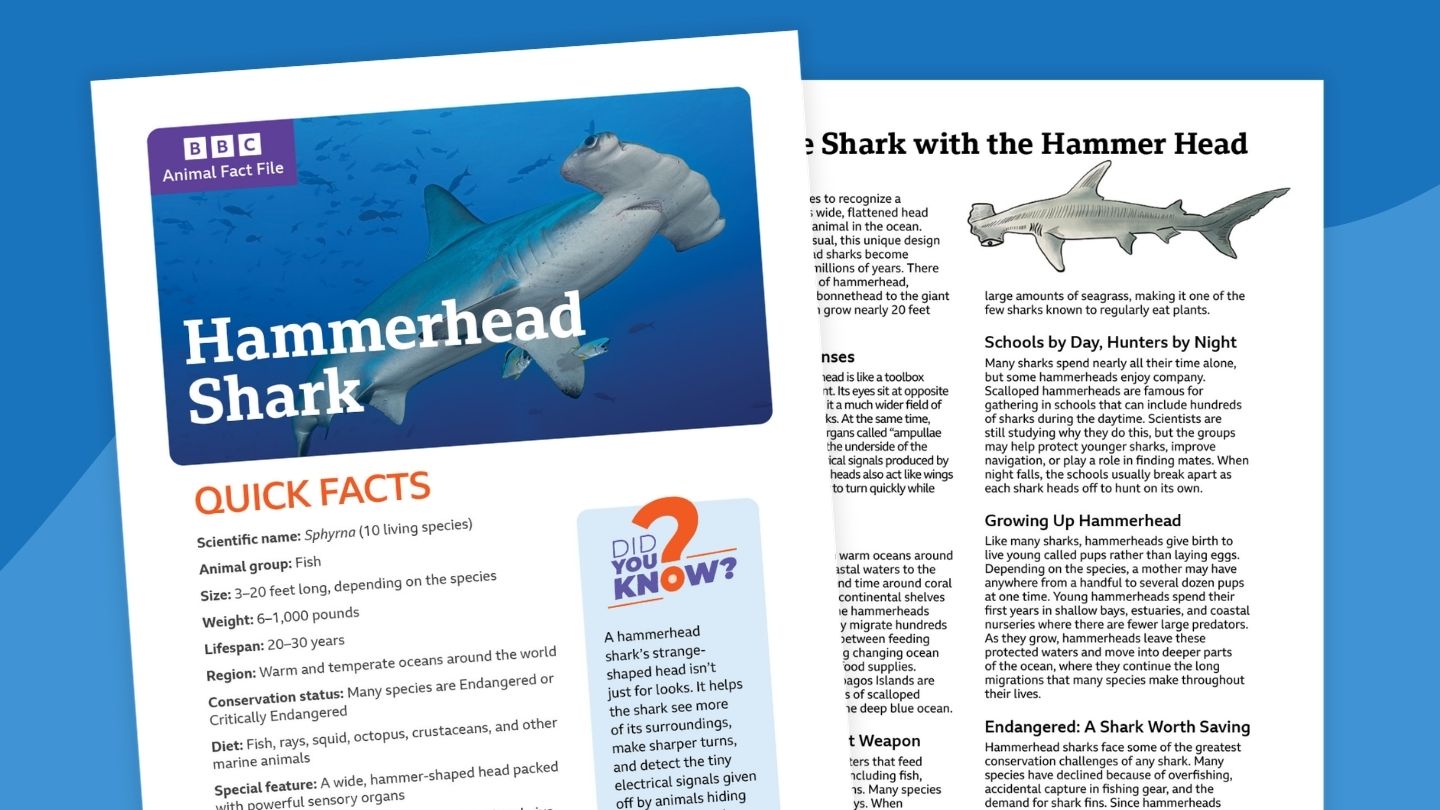
What shark has a head shaped like a hammer — and uses it like a high-tech hunting tool? Hammerhead sharks may look unusual, but every part of their unique design helps them survive.
Explore the fascinating world of these extraordinary sharks and discover how their wide heads help them see more, sense hidden prey, and make sharp turns while hunting. Learn why some hammerheads gather in schools of hundreds, travel thousands of miles across the ocean, and face growing conservation challenges that make protecting them more important than ever.
Teachers and parents, you can use this fact file to:
- Introduce an animal, wildlife, or life science unit
- Support nonfiction reading and vocabulary practice
- Explore animal adaptations, behaviors, and habitats
- Compare animals and the ecosystems they live in
- Practice finding and organizing information from nonfiction texts
- Prepare students for animal research projects or presentations (use our animal report templates!)
- Connect science learning to conservation and environmental issues
- Pair with videos, articles, or other informational texts (see Related Resources below)
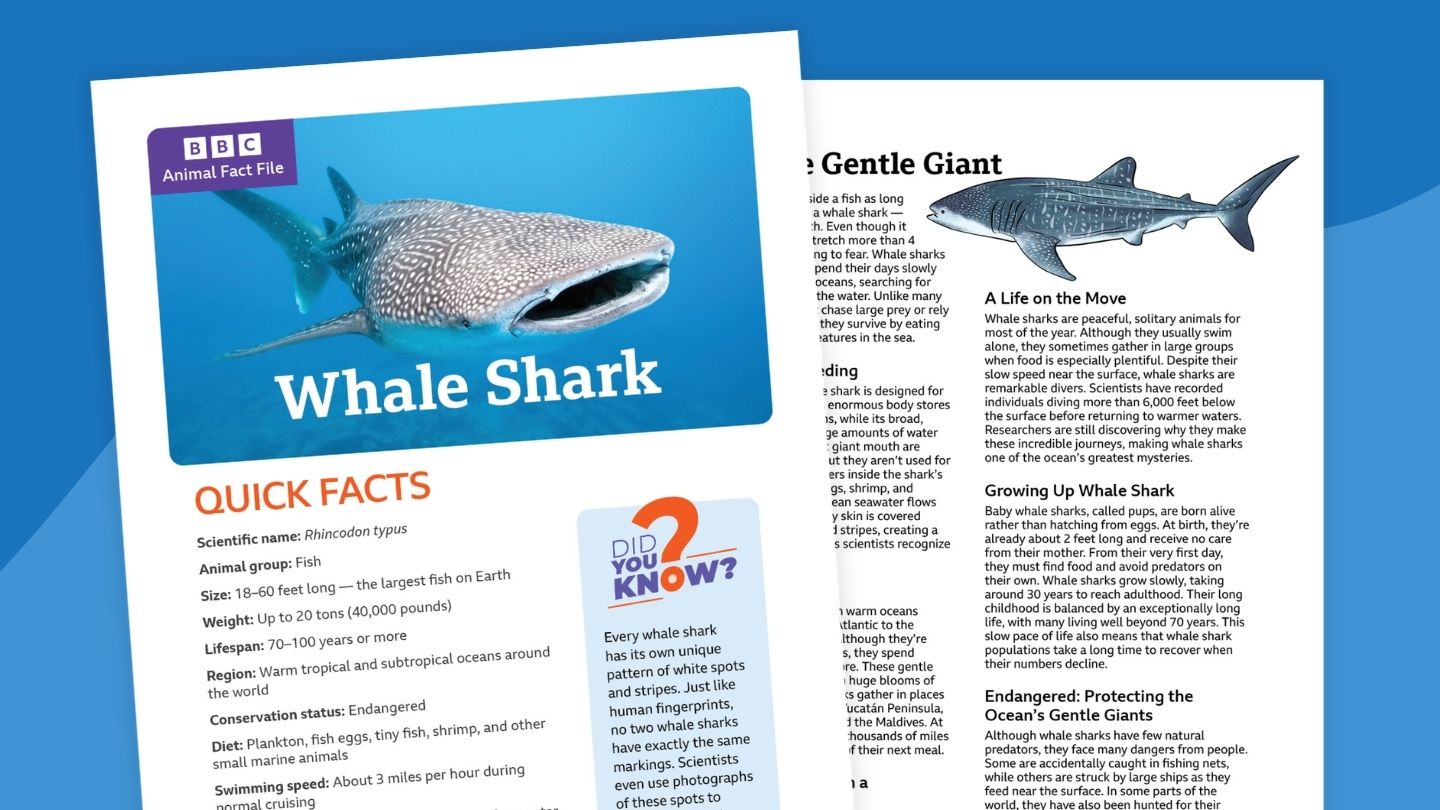
What fish can grow longer than a school bus but feeds on tiny plankton? The whale shark is the largest fish on Earth — and one of its gentlest.
From tropical coastlines to the open ocean, these enormous fish spend their lives searching for tiny creatures drifting through the water. Discover how whale sharks use filter feeding instead of hunting, dive thousands of feet beneath the surface, and migrate incredible distances across the globe. You'll also learn why these gentle giants are endangered and how scientists are working to protect them for generations to come.
Teachers and parents, you can use this fact file to:
- Introduce an animal, wildlife, or life science unit
- Support nonfiction reading and vocabulary practice
- Explore animal adaptations, behaviors, and habitats
- Compare animals and the ecosystems they live in
- Practice finding and organizing information from nonfiction texts
- Prepare students for animal research projects or presentations (use our animal report templates!)
- Connect science learning to conservation and environmental issues
- Pair with videos, articles, or other informational texts (see Related Resources below)
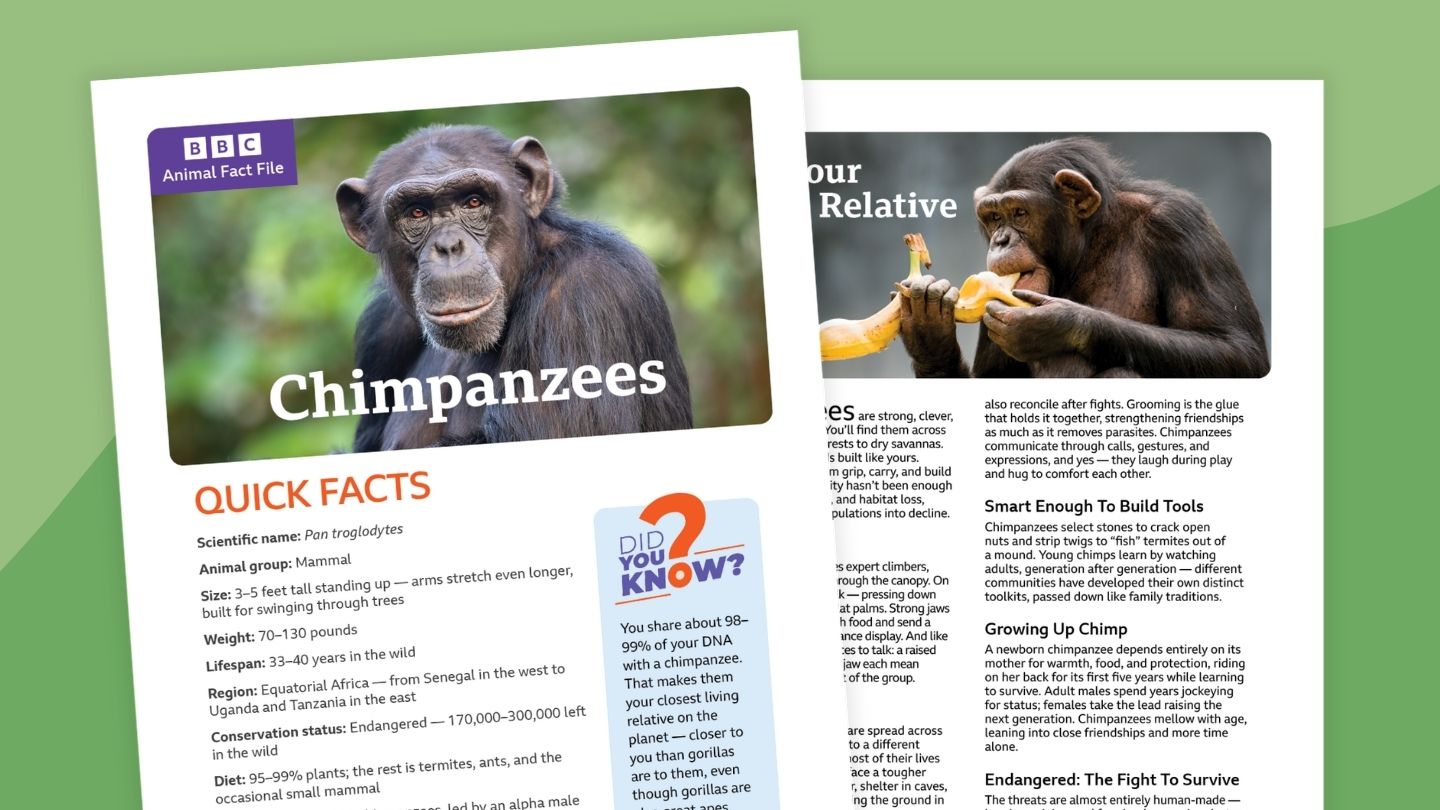
What animal laughs during play, uses tools to solve problems, and shares nearly 99% of its DNA with you? Meet the chimpanzee — one of the smartest and most fascinating animals on Earth.
This fact file takes you on a journey into the world of chimpanzees, from the rainforests and savannas they call home to the remarkable ways they communicate, work together, and care for their families. Along the way, discover how chimpanzees use tools, build friendships, raise their young, and face challenges in the wild.
Teachers and parents, you can use this fact file to:
- Introduce an animal, wildlife, or life science unit
- Support nonfiction reading and vocabulary practice
- Explore animal adaptations, behaviors, and habitats
- Compare animals and the ecosystems they live in
- Practice finding and organizing information from nonfiction texts
- Prepare students for animal research projects or presentations (use our animal report templates!)
- Connect science learning to conservation and environmental issues
- Pair with videos, articles, or other informational texts (see Related Resources below)
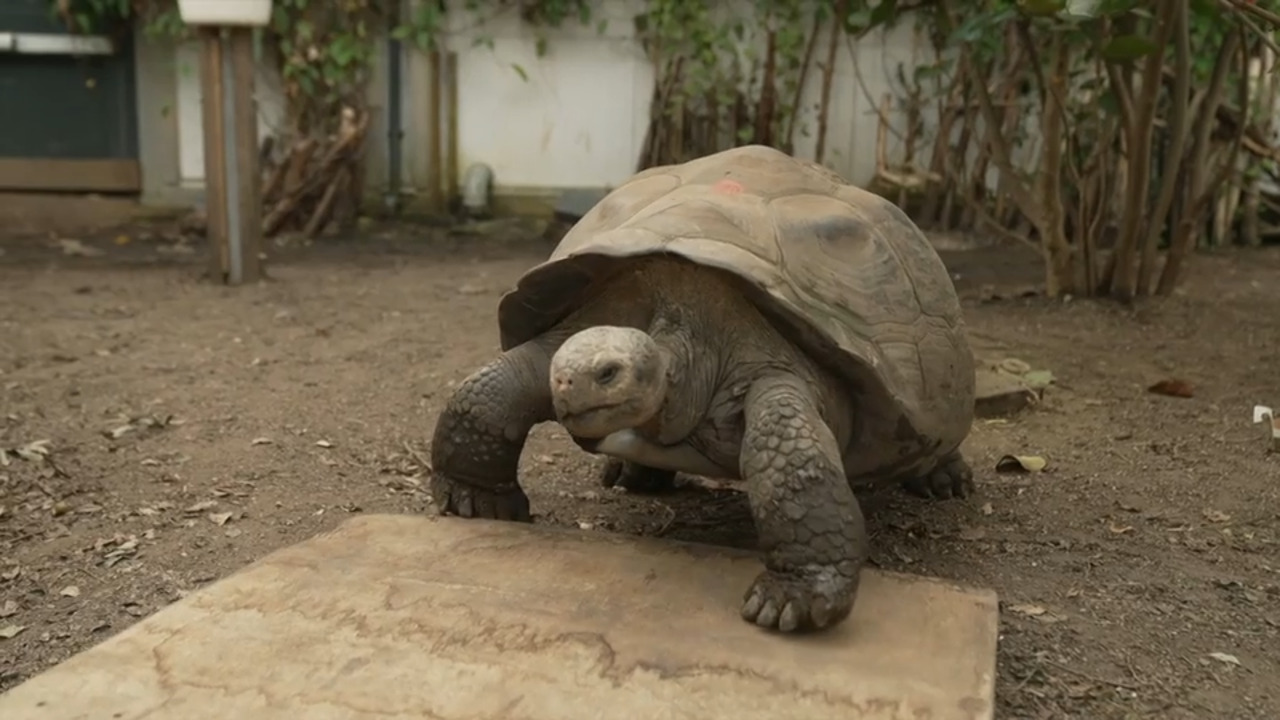
What happens when a zoo animal gets sick? For most of the history of zoos, that question had an answer most visitors never saw. Now, one of the world's oldest zoological societies is building a facility designed to change that — and what they're planning goes well beyond routine checkups.
The Zoological Society of London is constructing a new wildlife health center that will allow visitors to observe animals receiving medical care firsthand. Some of what they'll see will be routine — weight checks, dental exams, the kind of maintenance that keeps zoo populations healthy. But onlookers may also get a window into surgical procedures, and in some cases, postmortems. It's an unusually transparent approach for an institution that has traditionally kept its medical operations behind closed doors.
Not everyone is convinced. Critics argue the center is more about capitalizing on public curiosity than genuinely benefiting the animals in its care — that making medicine into a spectator sport serves the zoo's revenue more than its residents.
ZSL pushes back on that framing. The center is designed to be more than an exhibit. It's intended to function as a global training resource for wildlife vets, a hub where expertise in animal medicine can be developed and shared across institutions worldwide. The argument is that visibility and conservation aren't in conflict — that showing people what it actually takes to keep wild animals healthy is exactly the kind of thing that builds the public understanding zoos increasingly depend on to justify their existence.
The deeper question the center raises isn't really about one zoo or one building. It's about what zoos are actually for — and whether letting people watch is a compromise of that mission or an extension of it.
Get your students excited about wildlife with this collection of engaging articles! Covering elephants, polar bears, whales, and even the rarest creatures on Earth, these resources are perfect for sparking curiosity. Each article is available at three reading levels, making it easy for you to share with readers of all abilities in your classroom.
In Patagotitan — The Largest Animal to Walk the Planet, naturalist Steve Backshall explores this seriously huge dinosaur and its massive heart, which measured over 6.5 feet (2 meters) in circumference. Plus, watch an experiment take place to visualize just how powerful the Patagotitan’s heart had to be in order to pump blood throughout its body. This video is excerpted from BBC’s Deadly Dinosaurs, a documentary series in which host Steve Backshall is on the hunt for the deadliest animals to have walked the Earth — dinosaurs — exploring features of several species and putting their abilities to the test to reveal the raw power of these creatures.
In The Blooming Sea: Animal Life Reacts, narrator Sir David Attenborough describes the scale of the plankton bloom. Learn about how copepods grow and thrive until predators find them. This video is excerpted from BBC’s Blue Planet, a definitive documentary series diving into the mysterious depths of the sea to discover the natural history of the world’s oceans and the rarely seen marine life that reside there.
In Animal Adaptations Due to Receding Tides, narrator Sir David Attenborough explains how invertebrates in the mud are impacted by the receding tide, how flounder use the currents, and how ospreys hunt. Observe animal adaptations in the wading birds and the flounder. This video is excerpted from BBC’s Blue Planet, a definitive documentary series diving into the mysterious depths of the sea to discover the natural history of the world’s oceans and the rarely seen marine life that reside there.
In The Blue Whale is The Biggest Animal That Has Ever Lived, narrator Sir David Attenborough investigates the largest animal on Earth, the blue whale, and what it reminds us about the oceans. This video is excerpted from BBC’s Blue Planet, a definitive documentary series diving into the mysterious depths of the sea to discover the natural history of the world’s oceans and the rarely seen marine life that reside there.
What predator can burst through the ocean at nearly 40 miles per hour, replace thousands of teeth during its lifetime, and help keep marine ecosystems healthy? The answer may surprise you.
Separate fact from fiction as you dive into the world of the great white shark. Discover the incredible adaptations that make it one of the ocean's most successful hunters, from powerful jaws and razor-sharp senses to stealthy hunting strategies. You'll also learn why great white sharks are essential to healthy oceans and how conservation efforts are helping protect this iconic predator.
Teachers and parents, you can use this fact file to:
- Introduce an animal, wildlife, or life science unit
- Support nonfiction reading and vocabulary practice
- Explore animal adaptations, behaviors, and habitats
- Compare animals and the ecosystems they live in
- Practice finding and organizing information from nonfiction texts
- Prepare students for animal research projects or presentations (use our animal report templates!)
- Connect science learning to conservation and environmental issues
- Pair with videos, articles, or other informational texts (see Related Resources below)
What shark can leap completely out of the water while chasing its dinner? If you guessed the blacktip shark, you're right!
Known for their speed, agility, and spectacular spinning jumps, blacktip sharks are among the ocean's most exciting predators. Explore the warm coastal waters they call home, discover how they sometimes work together to herd schools of fish, and learn why mangroves, coral reefs, and estuaries are so important to their survival. You'll also find out how people are helping keep these remarkable coastal sharks thriving.
Teachers and parents, you can use this fact file to:
- Introduce an animal, wildlife, or life science unit
- Support nonfiction reading and vocabulary practice
- Explore animal adaptations, behaviors, and habitats
- Compare animals and the ecosystems they live in
- Practice finding and organizing information from nonfiction texts
- Prepare students for animal research projects or presentations (use our animal report templates!)
- Connect science learning to conservation and environmental issues
- Pair with videos, articles, or other informational texts (see Related Resources below)
What shark gets its name from the dark stripes along its body and has one of the most varied diets in the ocean? Meet one of the sea's most adaptable predators.
Powerful, curious, and built to thrive in a wide range of habitats, tiger sharks are among the ocean's most successful hunters. Discover how they use their keen senses and powerful jaws to find food, why they migrate across thousands of miles of ocean, and what role they play in keeping marine ecosystems in balance. You'll also learn about the challenges tiger sharks face and the efforts underway to protect them.
Teachers and parents, you can use this fact file to:
- Introduce an animal, wildlife, or life science unit
- Support nonfiction reading and vocabulary practice
- Explore animal adaptations, behaviors, and habitats
- Compare animals and the ecosystems they live in
- Practice finding and organizing information from nonfiction texts
- Prepare students for animal research projects or presentations (use our animal report templates!)
- Connect science learning to conservation and environmental issues
- Pair with videos, articles, or other informational texts (see Related Resources below)
What shark has a head shaped like a hammer — and uses it like a high-tech hunting tool? Hammerhead sharks may look unusual, but every part of their unique design helps them survive.
Explore the fascinating world of these extraordinary sharks and discover how their wide heads help them see more, sense hidden prey, and make sharp turns while hunting. Learn why some hammerheads gather in schools of hundreds, travel thousands of miles across the ocean, and face growing conservation challenges that make protecting them more important than ever.
Teachers and parents, you can use this fact file to:
- Introduce an animal, wildlife, or life science unit
- Support nonfiction reading and vocabulary practice
- Explore animal adaptations, behaviors, and habitats
- Compare animals and the ecosystems they live in
- Practice finding and organizing information from nonfiction texts
- Prepare students for animal research projects or presentations (use our animal report templates!)
- Connect science learning to conservation and environmental issues
- Pair with videos, articles, or other informational texts (see Related Resources below)
What fish can grow longer than a school bus but feeds on tiny plankton? The whale shark is the largest fish on Earth — and one of its gentlest.
From tropical coastlines to the open ocean, these enormous fish spend their lives searching for tiny creatures drifting through the water. Discover how whale sharks use filter feeding instead of hunting, dive thousands of feet beneath the surface, and migrate incredible distances across the globe. You'll also learn why these gentle giants are endangered and how scientists are working to protect them for generations to come.
Teachers and parents, you can use this fact file to:
- Introduce an animal, wildlife, or life science unit
- Support nonfiction reading and vocabulary practice
- Explore animal adaptations, behaviors, and habitats
- Compare animals and the ecosystems they live in
- Practice finding and organizing information from nonfiction texts
- Prepare students for animal research projects or presentations (use our animal report templates!)
- Connect science learning to conservation and environmental issues
- Pair with videos, articles, or other informational texts (see Related Resources below)
What animal laughs during play, uses tools to solve problems, and shares nearly 99% of its DNA with you? Meet the chimpanzee — one of the smartest and most fascinating animals on Earth.
This fact file takes you on a journey into the world of chimpanzees, from the rainforests and savannas they call home to the remarkable ways they communicate, work together, and care for their families. Along the way, discover how chimpanzees use tools, build friendships, raise their young, and face challenges in the wild.
Teachers and parents, you can use this fact file to:
- Introduce an animal, wildlife, or life science unit
- Support nonfiction reading and vocabulary practice
- Explore animal adaptations, behaviors, and habitats
- Compare animals and the ecosystems they live in
- Practice finding and organizing information from nonfiction texts
- Prepare students for animal research projects or presentations (use our animal report templates!)
- Connect science learning to conservation and environmental issues
- Pair with videos, articles, or other informational texts (see Related Resources below)
What happens when a zoo animal gets sick? For most of the history of zoos, that question had an answer most visitors never saw. Now, one of the world's oldest zoological societies is building a facility designed to change that — and what they're planning goes well beyond routine checkups.
The Zoological Society of London is constructing a new wildlife health center that will allow visitors to observe animals receiving medical care firsthand. Some of what they'll see will be routine — weight checks, dental exams, the kind of maintenance that keeps zoo populations healthy. But onlookers may also get a window into surgical procedures, and in some cases, postmortems. It's an unusually transparent approach for an institution that has traditionally kept its medical operations behind closed doors.
Not everyone is convinced. Critics argue the center is more about capitalizing on public curiosity than genuinely benefiting the animals in its care — that making medicine into a spectator sport serves the zoo's revenue more than its residents.
ZSL pushes back on that framing. The center is designed to be more than an exhibit. It's intended to function as a global training resource for wildlife vets, a hub where expertise in animal medicine can be developed and shared across institutions worldwide. The argument is that visibility and conservation aren't in conflict — that showing people what it actually takes to keep wild animals healthy is exactly the kind of thing that builds the public understanding zoos increasingly depend on to justify their existence.
The deeper question the center raises isn't really about one zoo or one building. It's about what zoos are actually for — and whether letting people watch is a compromise of that mission or an extension of it.