Use Any of These 10 Worksheets With Any of Our Student Reading Passages
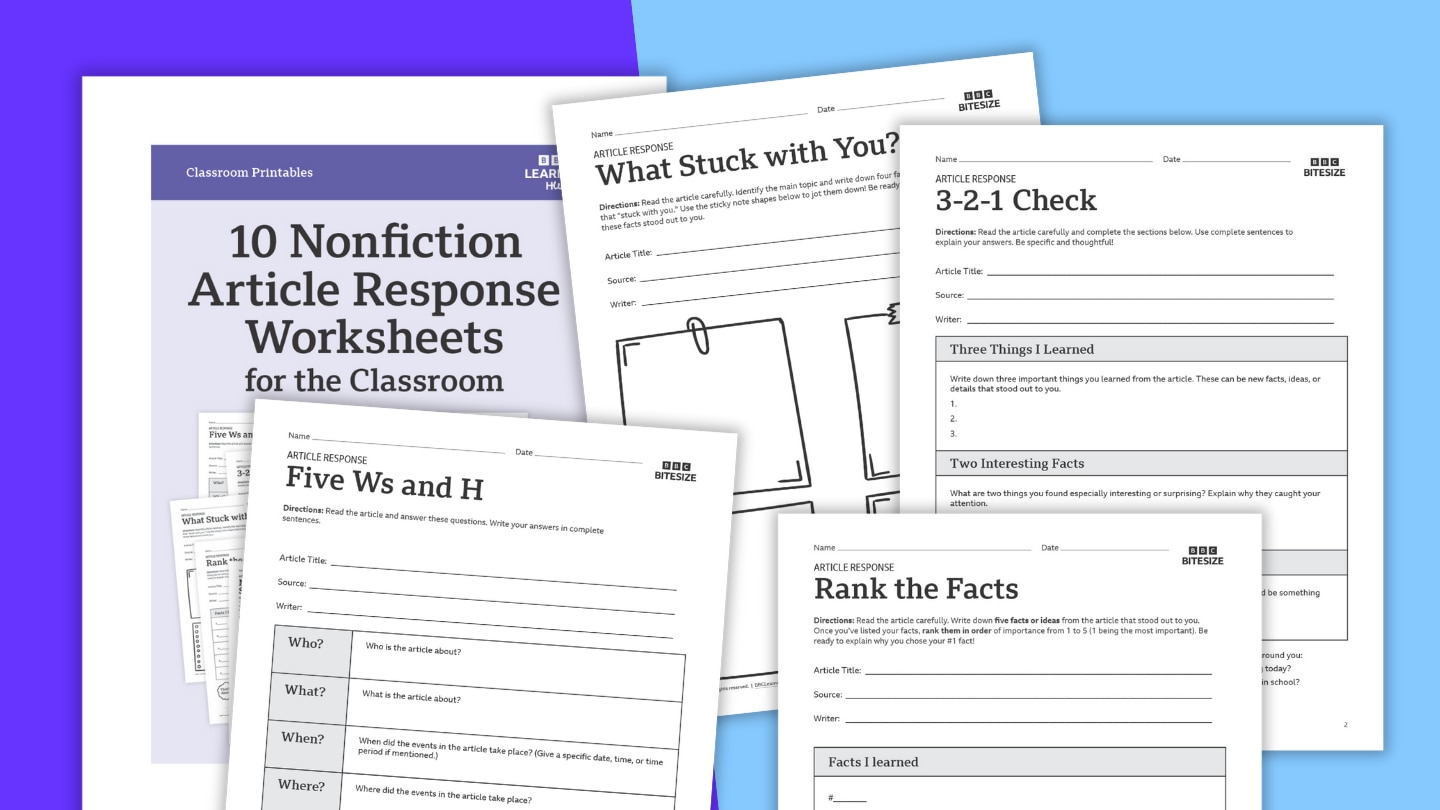
To help your students dive deeper into the article content, we created this bundle of article response worksheets. We designed these worksheets to be used with any magazine article and to keep students focused as they read and enhance comprehension and retention. (Please note that some worksheet types are better fits for certain content and grade levels). Assign students the same one, mix them up, or let them choose!
Teaching ecosystems helps students see how every living thing is connected. That's why we've created our Ecosystems Collection. We cover six ecosystems (grasslands, desert, coral reef, tropical rainforest, mountain, and polar). After watching videos on each ecosystem, challenge your students to become ecosystem experts by creating their own colorful reports filled with fascinating facts. (They’ll need to dig deeper with extra research, too!) There's a brochure template for each of the six ecosystems. Inside, students will uncover and share:
- Location of the ecosystem on a world map
- Adjectives that describe the ecosystem
- Three animals that live in the ecosystem
- Three plants that grow in the ecosystem
- The climate of the ecosystem
- What makes the ecosystem important
- Their favorite fun facts
Your students will summarize the most important details in their own words while keeping it clear and easy to understand. As they choose what to include, they’ll sharpen their ability to evaluate and combine information from different sources. Best of all, they’ll show off their creativity and communication skills by designing a brochure that’s as fun to read as it is informative!
Use the bits 'n' bobs on the page to make your own funny vehicle. Give it a name and don't forget the doodad, love.
More Like This
To help your students dive deeper into the article content, we created this bundle of article response worksheets. We designed these worksheets to be used with any magazine article and to keep students focused as they read and enhance comprehension and retention. (Please note that some worksheet types are better fits for certain content and grade levels). Assign students the same one, mix them up, or let them choose!
Teaching ecosystems helps students see how every living thing is connected. That's why we've created our Ecosystems Collection. We cover six ecosystems (grasslands, desert, coral reef, tropical rainforest, mountain, and polar). After watching videos on each ecosystem, challenge your students to become ecosystem experts by creating their own colorful reports filled with fascinating facts. (They’ll need to dig deeper with extra research, too!) There's a brochure template for each of the six ecosystems. Inside, students will uncover and share:
- Location of the ecosystem on a world map
- Adjectives that describe the ecosystem
- Three animals that live in the ecosystem
- Three plants that grow in the ecosystem
- The climate of the ecosystem
- What makes the ecosystem important
- Their favorite fun facts
Your students will summarize the most important details in their own words while keeping it clear and easy to understand. As they choose what to include, they’ll sharpen their ability to evaluate and combine information from different sources. Best of all, they’ll show off their creativity and communication skills by designing a brochure that’s as fun to read as it is informative!
To help your students dive deeper into the article content, we created this bundle of article response worksheets. We designed these worksheets to be used with any magazine article and to keep students focused as they read and enhance comprehension and retention. (Please note that some worksheet types are better fits for certain content and grade levels). Assign students the same one, mix them up, or let them choose!
Teaching ecosystems helps students see how every living thing is connected. That's why we've created our Ecosystems Collection. We cover six ecosystems (grasslands, desert, coral reef, tropical rainforest, mountain, and polar). After watching videos on each ecosystem, challenge your students to become ecosystem experts by creating their own colorful reports filled with fascinating facts. (They’ll need to dig deeper with extra research, too!) There's a brochure template for each of the six ecosystems. Inside, students will uncover and share:
- Location of the ecosystem on a world map
- Adjectives that describe the ecosystem
- Three animals that live in the ecosystem
- Three plants that grow in the ecosystem
- The climate of the ecosystem
- What makes the ecosystem important
- Their favorite fun facts
Your students will summarize the most important details in their own words while keeping it clear and easy to understand. As they choose what to include, they’ll sharpen their ability to evaluate and combine information from different sources. Best of all, they’ll show off their creativity and communication skills by designing a brochure that’s as fun to read as it is informative!